





































































Dark rooms, taxidermied bats, pinned spiders, live centipedes and other curiosities.
This wasn’t just any night- it was the Night at the Museum.
Decorated in spiderwebs and caution tape, Cordley and Nash halls were filled with specimens, interactive exhibits and activities for the annual event held Thursday.
Volunteers adorned in Halloween costumes informed visitors about hair-raising and interesting science. Visitors meandered through the buildings and could complete a bingo card scavenger hunt for a reward.
The ichthyology, herbarium, arthropod, vertebrate collections and the Oregon State University Arboretum all displayed various specimens at the event.
Specimens spanned the tree of life, from carnivorous plants from the herbarium to a preserved blobfish and the contents of a dead tuna’s stomach arranged beside its skull from the ichthyology collection.
Displays extended beyond specimens. Several hundred-year-old natural history books from the OSU Special Collections and Archives were available for visitors to sift through, including a 1607 bestiary describing various fantastical animals.
Student volunteers from a kaleidoscope of campus clubs, ranging from the Bird Nerds to the Fish and Wildlife club to the Bug Club, ran the evening’s activities, including things like owl pellet dissections and games- and provided information about specimens to visitors.
One club in attendance, the biochemistry club, showcased bioluminescent fungi from the herbarium and educated attendees about the chemical reaction that enables them to glow in the dark.
One of the student volunteers at the table, Lucia Gutierrez, the biochemistry club social chair, was also in charge of coordinating the club’s table at the event.
Gutierrez said that it was the biochemistry club’s first year participating in Night at the Museum and remarked that the event was attended by people of all ages, ranging from kids to college students to seniors, interested in science.
Gutierrez also highlighted the herbarium’s importance for research, and thought that the event provided a great opportunity to showcase the interesting properties of specimens in the often-forgotten collection and connect people with them.
“So many people who are able to see this, it’s so amazing,” Gutierrez said.
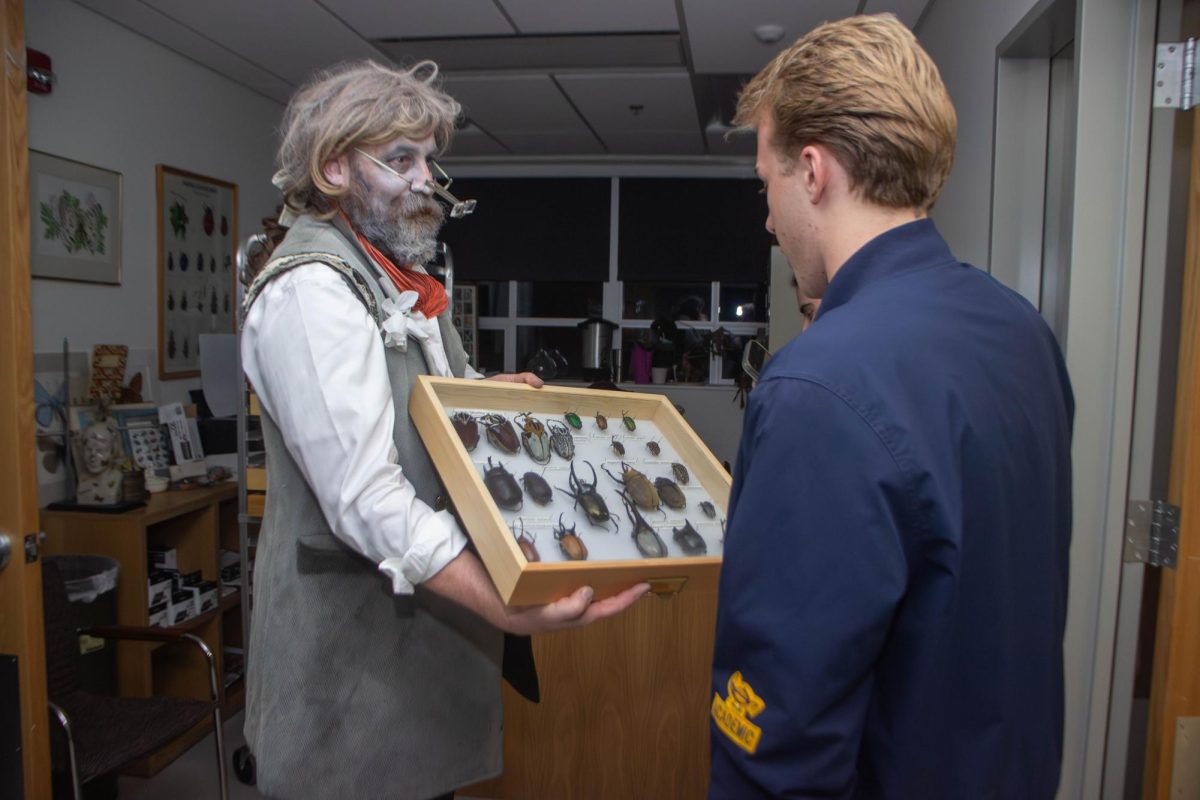
Dressed as a ghostly curator, Chris Marshall, the curator of the arthropod collection, welcomed visitors into a room filled with specimens, including walking sticks, scorpions, slugs and a species of beetle that can cause a human to enter into a coma.
According to Marshall, he was one of the original organizers of the event, when curators from all the OSU collections came together to try to get something with the feel of a natural history museum at OSU.
After starting with a small number of “dead week” tours, Marshall said the event really came into full force the past three years with the involvement of the Bug club, the Integrative Biology club and the efforts of horticulture Phd student Alexander Butcher.
Marshall said that the event’s first iteration had 45 people and had grown to host over 580 this year.
Marshall thought that the event was good outreach for all, but emphasized the role it plays in making students aware of opportunities in the often hidden world of collections, and that the event was becoming increasingly student-run.
“The collection is a really great collection of what it has. But a collection that isn’t engaged with the activity of the institution, the research mission and the education mission, the students, isn’t really going to thrive,” Marshall said.
Kaja Clark, one of two integrative biology club student coordinators for the event, noted that this year’s event was planned further in advance and thought that it was more organized than previous years, benefited from the inclusion of more interactive stations and increased student involvement.
Parker Van De Wetering, a fourth-year ecological engineering student, attended this year’s event with some friends. After attending last year, it was on his radar when he saw a poster for it in Nash Hall.
While he expressed disappointment with the reward for the bingo scavenger hunt being candy after getting a house plant at last year’s event, he enjoyed looking at all the specimens. He thought that the bioluminescent fungi were particularly cool and expressed interest in foraging for species native to the Pacific Northwest.
“It’s cool to see everything on display again,” Wetering said. “There’s so much awesome stuff to look at.”
Kim Catarius, a Corvallis resident, attended the event with younger science enthusiasts.
“I have a child, and he has friends, and we thought it would be cool to come see what’s happening over here,” Catarius said.
Catarius thought that the event was fun and was enjoyed by the kids, who were big fans of the stick bugs.
Catarius recommended the event to other families, “as long as you tell the kids to keep their hands to themselves before they get here.”
Night at the Museum is an annual event each October. Students interested in the planning process or volunteering for the event are encouraged to get involved in participating clubs.