





















































































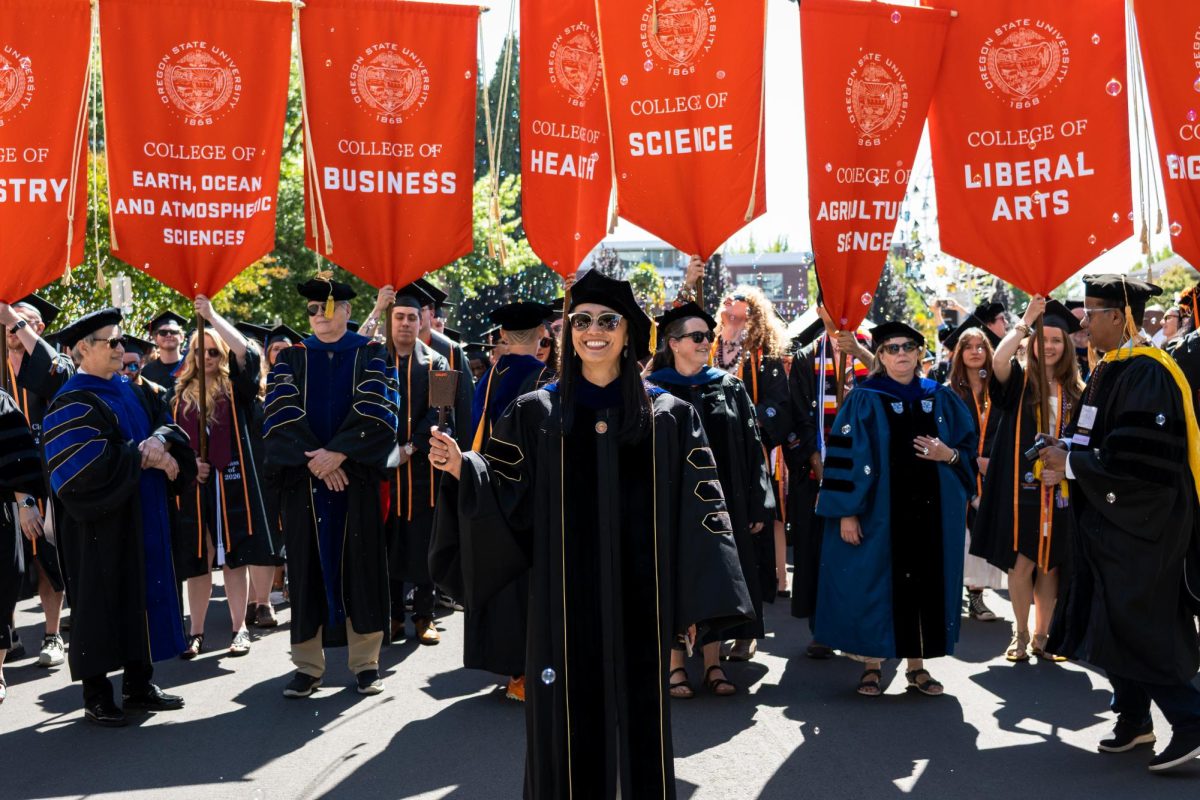



From working on finding cancer treatments to studying Antarctic ice cores, Oregon State University is known for its world-class research across different fields.
Much of this research is funded through federal grants from agencies like the National Science Foundation and the National Institute of Health.
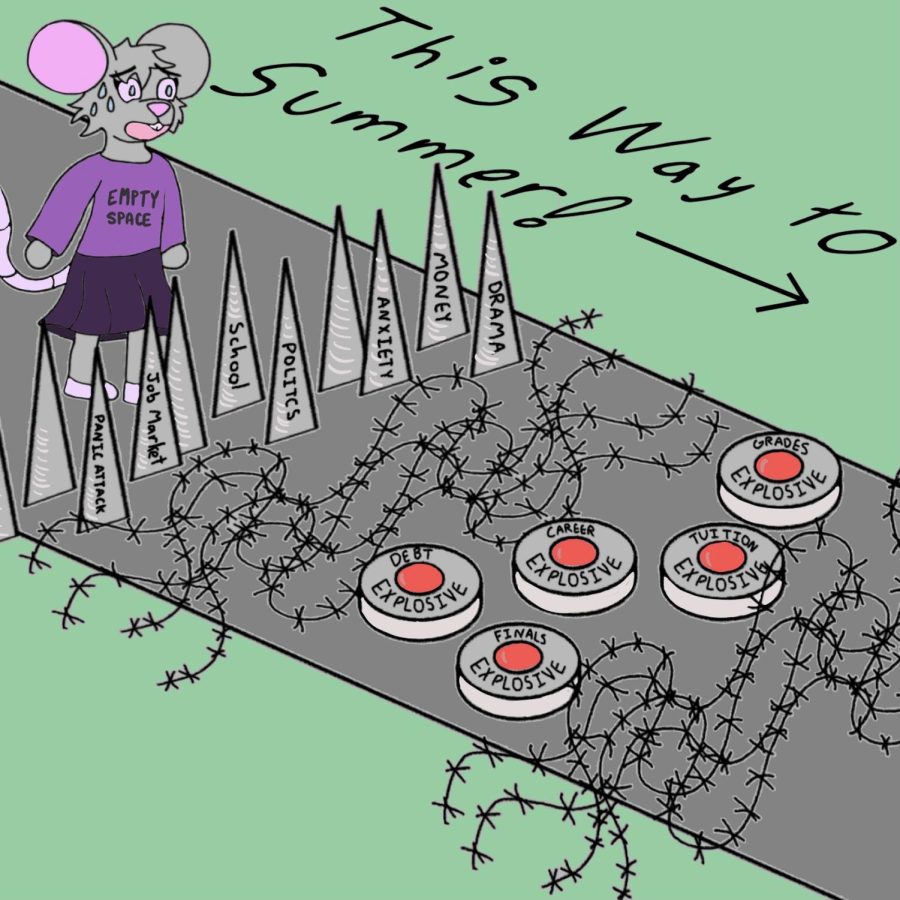
Since the start of the Trump administration, several changes to federal research funding, including grant terminations, funding cuts, the politicization of science and a government shutdown have unsettled the federal funding landscape.
Tuba Ozkan-Haller, dean of the College of Earth, Ocean and Atmospheric Sciences, notes that several CEOAS research projects have faced grant terminations, where already appropriated grant funding is no longer dolled out.
“There have been a few projects that have been canceled, and we were not provided a reason. They were just terminated. And to tell you the truth, with some of them, I cannot quite figure out why, but there is really no opportunity for recourse,” Ozkann Haller said.
“These are real livelihoods that are being impacted. And then, morale is down, and we don’t do our most creative work when we’re operating out of a position of fear.”
According to Martin Storksdieck, the director of the OSU Science, Technology, Engineering and Math Research Center, grant terminations and funding cuts have also impacted several of the center’s research projects.
The center received a grant termination notice from the NSF for its Climate Stories project.
The project, funded by a $1.5 million NSF grant, involved working with hundreds of planetariums across the United States to tell stories about the impact of climate change on local communities, with a focus on climate education and climate change solutions.
The center secured a smaller $25,000 emergency funding grant from a private foundation, but Storksdieck said other center projects have not been as lucky.
For the first time in Storksdieck’s 11 years running the center, funding uncertainty has forced him to let go of two full-time staff members, resulting in a loss of expertise, investment and relationships.
Another concern for researchers is research funding cuts, including those in the Trump administration’s new proposed budget.
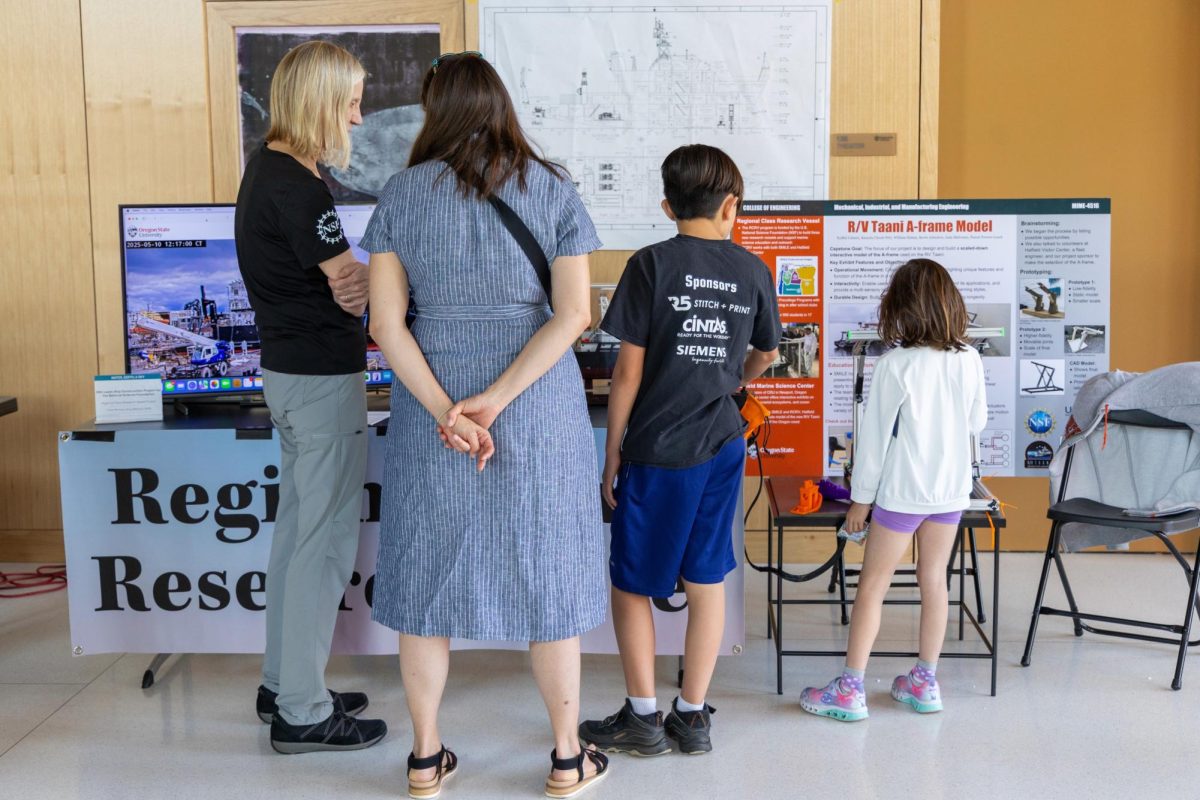
Ed Dever is a project manager for the Ocean Observatories Initiative. The initiative, a partnership between OSU, the Woods Hole Oceanographic Institution and the University of Washington, has been funded by the NSF since 2009.
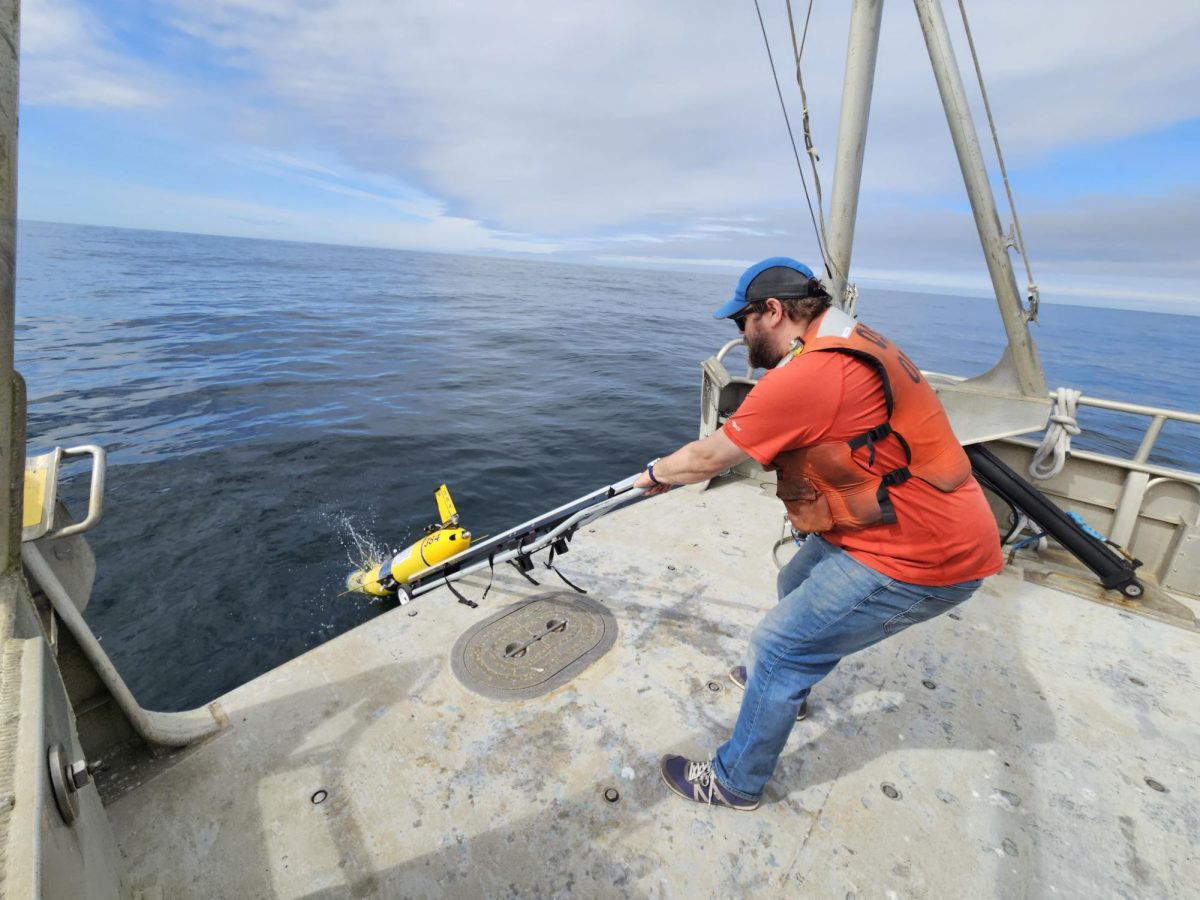
The OOI deploys moorings, ocean gliders and other technologies to collect long-term oceanographic data, including temperature, carbon dioxide levels and pH. The data is used by researchers and the public to study ocean acidification, marine heatwaves, earthquakes and other issues.
After a June proposal to decrease NSF funding by 55%, the OOI was informed it would need to prepare for a large funding reduction.
Dever and Ozkan-Haller believe that ongoing Senate and House negotiations will likely reduce the proposed cuts size.
Even so, according to Dever, the OOI has already had to let go of several individuals and eliminate five undergraduate positions.
For now, the OOI is focusing on preserving data continuity and keeping staff employed elsewhere at OSU. Cuts have forced the OOI to deploy only one mooring instead of the usual seven, and one ocean glider instead of four or five, affecting data collection.
Dever is concerned about the impacts of cuts on mid-career workers. Dever believes they have invaluable expertise that could be lost.
“The people stuck in the middle, if they leave the field altogether, I think that’s an enormous, long-term drain on the scientific enterprise of this country,” Dever said.
According to Perry Hystad, associate dean for research for the College of Health, a proposed 40% reduction in NIH health research funding would have significant effects.
“We have already seen the real impact of funding cuts, including the $9.5 million loss of SNAP-Ed funding that means fewer evidence-based nutrition, youth, and health programs in communities across Oregon,” Hystad said in an email.
“These cuts would also shrink opportunities for graduate students and trainees, weakening Oregon’s future health workforce and slowing the translation of science into better care, prevention, and policy.”
Katy Kavanagh, the associate dean of research for the College of Forestry, noted that researchers rely on grants to fund research and three months of their salary, making the increased funding uncertainty challenging.
Kavanagh also expressed frustration about the politicization of science, particularly with the impact on unbiased science of grant proposal determinations deviating from being based on merit alone.
“If you get into a political realm, sometimes there’s a shorter-term viewpoint like, ‘How is this going to impact my ideas this year?’ But most science is a longer-term vision and impact, and that’s often why it’s kept separate from politics.”
Kavanagh, Ozkan-Haller and Hystad expressed that OSU researchers were resilient, optimistic and creative. They urged people to stay informed and advocate for research.
Storksdieck remains ‘hoptomistic’- meaning that he is optimistic despite the challenging times. Even so, funding changes have been difficult.
“Sometimes, you have budget constraints and conflicting priorities, and your program that you receive funding from might not get as much funding as it did last year… but you have adjusted your operation to this broader context, roughly how much federal funding is available. You adjust when, almost overnight, the infrastructure that funds you is cut in half or even more. Then suddenly the entire system breaks down,” Storksdieck said.
“That’s just the game you play, but you play that game under relatively stable conditions. The conditions have changed.”