

























Editor’s Note: The last name of Zoe Pawlak was originally misspelled and has since been corrected.
At Oregon State University, there’s a place where anyone can tap into Oregon’s roots of brewing history or take to the skies to read historical papers about Ufology, the study of unidentified flying objects.
Located just beyond students studying on the fifth floor of the Valley Library, OSU’s Special Collections & Archives Research Center holds hundreds of thousands of historical items from over 1,400 unique collections.
Items held by SCARC include t-shirts, brewing taps, manuscripts, university records, student correspondences, photographs, videos, maps and oral histories. SCARC’s rare books collection even includes ancient cuneiform tablets from circa 3000 B.C.E.
SCARC offers access to view collections by appointment and provides support with navigating the collections and an individual’s research process.
The library also has an “Ask an Archivist” event where students can present their questions on what an archivist does or about the collections. The next event will be 3 to 5 p.m. Jan. 14 on the fifth-floor foyer of the library.
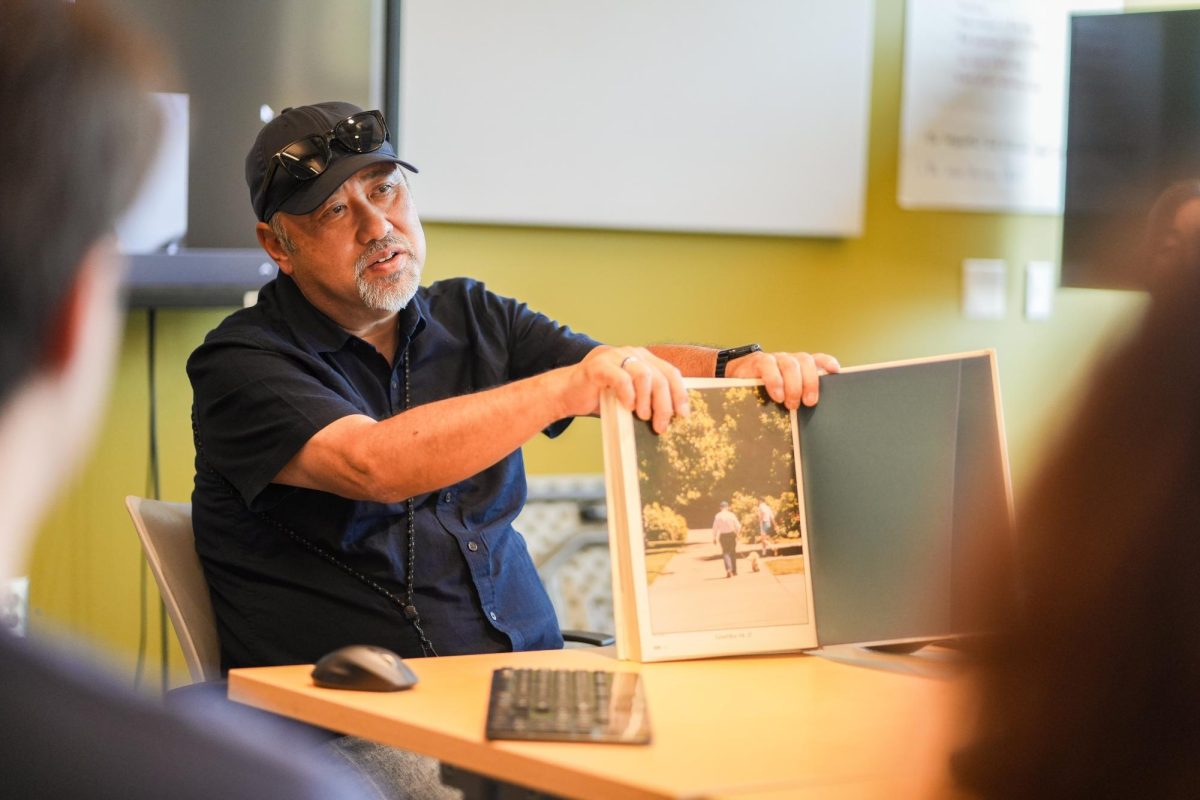
According to Rachel Lilley, the SCARC public services unit supervisor, in an emailed response, archivists at SCARC provide information, expertise and instruction on the use of primary sources in addition to helping with finding, accessing, managing and maintaining the conditions of archival collections.
Lilley noted that SCARC’s many collections are used by researchers from across disciplines in their studies.
“We once had a researcher visit us to look at our collection of fashion plates – an illustration, or plate, (used) in magazines and demonstrating fashionable styles of clothing – to make sure the clothing worn in the video game they were designing would be period accurate,” Lilley said.
“A number of researchers have used our maps collections to show environmental changes over time, and one researcher even used one of our maps collections to find an actual sunken treasure ship!”
Lilley said SCARC is known for holding the Ava Helen and Linus Pauling Papers. The collection contains over five hundred thousand items from OSU alumnus and two-time Nobel Prize-winning chemist and peace activist Linus Pauling, including personal and scientific papers, research, regalia, memorabilia and other items from his life. 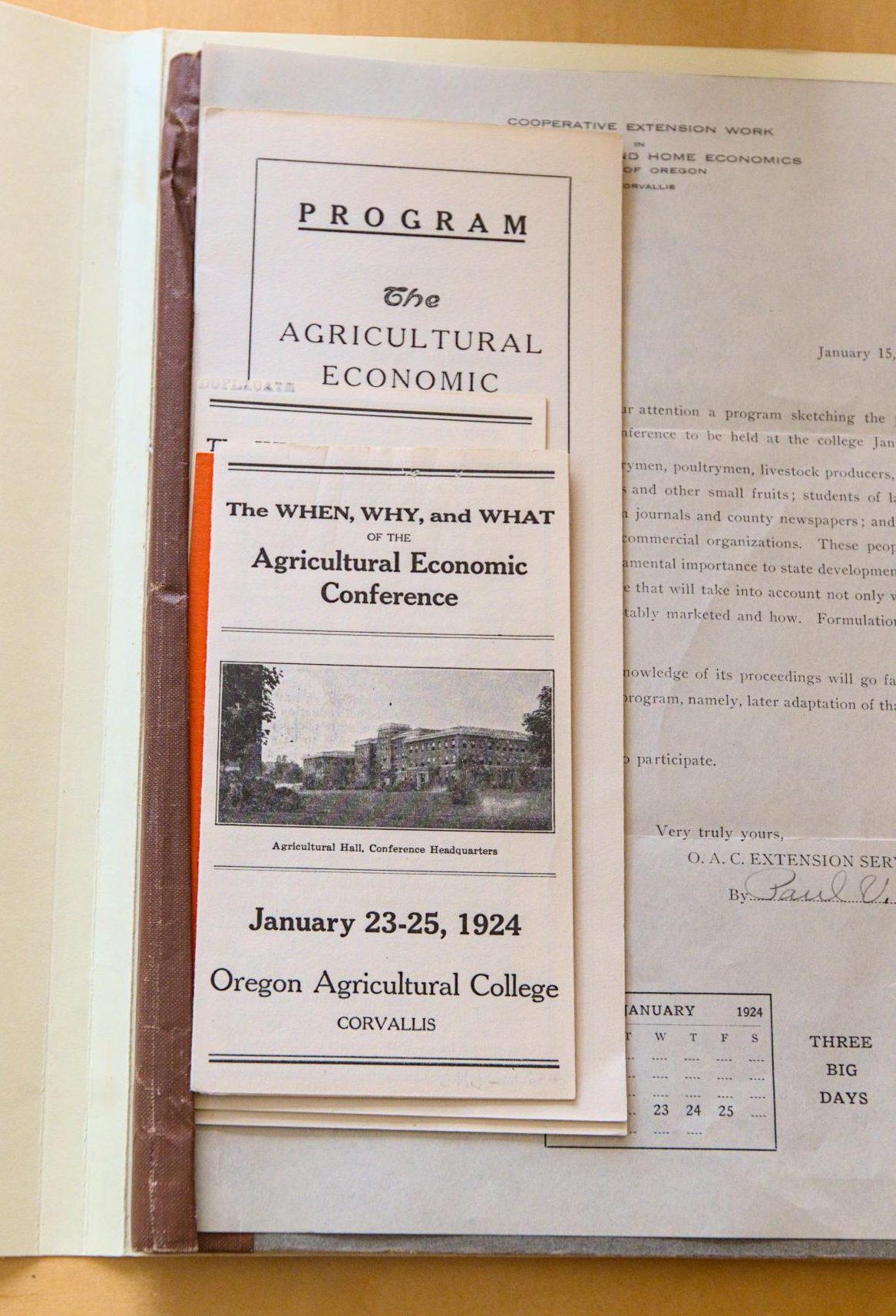
Lilley also noted that SCARC was home to several large collections as well, including the Oregon Multicultural Archives, the Oregon State Queer Archives and the Oregon Hops and Brewing Archives.
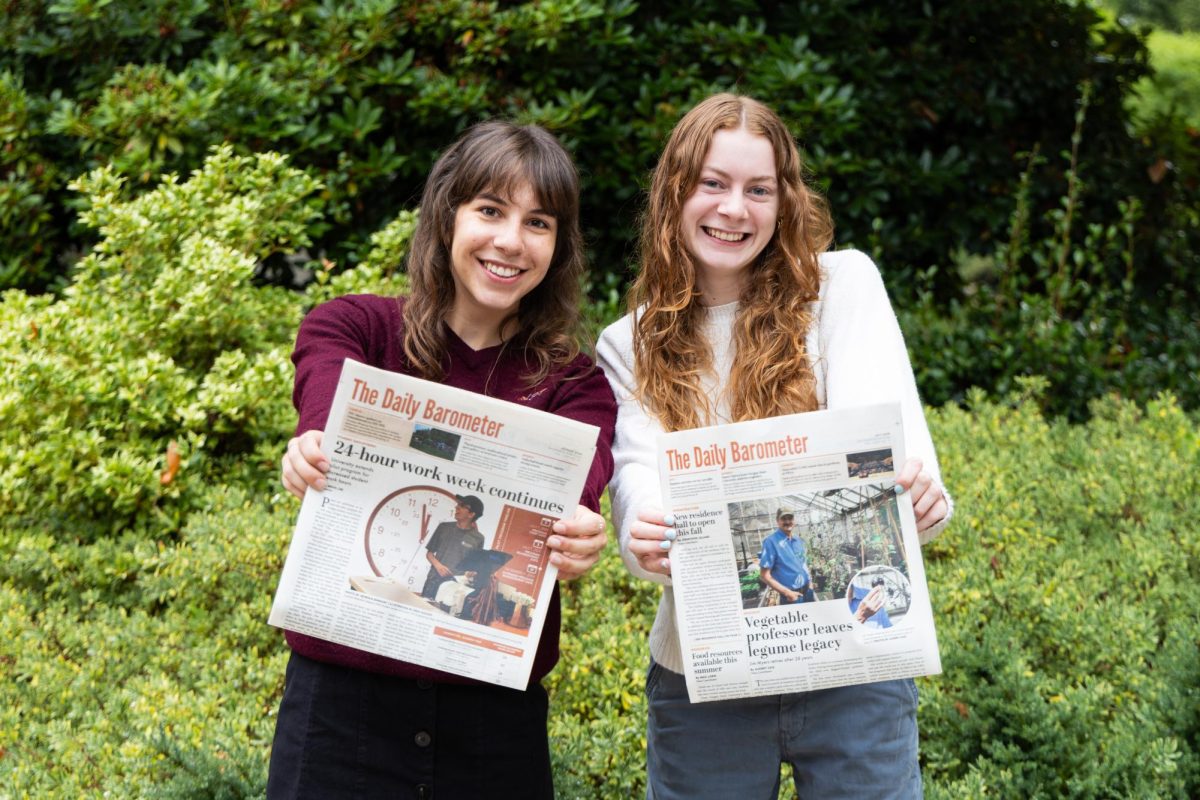
SCARC also has an extensive collection of OSU history, including historical editions of “The Daily Barometer,” the student newspaper, “The Oregon Stater,” the alumni magazine, as well as yearbooks, photos and other items.
Lilley emphasized that the collections are cared for by archivists so the public can benefit from them and use them.
“It’s not just the history of OSU, it’s (the public’s) history. We hold it in trust for you, and make it available freely. Our materials are priceless, in part because many of them don’t exist anywhere else but also because they document under-represented communities, support social justice, and connect us to our past,” Lilley said.
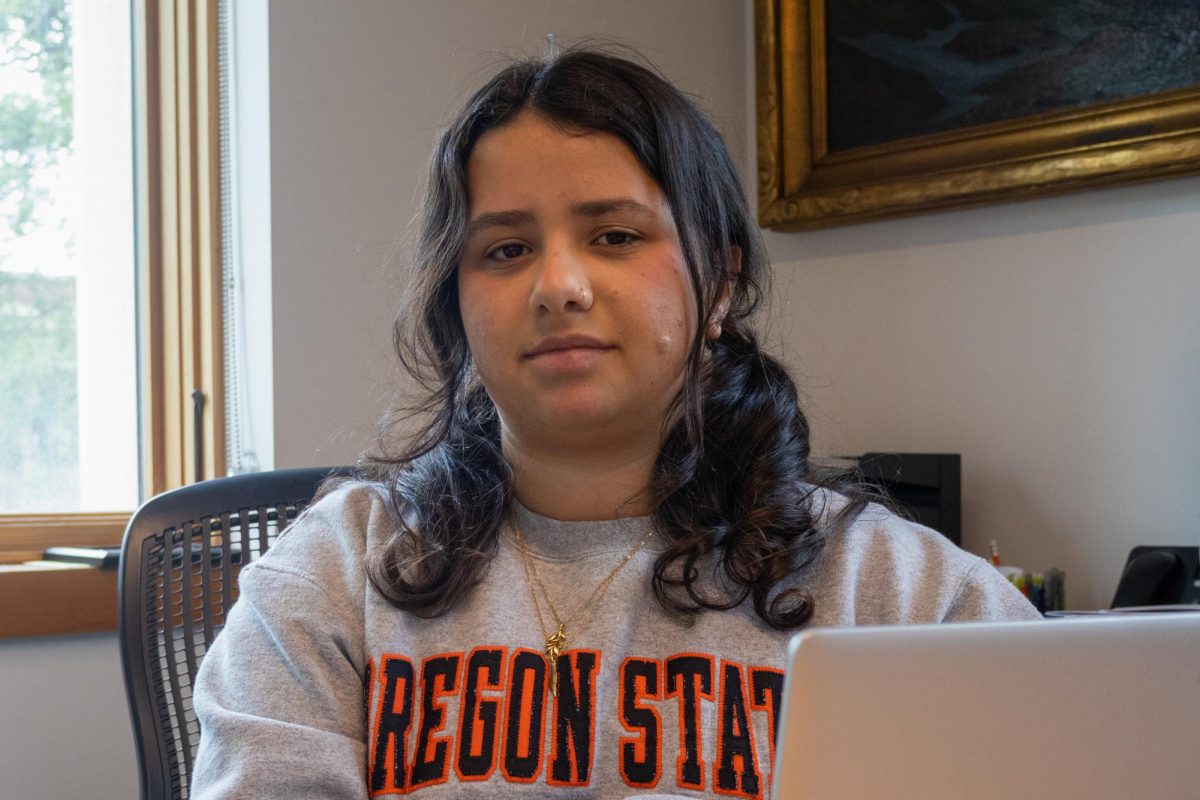
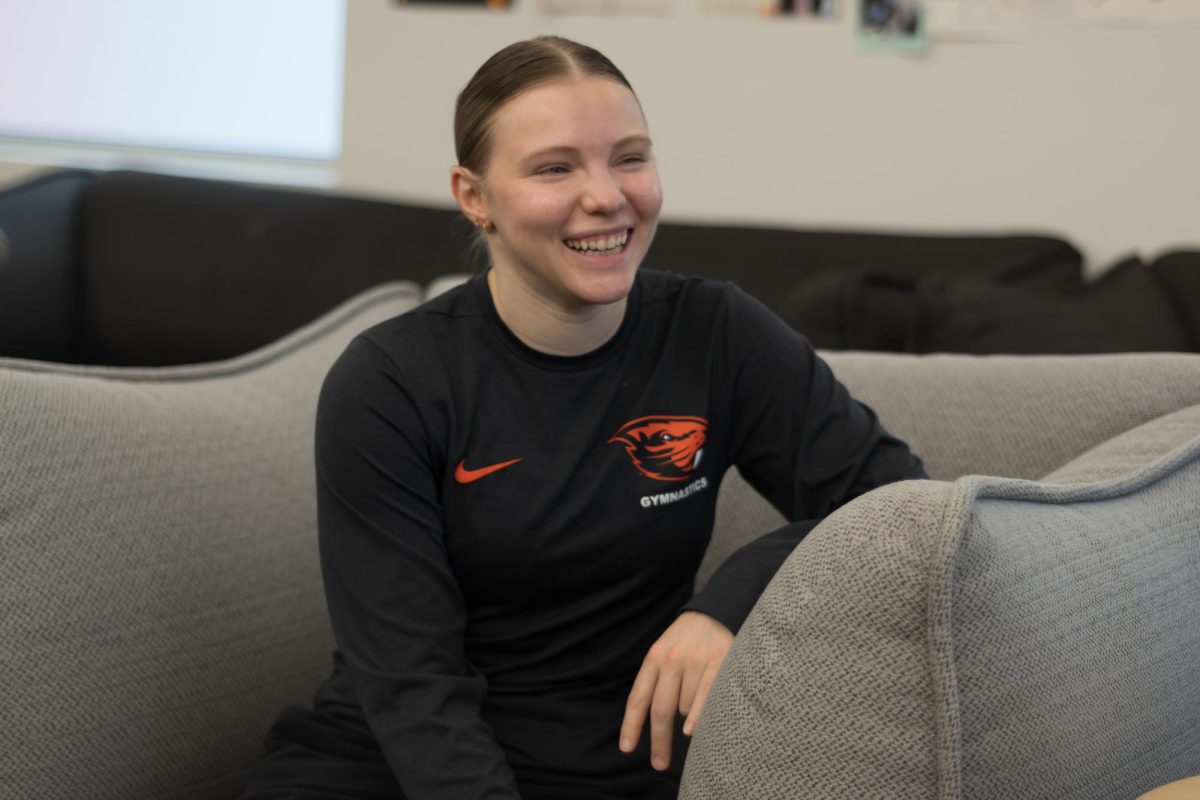
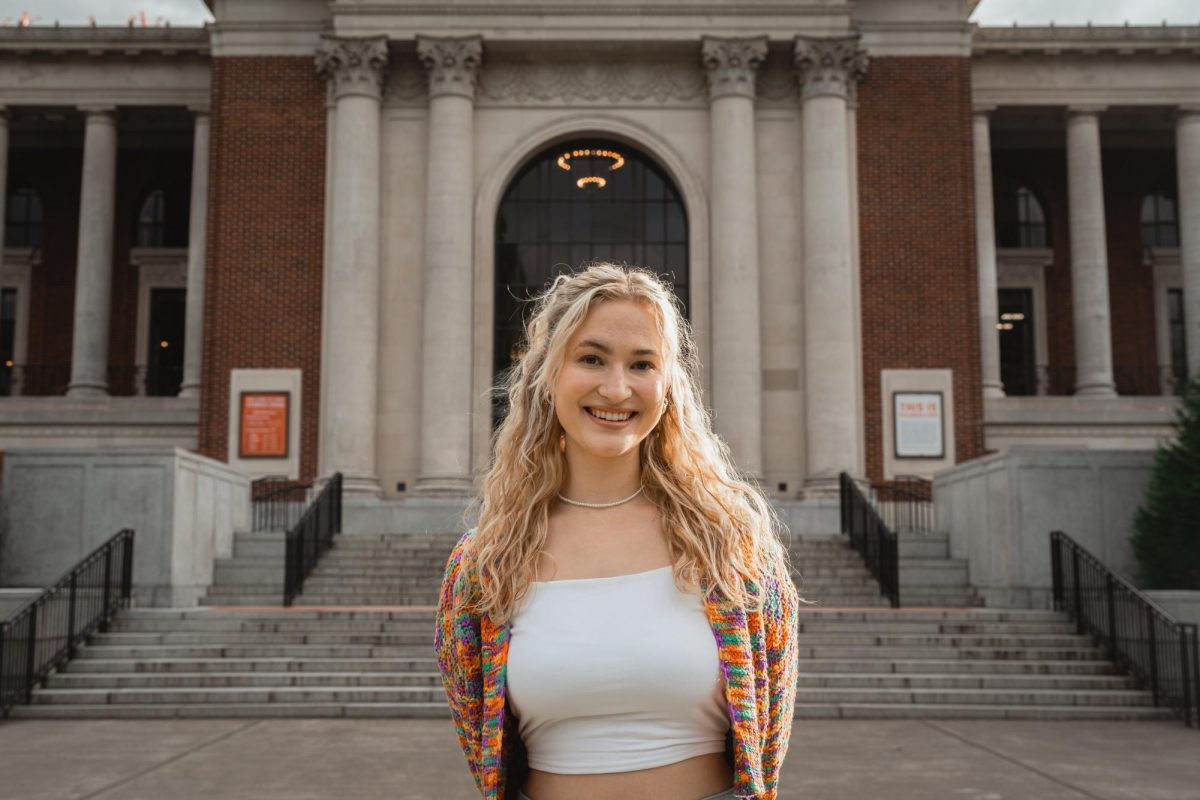
Zoe Pawlak, a fourth-year history and marine studies major, works as a student archivist at SCARC, where she helps with many tasks, including student projects, handling digitization requests, scanning, filing and collection management.
Pawlak said she is a history lover and that working at SCARC is her “campus dream job.”
Pawlak said her favorite item in the collections is a rare book called a ‘wunder cabinet,’ with small trinkets, items and other curiosities held inside. According to Pawlak, OSU holds two of only around 30 worldwide and noted that SCARC has many other unique items.
“There’s a lot of stuff in here that you just wouldn’t be able to get your hands on otherwise due to it being old or rare or just sort of niche. I think that everybody should give themselves the opportunity to come into contact with those materials,” Pawlak said.
Pawlak also expressed that the collections are open to everyone, regardless of whether they have a specific project to work on.
“You don’t need to be a formal researcher. You don’t even really need to have a question. If you just want to look at an old scrapbook or an old book or something from the Linus Pauling collection… you don’t need to have any purpose beyond just ‘I want to look at it,’” Pawlak said.
“People will get a little bit intimidated by the appointment system and by the fact that we have research in our name. But we’re not just for researchers. We’re here for everybody.”
Lilley shared Pawlak’s thoughts and said SCARC is open for everyone.
“You don’t have to be working on a project or assignment – it can be just for fun!” Lilley said.
Both Lilley and Pawlak encouraged interested individuals to engage with SCARC’s collections. SCARC currently hosts an exhibit called “Looking Back, Looking Ahead: A Retrospective of Exhibits in the Special Collections & Archives Research Center” on the fifth floor of the Valley Library.
SCARC also hosts a weekly open house event 10:30 a.m. to 1:30 p.m. on Wednesdays, where all individuals can look through curated collections.
More information on the events can be found on the OSU events website.