































































































The Oregon State University Faculty Senate approved a resolution rejecting the Trump Administration’s “Compact for Academic Excellence in Higher Education.”
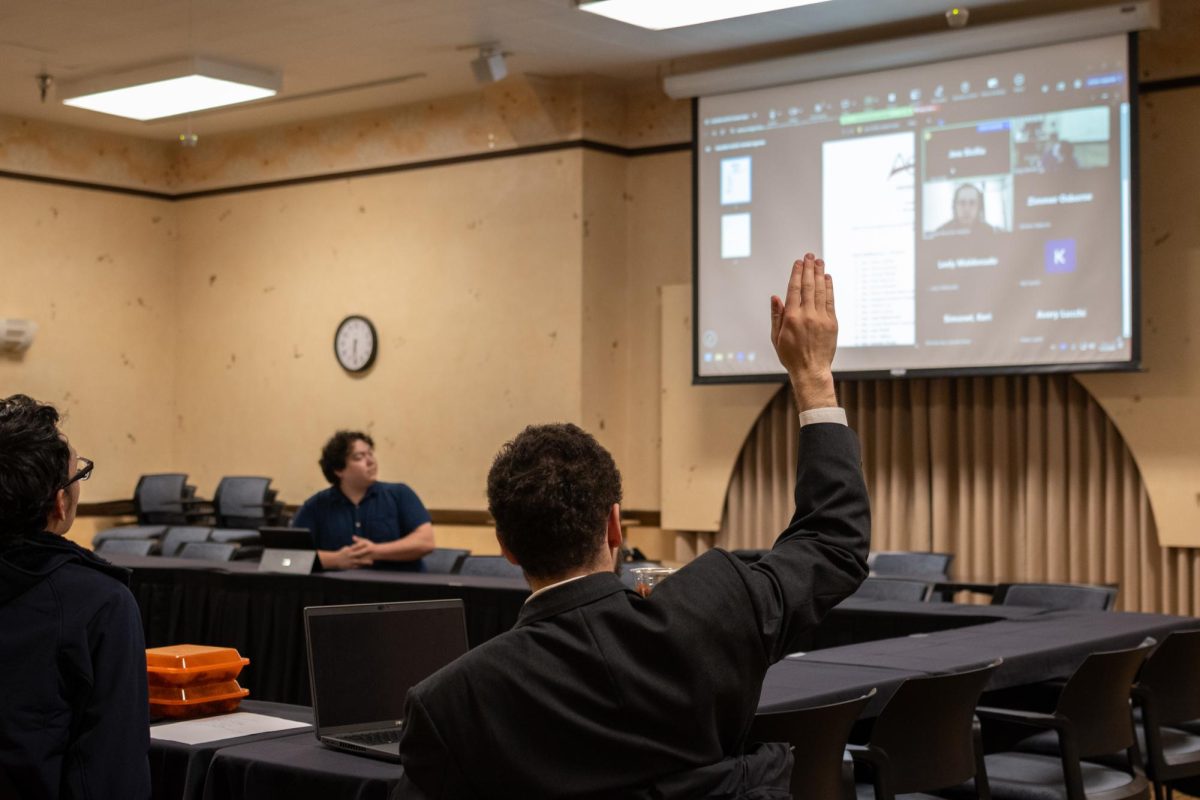
In a 63-21 vote, with 10 abstentions, senators approved the resolution proposed by the state of Oregon’s Interinstitutional Faculty Senate during a monthly meeting on Thursday.
Oregon’s eight public universities had previously adopted the resolution in November, rejecting the compact and “any successor instruments that condition federal support on political or ideological compliance.”
The compact proposed by the Trump Administration was initially offered to nine top American universities in October 2025, and they later expanded the offer to all universities. The compact was announced Oct. 1 with a response deadline of Oct. 20.
The compact made funding conditional on ideals such as banning race and sex as factors in admissions and hiring, a 15% cap on international students admissions and greater representation of conservative ideology on campus.
The compact offered federal funding for universities that signed on, and loss of federal grants for those who did not comply.
The IFS resolution called on the president and governing board of OSU not to sign the compact or other directives from the federal government that condition funding on “political directives” rather than “institutional processes.”
In addition, the resolution calls for coordination among Oregon and national universities to protect against infringement on the independence of higher education.
Some senators highlighted potential for backlash to the resolution by the federal government.
“Are we feeling courageous enough that we’re willing to put our own jobs on the line if it came to that?” Philip Mote said, a climate science professor and proxy senator.
“It’s easier just to go with the flow if no one is bothering us, but the reality is out there and it’s lingering,” Roberta Riportella said, OSU’s Interfaculty Senate representative and a College of Health professor.
Provost Roy Haggerty cautioned against the resolution, asking senators if it was a “wise” decision. Haggerty said that most Americans agreed with the goals of Trump’s higher education policies.
“If you vote to endorse the Interinstitutional Faculty Senate declaration, you are voting to endorse something the majority of Americans disagree with, and something that doesn’t even exist,” said Haggerty. “The compact’s not coming our way, it’s gone. In other words, it’s political theater to do this.”
Other senators replied to Haggerty’s comment, speaking in support of the resolution.
“If it is political theater – fine,” said Ingrid Scheel, a senior instructor of electrical engineering and computer science. “At least then someone will be able to say that I made a stance, that we made a stance together.”
“Let this be the litmus test to decide if we are courageous enough to combat this and then (a) 2.0,” said Brandi Douglass, a senator from Student Affairs.
Aside from the IFS resolution, the senate voted to update promotion and tenure guidelines within the Quality Teaching Framework, guidelines for how teaching is evaluated, passed in 2021.
The senate also voted unanimously to approve changing the name of the international studies major to global studies. This was intended to reduce confusion between the international studies major and the international affairs track from the public policy major.
In addition, a new class of faculty senators were sworn in at the meeting.
Jacob Hamblin, a professor of history, was sworn in as Faculty Senate president, and Prem Matthew, professor of finance, was sworn in as president-elect. In the Faculty Senate, the president-elect must hold this position for one year before becoming president.
The next Faculty Senate meeting is scheduled for Feb. 12.