





























































































Resident undergraduate students at Oregon State University will see a combined tuition and fee increase of 4.97% — weighted — for the 2026-27 academic year, the Board of Trustees decided on Friday.
The cost translates to a $720 per year increase for students taking 45 credits, according to Vice President for Finance and Administration and Chief Financial Officer, Carla Hoʻā.
Altogether, the 4.97% weighted average tuition increase falls just below the 5% review threshold for undergraduate resident tuition. If it were to go above a 5% increase, it would trigger a review by the state’s Higher Education Coordination Commission.
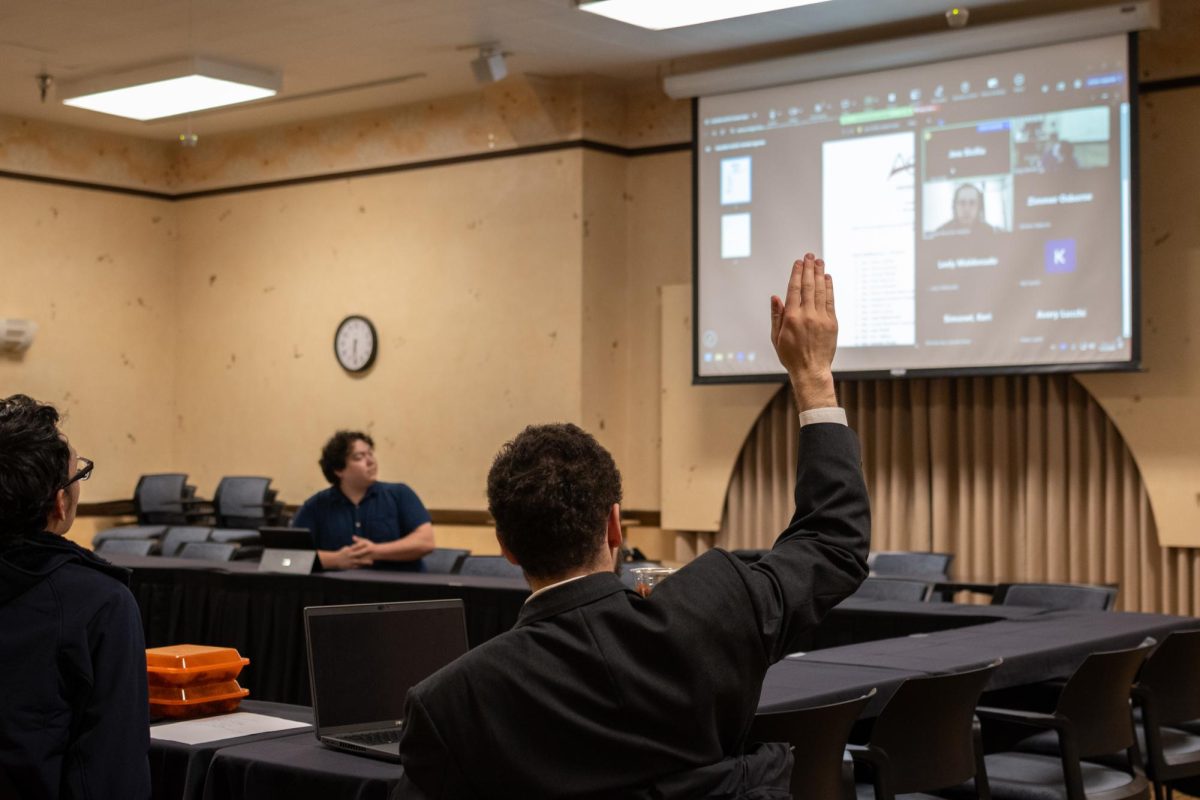
Board members voted with 12 in favor, two opposed and one abstention for the cost increase at the meeting, which was held in the Horizon Room of the Memorial Union.
The recommendation to raise tuition prices for current undergraduate students came from President Jayathi Murthy — by 5.75% for continuing students and 6.25% for incoming students. Murthy also proposed tuition increases between 2% and 5% for graduate and professional programs, depending on the program.
Undergraduate differential tuition rates are set to rise the most for College of Engineering students, at 9.2%, to support the expansion of the Engineering+ program, per the president’s recommendation.
Mandatory enrollment fees are not increasing. However, the university is bringing back a distance education fee of $15 per credit hour for Ecampus. In addition, the matriculation fee paid by first time students will increase for both undergraduate and graduate students by 4% to 7.7%.
The student services fee — which was previously an incidental fee — will be included as part of mandatory fees for the first time, according to the board’s report. Incidental fees approved by the student governments in Corvallis and at OSU-Cascases will increase by 3.3% and decrease by 4.2% respectively.
The university was facing a projected $54.5 million budget gap for fiscal year 2027 before tuition increases were approved at the meeting, but decreased to $30.8 million after approval, according to Hoʻā.
For the current fiscal year 2026, there is also a projected year-end shortfall of $19.1 million, according to Hoʻā.
“This has largely been driven by what we’ve been talking about in some prior conversations about Ecampus enrollment and seeing declines in some of our most significant programs and not seeing that increased growth in other programs for Ecampus,” Hoʻā said.
“Most programs on Ecampus are growing healthily. The singular event that caused the $19.1 million drop is really the meltdown of computer science which we are addressing through a panoply of new programs,” Murthy said.
According to Hoʻā, the projected gap for the fiscal year 2027 budget is largely due to increases in employee compensation and mandatory cost increases for the university — like utilities, debt service and contracts.
Trustees Karla Chambers and Lauren Camou voted in opposition of the tuition increase proposal.
“I think as we move from a $19.1 million dollar debt this year to $30.8 (million) next year, we add to that,” Chambers said. “This truly is the easier discussion this year and I trust everyone around this table, but I’m going to tell you we need a sustainability plan because we’re not on a sustainable pathway here.”
Camou worried that the increase would “harm marginalized and underrepresented students.”
Board Chair Román Hernández expressed support for the proposal, but refrained from voting because he is the parent of a current OSU student.
Murthy responded to a question asked by Camou about the $7 million revenue difference between choosing a 3.5% tuition and 4.97% tuition increase.
She acknowledged the higher tuition scenario added burden on students, but said that it was better to raise tuition than risk cutting jobs.
“The difference is that I can raise money to support students, all right,” Murthy said. “I can raise money to get scholarships. There are people on this board who can give money to support students, but there’s nobody on this board who can afford to continue employing these 70 extra employees into the future.”
Vice President for Student Affairs Dan Larson said the university is planning to add between 100 and 200 scholarships of “anywhere between ($4,000) to $8,000” next year for incoming resident undergraduate students with the most need.
“I know this is a burden to students, so I know none of you take this lightly,” Murthy said. “I am with you there a hundred percent, but I will tell you this — in a state in which student support and support for the university is very low, tuition increases are a part of the levers that we have to use to keep our university functioning.”