





































































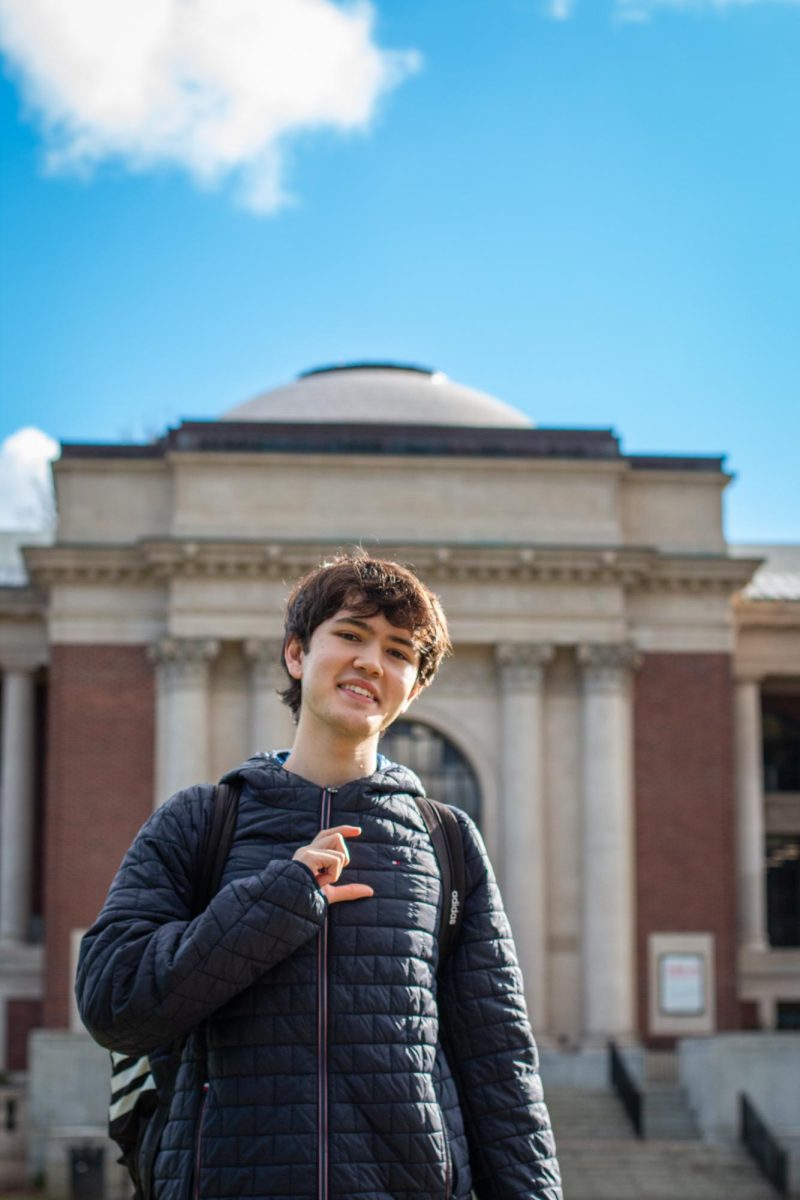











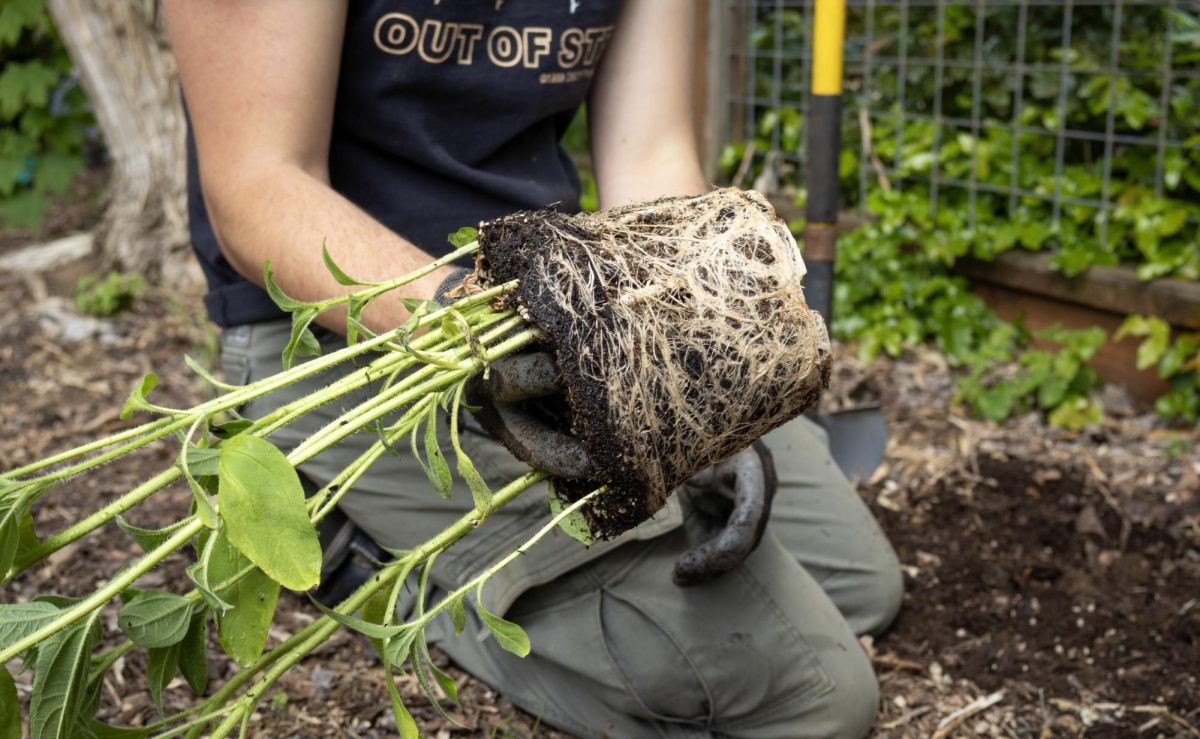
For Milo Tisdale, food is never just something to eat; it’s something to understand.
As a botany and horticulture student, Tisdale spends much of his time thinking about where food comes from, how it grows and why eating seasonally matters, especially for students who may feel disconnected from agriculture.
“I think that every person has the capability to have a green thumb. I think that it’s a very human trait,” Tisdale said. “One of the things that really makes us stand out as a species is agriculture … If a plant dies, you can always plant a new one, or plant something else, or try something different … It’s really not that deep.”
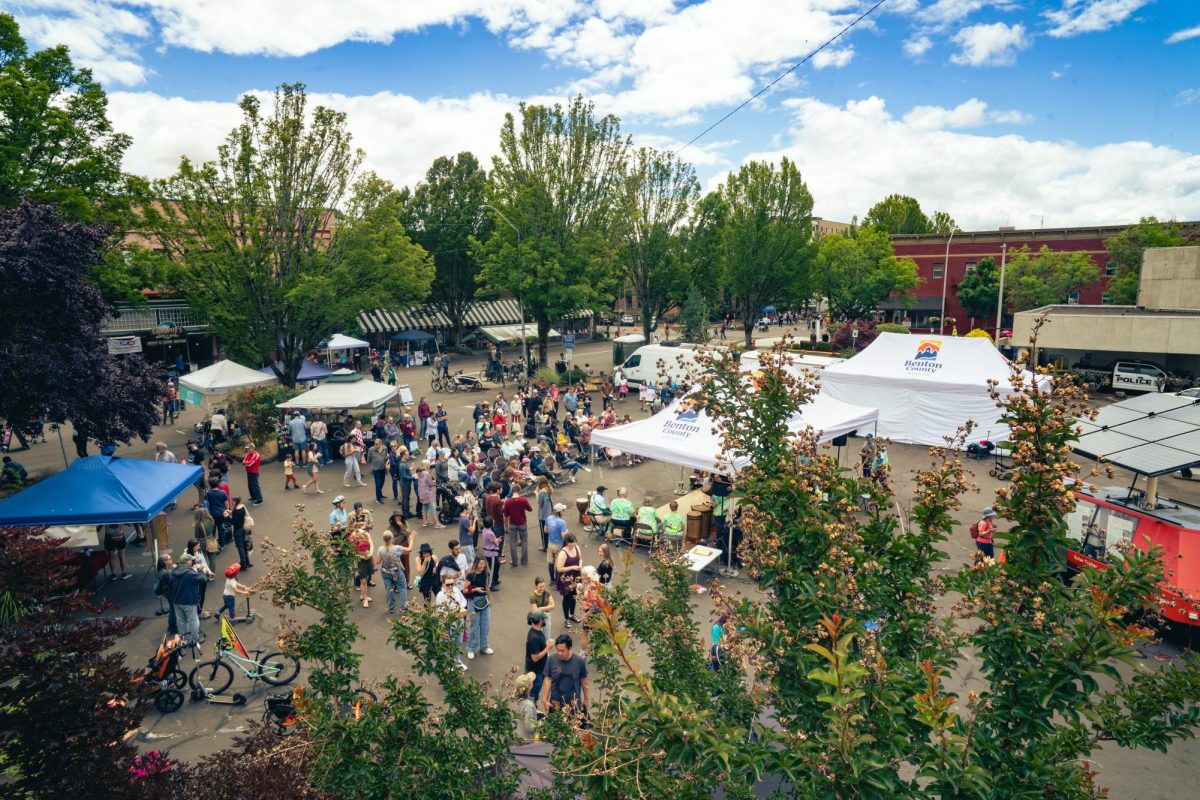
If gardening isn’t quite your interest, you can still access seasonal produce this spring, sold by local farmers from 9 a.m. to 1 p.m. every Wednesday and Saturday downtown at the Corvallis-Albany Farmers’ Market.
Artichokes, asparagus, peas, bok choy and strawberries are all fresh local produce you can buy at Oregon farmers’ markets this May, according to the Farmers Market Fund.
Eating foods that are in season helps to support local farmers, reduces the environmental impact of the food system and is associated with better-tasting produce, according to the Seasonal Food Guide.
The American Heart Association also asserts that eating seasonally is a more economical choice for consumers and provides a nutritional edge.
One campus resource that focuses on seasonal produce is Oregon State University’s Food Forest, a student-led garden located next to Callahan Hall.
“People can see like, okay, this is when tomatoes normally grow, or this is when cucumbers grow,” Tisdale said. “Because when you go to the grocery store, you just have produce year-round. So you don’t really understand the seasonality of these things. But when you walk through space like this, you can see the way it changes through the seasons.”
According to Tisdale, eating seasonally makes a difference both in the flavor of produce and its environmental impact.
“Most people don’t really bat an eye eating a tomato in December, but tomatoes don’t grow in December, so they have to be grown halfway across the world and shipped. But when you do that, you pick the fruit when it’s not ripe, and then they get chemically ripened,” Tisdale said. “You can definitely taste the difference between a chemically ripened tomato and a tomato that’s straight off the vine during the summer.”
According to Tisdale, he will eat canned tomatoes and other preserved goods, but he makes the conscious choice not to eat produce that’s out of season.
“I’ve had people push back and say, that’s a really privileged take, but I would push back on that and say I think it’s privileged to demand that you can eat something that doesn’t grow naturally, and so you have to have someone else grow it somewhere else, ship it to you and use a lot of fossil fuels,” Tisdale said.
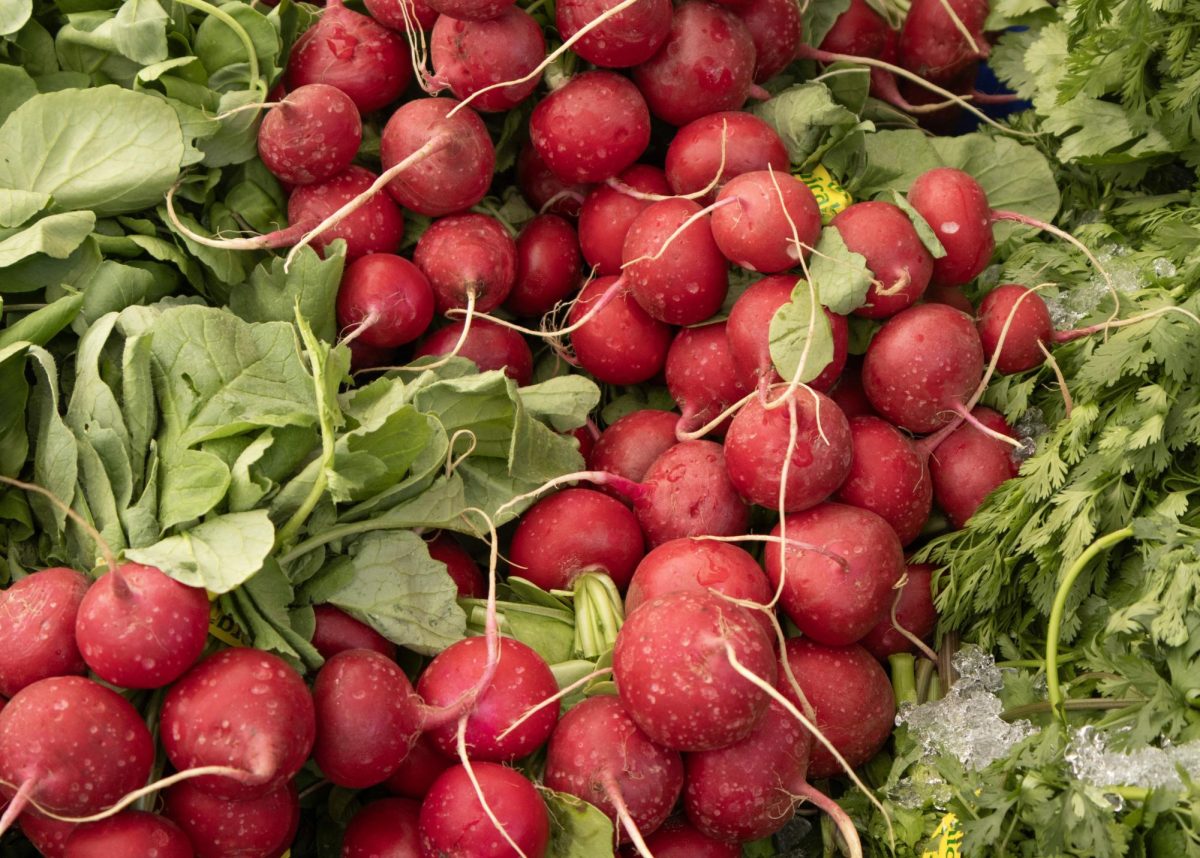
Tisdale recommends that students interested in connecting more with the food they eat try their hand at gardening, even if they find it intimidating.
According to Tisdale, eating seasonally is also a much more affordable choice.
“If you buy a really good quality organic greenhouse-grown tomato in December, it’s going to be really expensive,” Tisdale said. “But if you’re buying a really tasty tomato in the summer, it’s a lot less expensive because they’re just a lot more prolific and there’s a lot less cost going into it … Eating seasonally does really save a lot of money; it just takes a little bit of adjusting your eating habits, planning your meals around the seasons, which again, to me, adds a lot of beauty to eating.”
In the future, Tisdale hopes to convince the university to establish an Edible Gardens Coordinator and Educator position to help coordinate between different OSU departments and the Food Forest. He hopes that eventually this can include having classes in the space, providing internship opportunities, coordinating with the dining halls to use the produce, creating educational materials and engaging in outreach.
While those plans look toward long‑term institutional support, Tisdale’s approach to the garden remains rooted in everyday stewardship. He welcomes students to harvest from gardens like the Food Forest, but asks that people do so respectfully.
“You should never be pulling up a plant by the root,” Tisdale said. “My general rule of thumb is that I shouldn’t be able to notice that people are harvesting. That’s the epitome of (what) a perfect harvest is; I visually can’t really tell that the plant has been disturbed in any way.”
According to Tisdale, he is almost always in the garden and welcomes students to come say hello and ask questions.
“This garden really means a lot to me,” Tisdale said. “I’d love to help people get more involved with gardening … I think if more people grow even a little bit of their food, the world will be a better place.”