


























































































No, it’s not an ogre in a swamp, it’s a recreation center in a landfill. Meet SHRec.
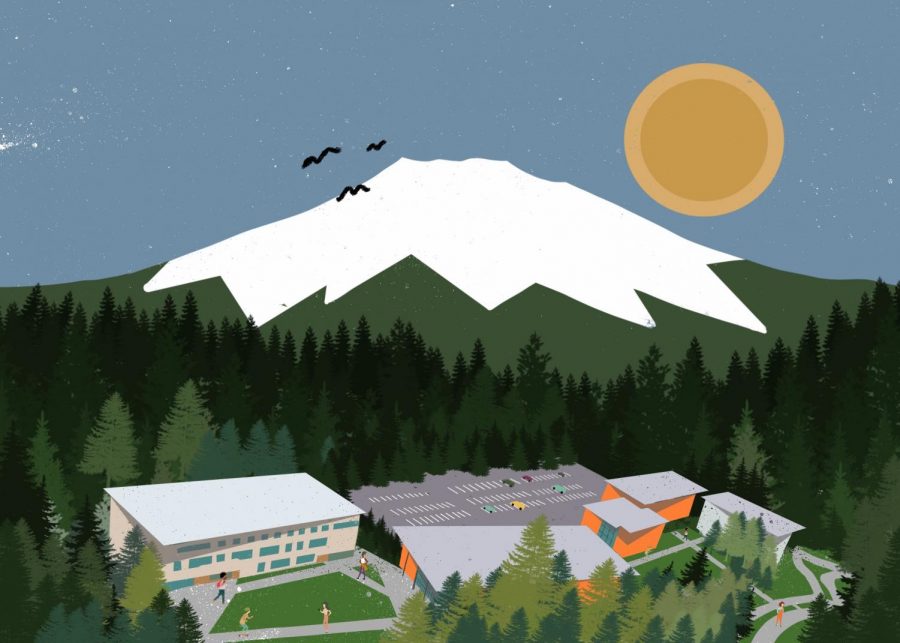
Oregon State University-Cascades is set to transform a former landfill and pumice mine into prime campus real estate, advancing a $44 million project that will unlock 17 acres of buildable land for future academic buildings, housing and a new Student Health and Recreation Center.
The OSU Board of Trustees’ Finance and Administration Committee approved advancing the project to the construction phase — known as Stage Gate II — clearing the way for work to begin on the long-planned development. The project is expected to be completed by summer 2028.
The approval marks a major milestone in OSU-Cascades’ decade-long strategy to turn underutilized “brownfield” properties into a “thriving” campus.
Instead of paying a premium for ready-to-build land, the university acquired 118 acres of contaminated property — including a 72-acre construction and demolition landfill and a 46-acre pumice mine — at below-market rates.
The university then spreads cleanup costs over time through phased remediation projects that leverage state, federal and private funding.
“This approach minimizes upfront land costs while leveraging state, federal, and external funding to support sustainable development,” according to project documents.
Phase III will remediate roughly seven acres of the remaining landfill, using clean material excavated from the site to fill and stabilize the adjacent pumice mine. The work will create a 17-acre development pad and install infrastructure to support the proposed SHRec, future resident halls and academic buildings.
The landfill currently sitting in the middle of campus has long been described as a “physical and visual impediment” to campus growth.
The SHRec facility is planned as an approximately 40,000-square-foot center designed to improve student wellness, retention and graduation rates. The recreation and health hub is included in the 2026 Oregon Legislative session.
“Access to integrated health, counseling, and recreation services will support student retention by reducing the likelihood of withdrawal associated with physical or mental health challenges,” the project summary states.
University officials acknowledged several risks going into the approval decision, including whether enough suitable fill material would be available on-site, the potential discovery of prohibited hazardous waste in the landfill and uncertainty over external funding.
To mitigate those concerns, OSU has a Prospective Purchaser Agreement with the Oregon Department of Environmental Quality limiting liability, has designed flexibility into grading plans to adjust elevations based on available fill and set aside roughly 5% of the budget specifically for hazardous waste contingencies.
The university also plans to hire a general contractor with a background in landfill remediation.
The remediation plan has already drawn national attention. Earlier phases — including work that enabled construction of Ray Hall and the Student Success Center — earned OSU-Cascades a 2025 EPA Brownfields Phoenix Award.
Since becoming a four-year campus in 2015, OSU-Cascades has become a “significant” economic and community driver in fast-growing Central Oregon, according to the project summary. University officials say Phase III is an “enabling investment” that completes the core land development needed for decades of future growth.
“This Phase III Project creates buildable land in the heart of the OSU-Cascades campus to support decades of future academic and research focused buildings as the campus enrollment grows,” the proposal states.
