









































































The Department of Public Safety at Oregon State University has one primary goal: serving the people. They aim to practice that every day, in ways most students may not notice.
Of the more obvious ones are the public safety officers who protect students around campus, which includes jump starting cars, letting people into buildings and campus police officers who act as law enforcement on campus.
Many people may not know, however, the things they do to keep campus safe behind the scenes.
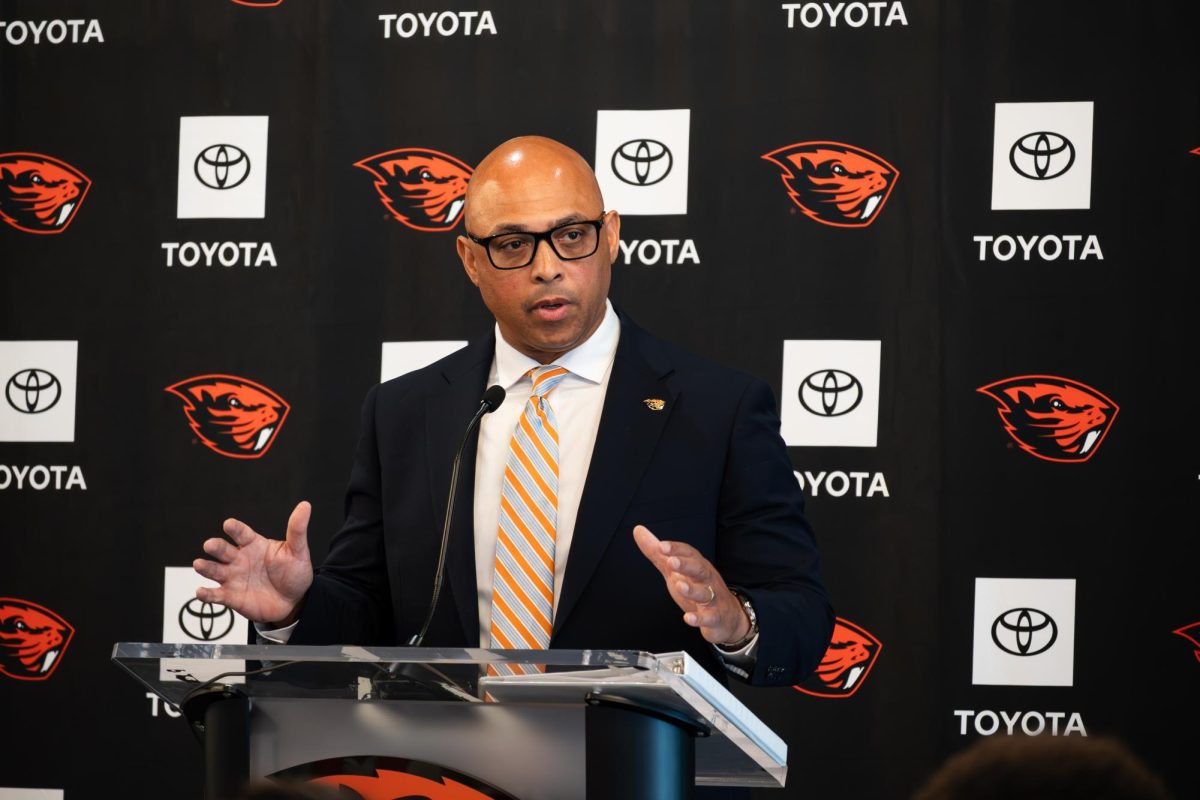
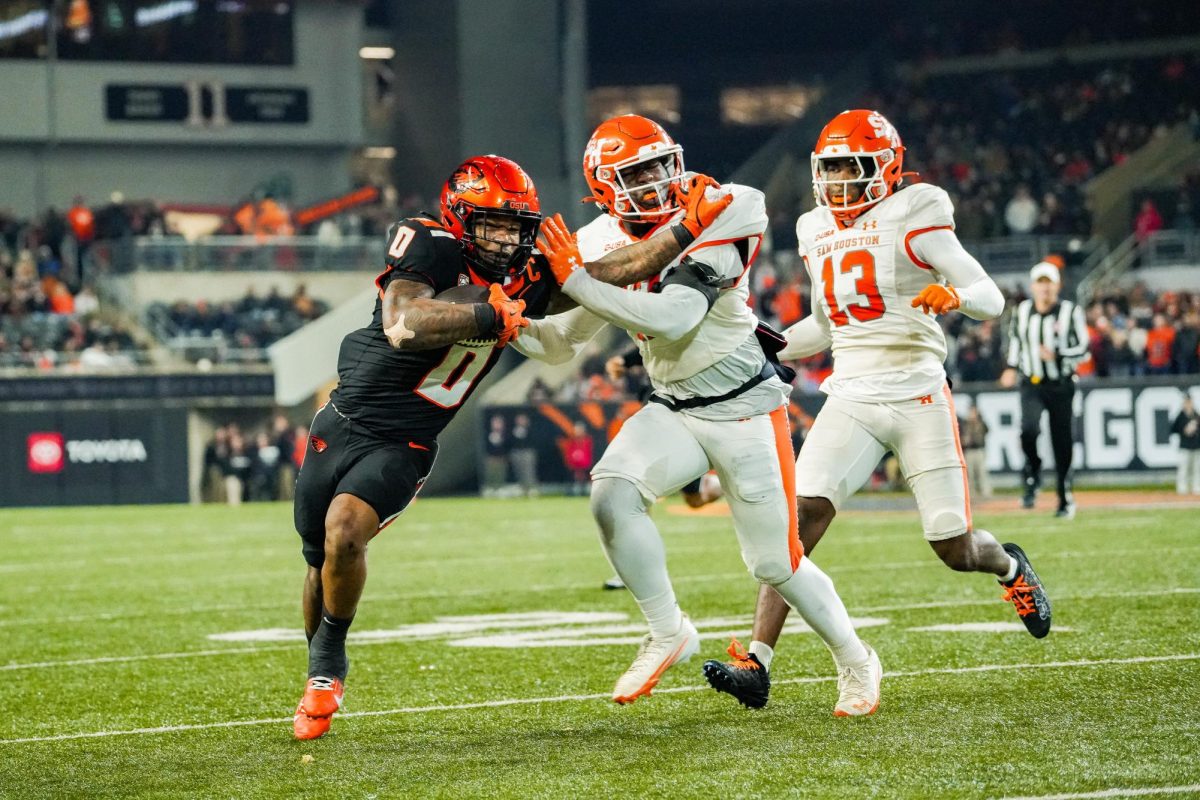
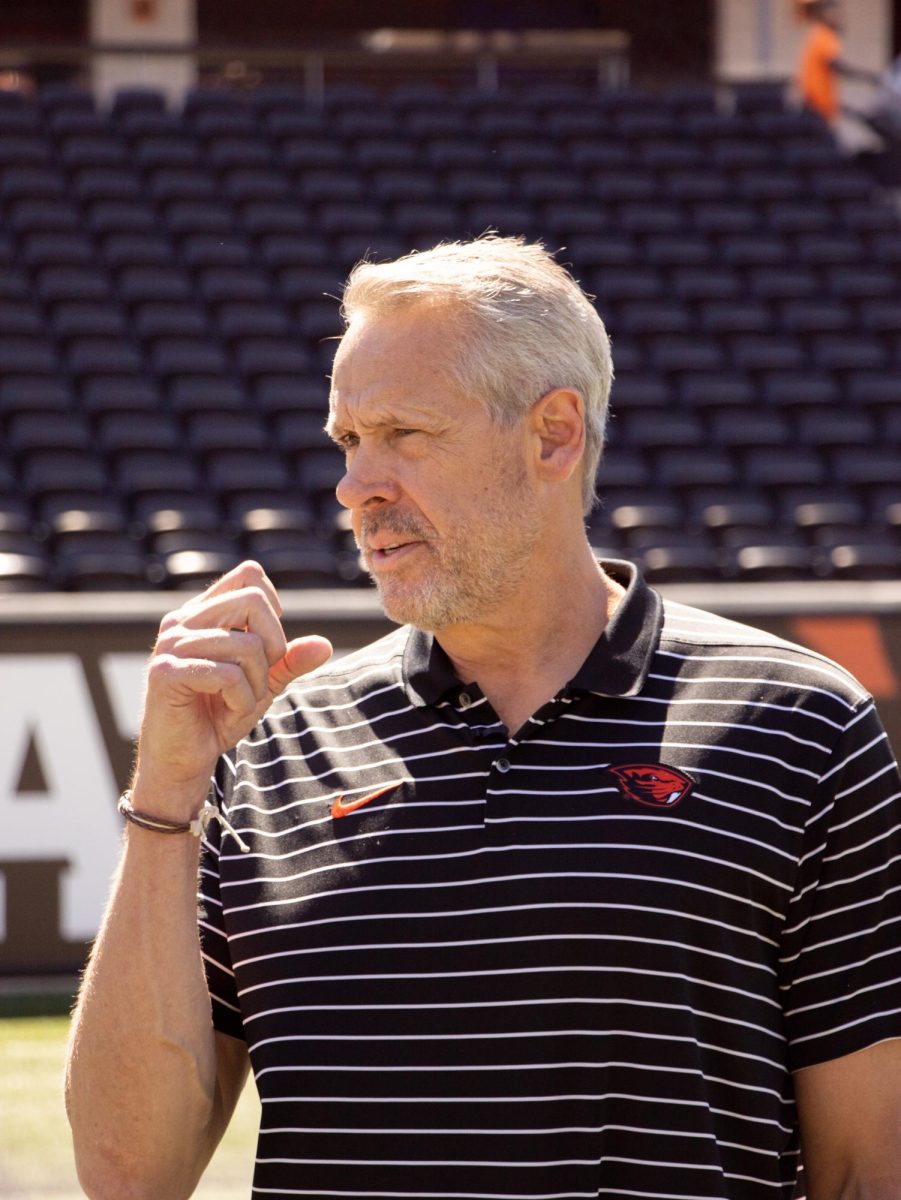
Take football games, for example. Captain Jefferson Schrader creates plans for how they will keep people safe at football games, which includes utilizing officers from at least seven other local police departments and sheriff’s offices, in addition to other emergency services like ambulances and the fire department.
On a whiteboard in Schrader’s office he writes out who is on duty for each of these departments on game day, so he can plan out who is going to be stationed where.
“Once I have all of the names of the people, then I create what we call an ‘Incident Action Plan.’ And so it’s probably about a 30 to 40 page plan,” Schrader said. “Once I have all of that together, then I turn around and I create a PowerPoint. And then the day of the game, about three and a half hours before the kickoff, we have a big meeting… and all of those police officers show up.”
DPS has many departments including evidence, records, cleary, dispatch, computer forensics, emergency management, patrol, community outreach and financial.
Every student on OSU’s campus receives emergency alerts. Those alerts are sent out primarily by Michael Bamberger, who works as the emergency preparedness manager for the Emergency Management Department.
Not only does he send out the alerts, but he also develops plans for how the campus will respond to a major event.
“We help write the plan, (for) how to support the football game,” Bamberger said. “Then I do ‘what if?’ And then if the what if happens, then we roll into that version of the plan. So my job is to think about all the bad stuff.”
The DPS office has a large conference room, called the Emergency Operations Center, and it is set up to be used in case of emergency. If something happens on campus – ranging from winter weather to genuine disaster – the conference room is set up to act as a command center. It is equipped with physical maps and icons on the walls, just in case something happens to technology while they are trying to create a plan.
Possibly the most well-known aspect of DPS is the Patrol Department, which consists of 13 public safety officers and 13 police officers.
“If you were to call at two in the morning because you just came back from a bar and you got dropped off at a parking lot and you’re scared to walk across campus – if you called dispatch, we would send a PSO to either give you a ride or just make sure you get there safe,” Schrader said. “They are so oriented to just safety and serving people.”
Also working for DPS is a Community Outreach team, consisting of Nick Herman, Patrick Sloma and Cedar the wellness dog. Herman and Sloma are also PSOs. They are responsible for engaging with students. Herman also runs the DPS social media accounts.
Herman is an OSU alumni, and has found serving the community as a Public Safety Officer in the outreach team to be rewarding.
“I really like kind of being that bridge between what people’s perceived expectations were going to be at law enforcement, and then kind of breaking those down,” he said. “Making that a good experience for them is very important for, you know, kind of what their expectations are going forward.”
Herman even instructs self-defense classes around campus and for sororities.
“I do the women’s self-defense classes, so that’s a lot of fun,” Herman said. “We’ve got one tomorrow, and then I’m doing two more this weekend, one with Kappa Kappa Gamma and one with the Alpha Thetas. And so it’s just a really cool opportunity to provide women with more empowerment… So just, giving people that extra sense of security when they’re out walking.”
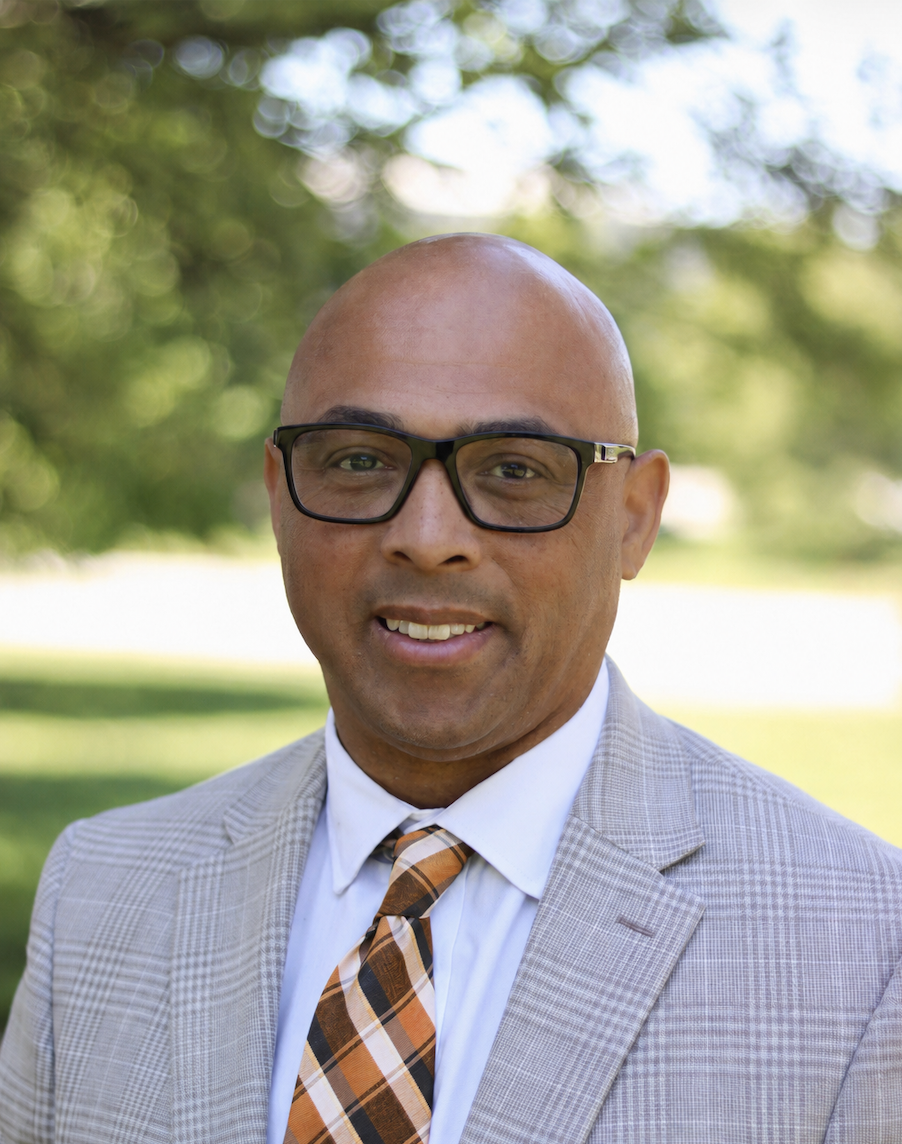
Schrader has worked in law enforcement for around 32 years. He worked for the Linn County Sheriff’s Office for most of that, before retiring as sheriff in 2021, and later coming out of retirement in 2025 to be a captain at DPS. For him, the job has always been about helping people.
“I find it personally fulfilling to be able to help people. And that was always my goal,” Schrader said.
During his first year as captain he hopes to develop a deeper relationship with the OSU community.
“Every day we should reach out to someone and just say hi. It costs nothing to be nice and it has lots of rewards,” he said.
Those looking to learn more about DPS are encouraged to register for the Citizens Academy, which will be held every Wednesday between April 15 and May 13. The Citizens Academy will give the community a chance to see what goes on at DPS, from how their patrol cars are set up to how they handle evidence, and hear insights from those who work there.