
































































































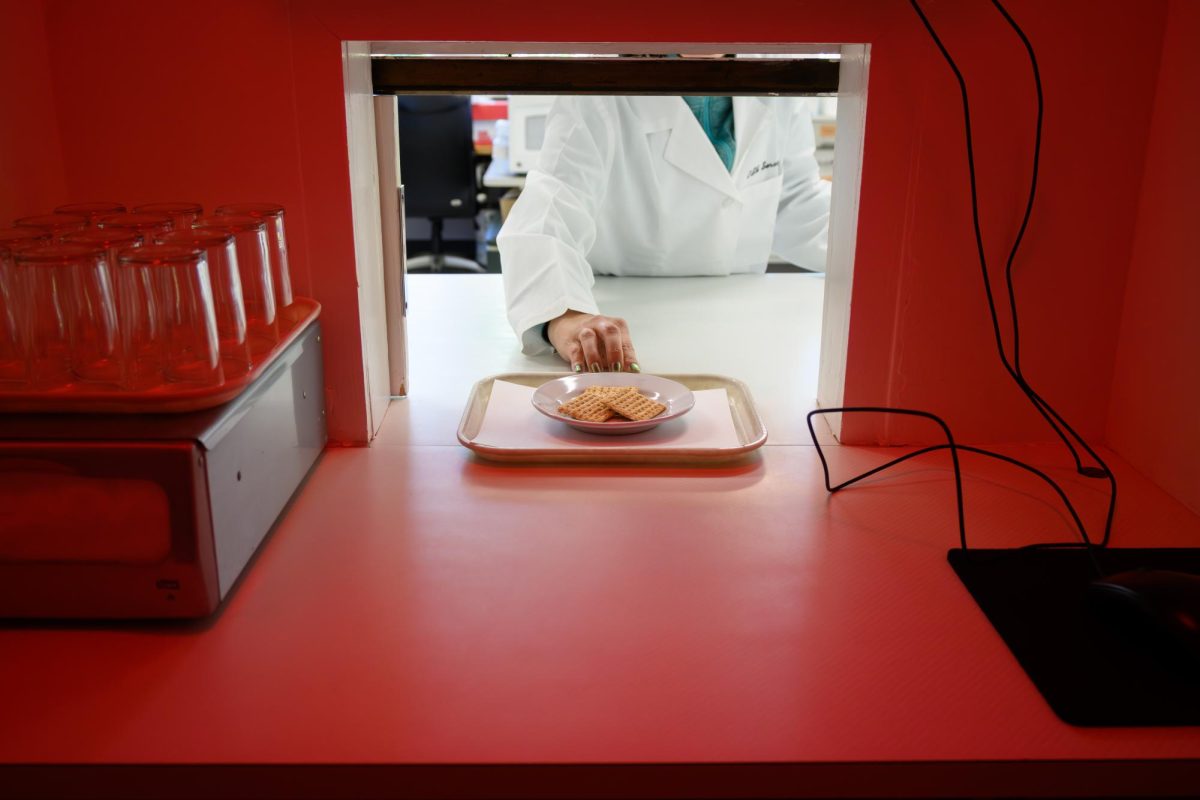
Half a dozen sterile, white, LED-lit cubicles line the wall. A TV on the other side closely monitors each cubicle and the tasting that takes place within them.
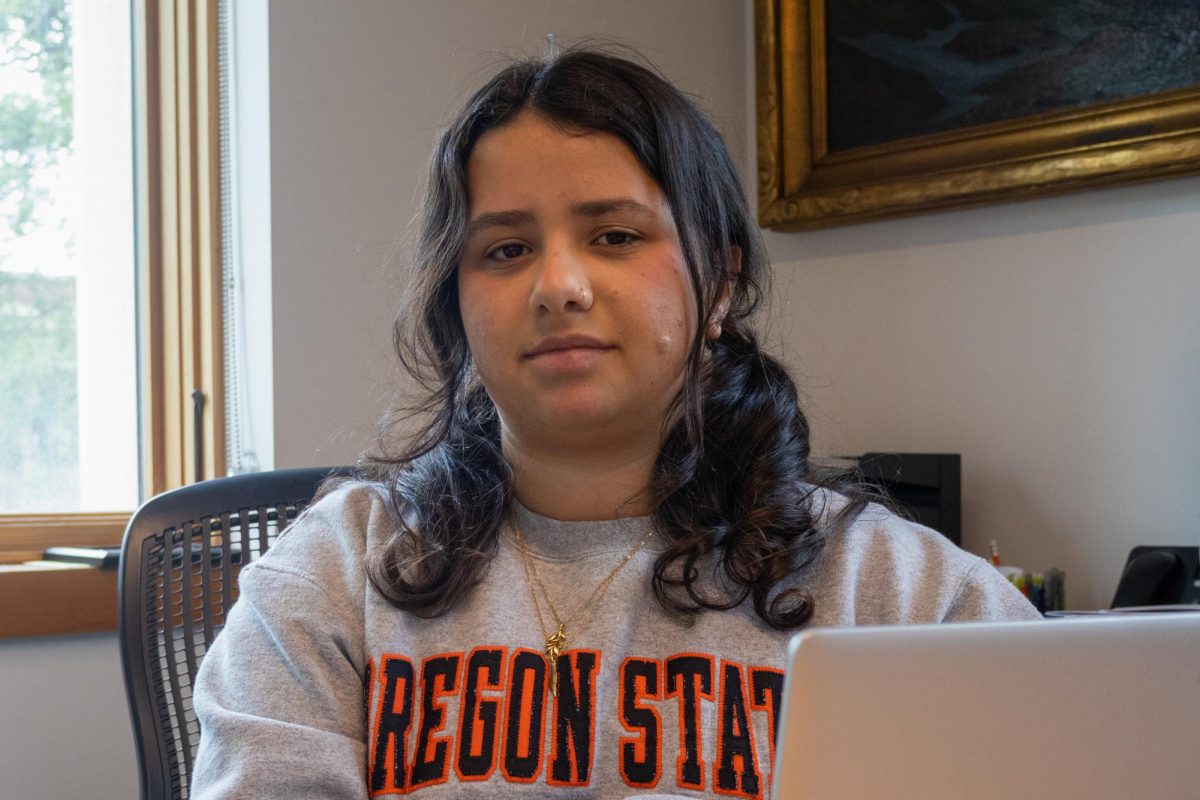
This is Oregon State University’s Food Sensory Testing Lab, which is overseen by Project Manager Sara Maruyama.
The lab analyzes consumer research methods to inform companies of their products’ sensory qualities, market readiness and price estimates.
According to Maruyama, the lab is researching everything from trail mix to Dubai chocolate. Meaning every crunch, crack and snap could possibly change products on the market.
Maruyama noted that some current events have influenced the operations of the office.
“The main reason (for slow business at the lab) is because the economy has been bad,” Maruyama says. “Gas prices are through the roof, so freight is really expensive. Ingredients are really expensive. Companies are being more cautious or conservative about how they spend their money.”
Maruyama also explains that an ongoing labor shortage has impacted the way companies manufacture food.
“I think within the food industry you will definitely see more cost-cutting,” Maruyama says. “You will see companies, sadly, trying to cheapen their products.”

April 29. Foods are tested in isolated booths for various methods of consumer testing and
research. (Liam Flannery)
According to Maruyama, companies will sometimes substitute expensive ingredients for more affordable alternatives. Maruyama notes that this could be purely cost-related, but companies can change ingredients for a variety of reasons.
“Ingredient swaps aren’t always for cost savings. Some companies seeking a cleaner label will swap a dirtier ingredient for a more natural one and it almost always costs more,” she says.
In an email, Maruyama adds that war and conflict are another cause of ingredient substitution. She notes that international conflict can disrupt the supply chain and potentially influence the availability of certain ingredients on the market.
“Either suppliers do not have (the ingredient), or it is not certain that the supply will be available in the foreseeable future, regardless of cost,” Maruyama said in an email. “Furthermore, unavailability of any ingredient tends to drive up the cost of suitable substitutes because demand for them is higher.”
Maruyama notes a time in recent history in which she experienced this change first-hand.
In 2022, at the beginning of the war between Ukraine and Russia, sunflower lecithin, a common ingredient in chocolate, was becoming harder to source.
Consequently, companies had to switch to a soy lecithin alternative, and while it did not change the flavor, it introduced an allergen that the food did not previously contain. Maruyama noted that soy is one of the big nine allergens in the USA.
According to Maruyama, the sampling process begins with asking the client what they are testing. Then, they narrow down questions like how many samples they want to test or what their taster questionnaire will look like.
“We’ll talk about what flavors they want to test,” Maruyama says. “Overall liking and purchase intent are probably the two biggest questions we ask. Everything else is more specific to the product.”
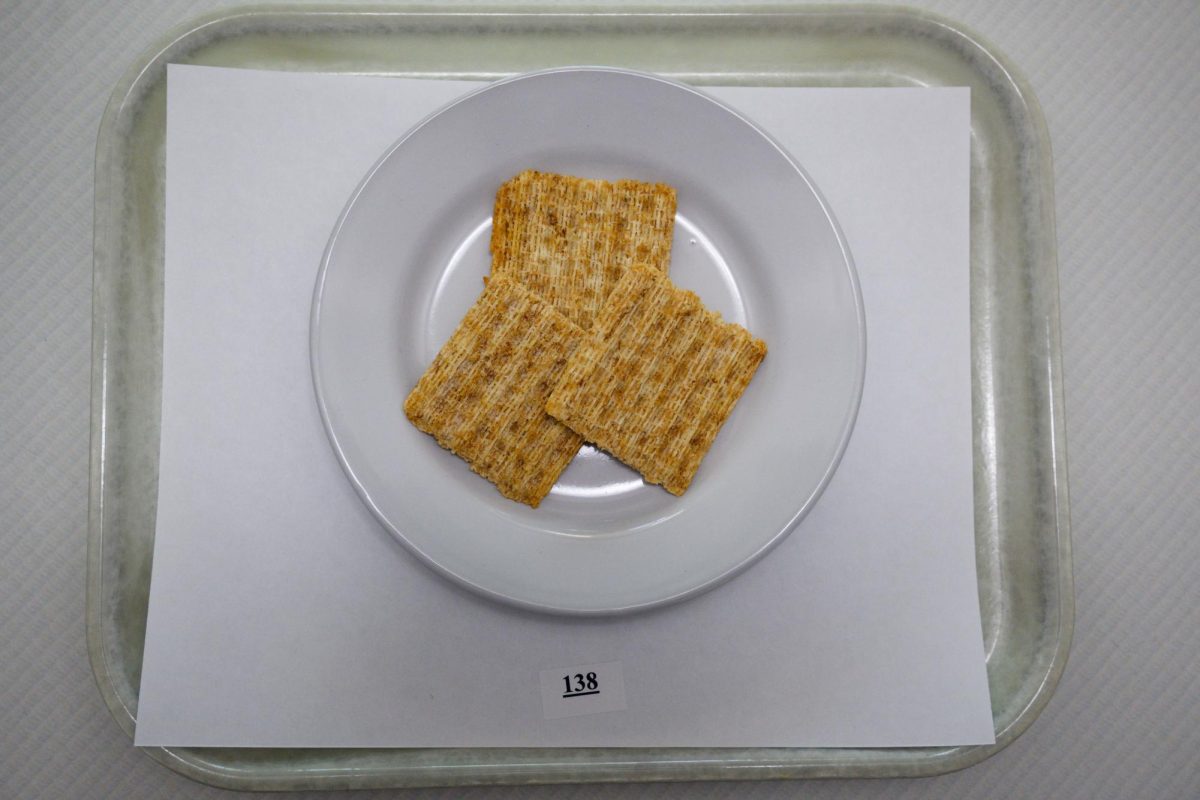
Maruyama uses coffee creamer as an example. She narrows down the questions to, “How much do you like or dislike the coffee flavor? How is the coffee flavor? How about the sweetness? The creaminess?”
With this process, companies get their desired feedback and testers, made up of students and community members alike, know exactly what to look for.
Similar to other commodities like fashion and entertainment, food goes through trends. For instance, recently, Maruyama has noticed an increase in products targeted towards healthier eating.
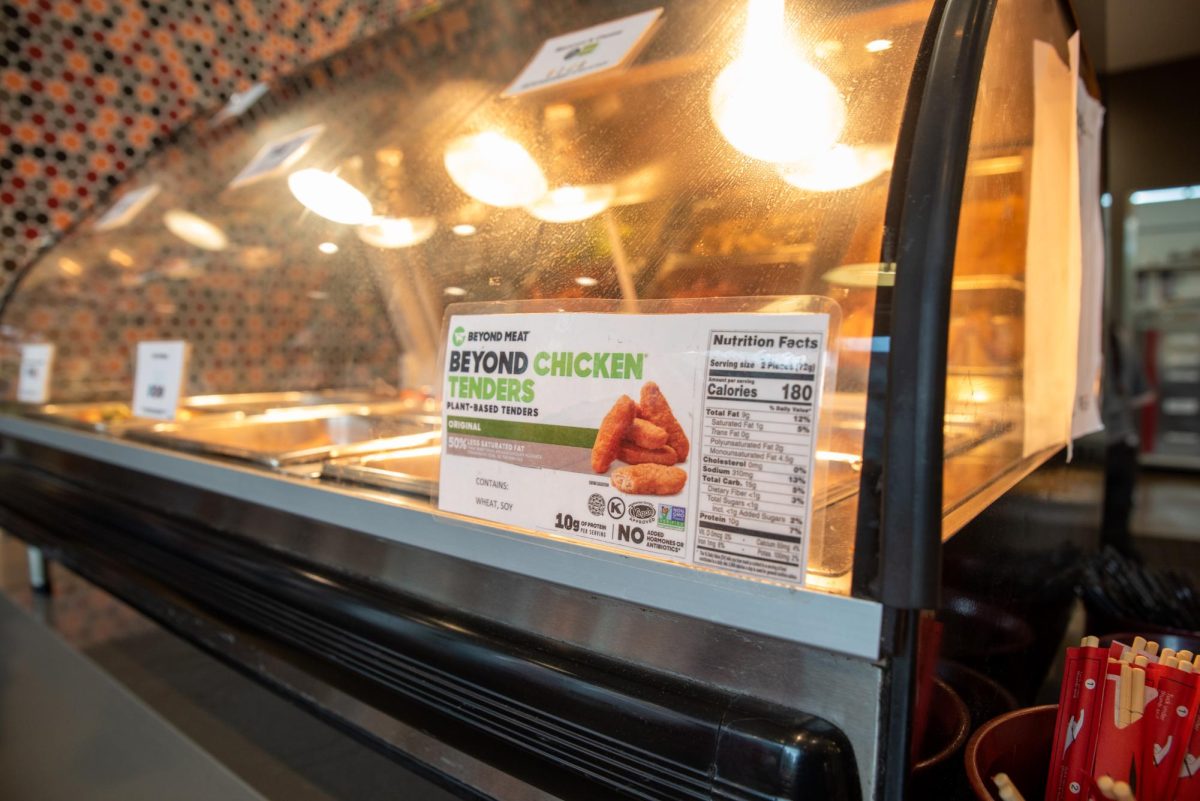
“Food companies recognize it is an area they can innovate in,” Maruyama says. “High protein and low sugar is another one. I’ve had some companies that are interested in testing with GLP1 users.”
According to an article published by Johns Hopkins University, social media has a major influence over diet, and the most recent internet trends promote a high protein intake.
Trends in consumer products are not limited to consumer reception. Disruptions to global trade and the availability of resources force innovative ideas to develop and invite new testing possibilities.
Students interested in potentially joining the Food Sensory Lab as either a tasting panel member or as an undergrad researcher can find more information on the lab’s website.