
















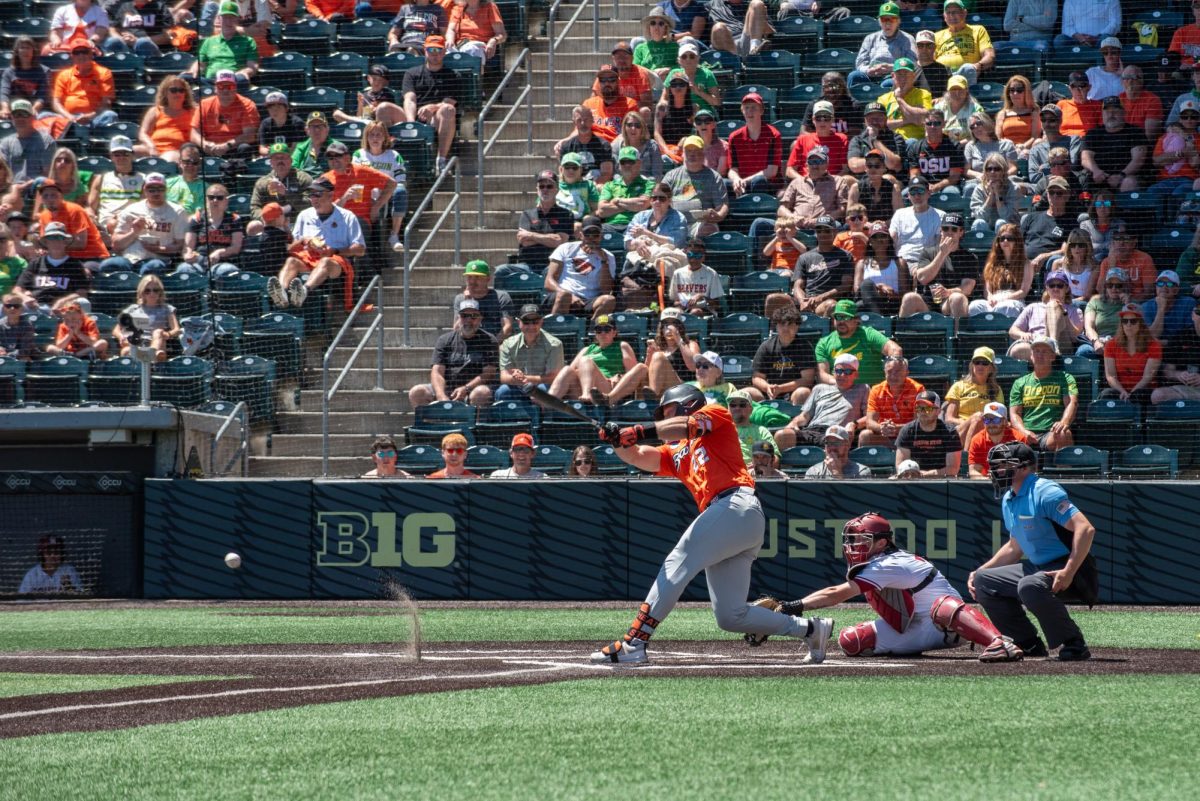
















































Countless hours of practice and effort hold up the Oregon State University baseball team, but what about the fuel that drives them? What kind of food keeps the team running?
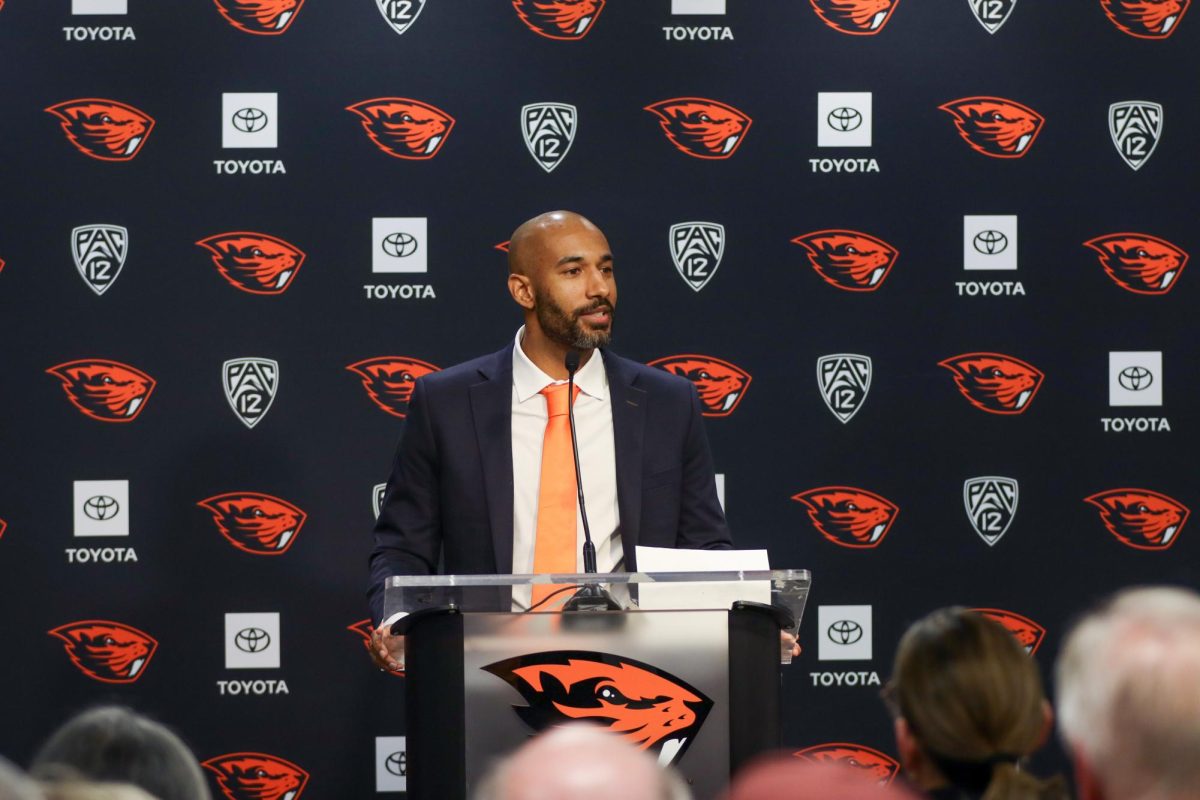
According to Assistant Athletic Director and Director of Sports Nutrition Toni Langhans, many of the specific choices come from the athletes themselves.
“What we like to do offseason is education,” Langhans explained. “So we’re not sitting around spoon-feeding them, we like to do more of the education piece of it so that they can go grocery shopping on their own, do some cooking on their own, kinda learn what they need to.”
This approach gives the athletes more freedom to make choices about what food they eat, while still making sure that they’re in line with both their personal and team goals.
It’s critical for the team that they’re both eating enough and at certain times. The players lift weights at 6 a.m., so if they don’t eat something beforehand, they won’t have the energy to get through their exercises and practice.
Currently, the team eats breakfast together Monday through Thursday, and during the season they eat lunch together as well. Eating together, both in Corvallis and on the road, ensures the players are hitting the macronutrients they need while building camaraderie amongst the team.
“They eat pretty well on the road,” Langhans said. “Because if they are losing weight as the season goes on, weight is equal to power. So if everyone’s losing weight during the season, then we’re not going to have very good hitters. We’re going to have people who, at sixth inning, are exhausted and so, it really behooves them to make sure that they’re on top of it.”
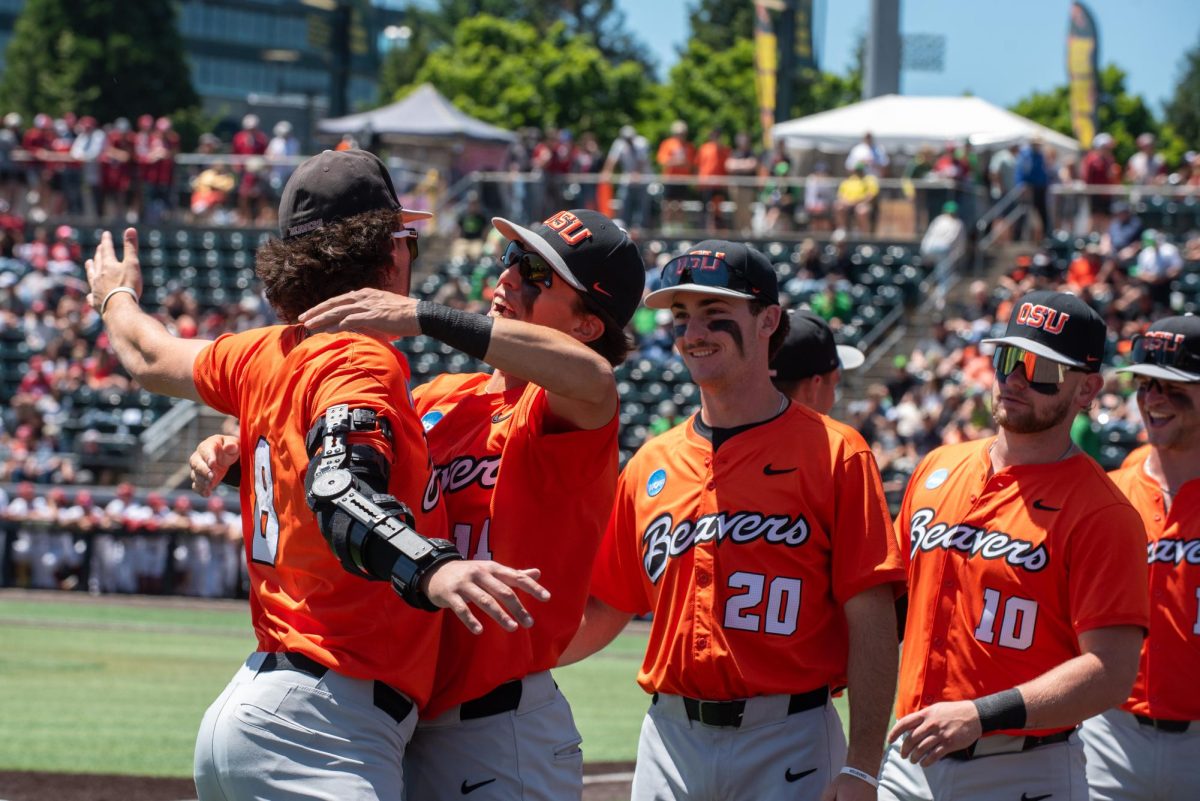
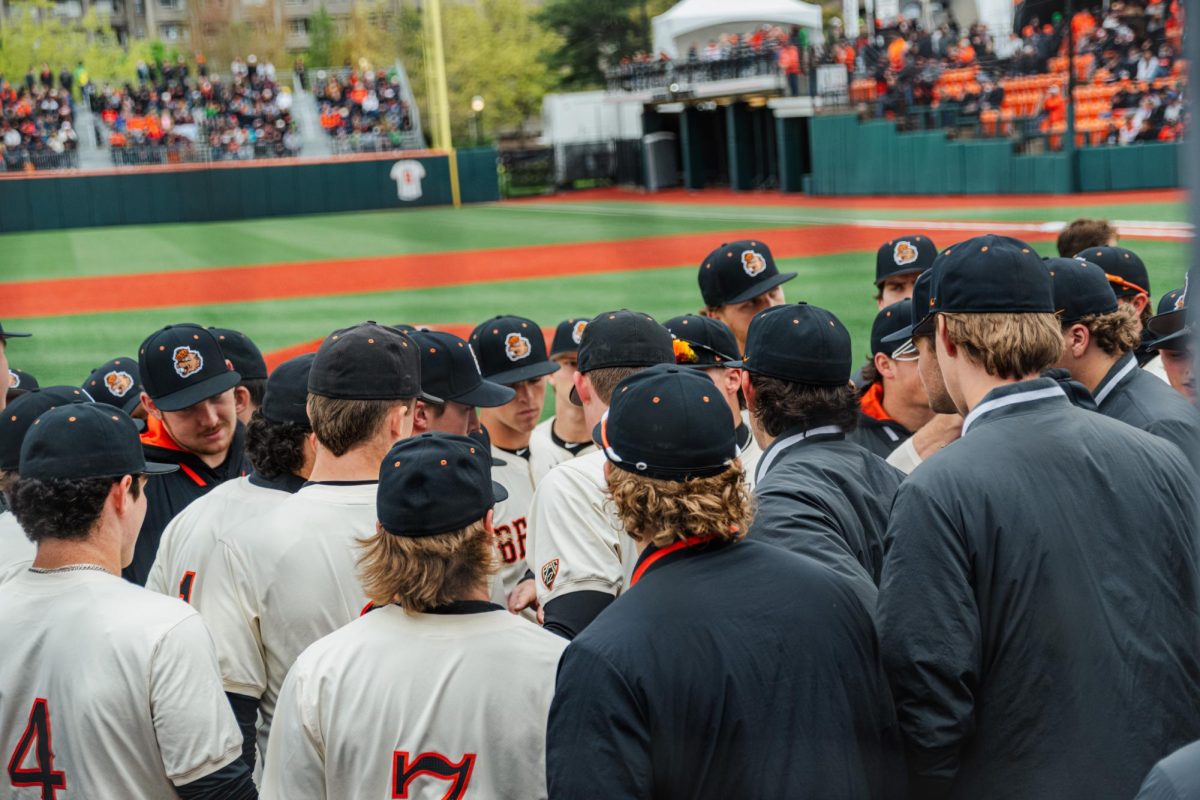
Food is an integral part of the playing experience — not only do the players eat before and after games but they’re encouraged to fuel up as games progress. The team keeps snacks in the dugout and encourages players who are done playing to replenish right away to maximize recovery, especially if only a few innings have passed.
Players are able to have plans tailored to them based on their specific needs, position and genetics. The athletes are able to have a body composition analysis done, which gives the support staff information on how to craft targets and goals for food for that individual.
Freshman pitcher Dax Whitney, the No. 1 recruit out of Idaho, had some high praises of the food at OSU and how it fits into his improvement since arriving on campus.
“The food here too is amazing. I’ve gained 26 pounds, I think, since I first got here,” Whitney remarked.
Despite the emphasis on healthy food and making the right choices for individual needs and positions, the team is still able to find food outside of their plans to enjoy.
“We don’t use the phrase ‘cheat days’ because cheating is when you’re doing something dishonest,” Langhans said. “So we pack it into it, so it’s not cheating if it’s part of the plan.”
The players typically target 80% to 90% of their food consumption towards recovery, health, energy and overall training. For the remaining food that they eat, they’re allowed to relax and not worry about the content of the meal. They’re able to just enjoy what they eat.
According to Langhans, trying to eat perfectly all of the time can lead to not eating enough or having a negative relationship with food.
Similarly, the team is against calorie counting for the athletes, which can be an inaccurate measurement of nutritional goals. They instead opt for measuring portion sizes and hitting food group recommendations. Not counting calories also leads to more food variety for the players, which comes with several health benefits.
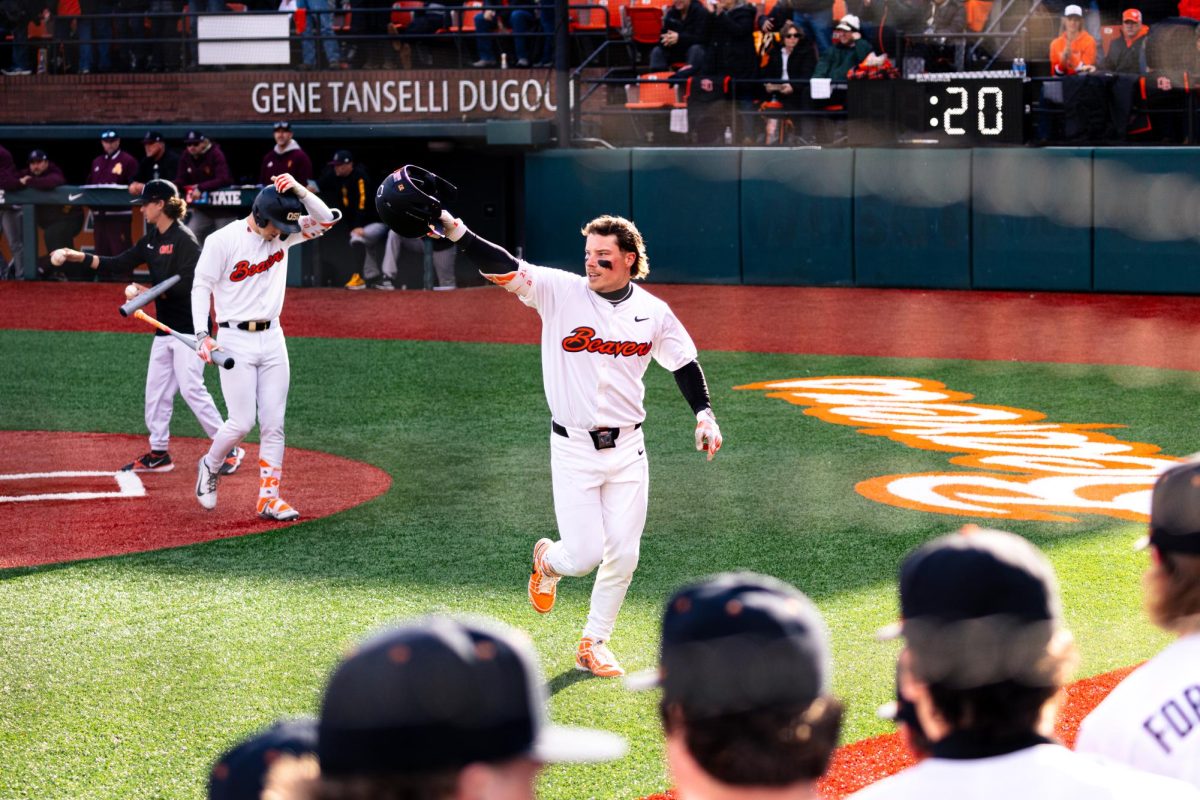
Oregon State is currently the eighth-ranked team by D1Baseball and their home opener begins this Friday at 5:35 p.m. as they host the University of San Diego for a three game series.