


































Nikolas’ Part:
This past August, a wide variety of predictions on the Oregon State football team were released. The one connecting note, they were all positive, from ESPN saying around six wins, to the Corvallis Gazette-Times saying seven wins, with myself saying eight.
But hindsight is 2020, and now in the new year of 2026, we have ours, and it, much like the many field goal tries of the season, was way off.
The Oregon State Beavers finished with a putrid 2-10 record. And we are all left asking, what on Earth happened…?
So to begin, I’ve chopped this up into five major reasons. Five definitive points that we will all look back on and say, ‘That is totally what screwed us that year.’
Point number one: injuries. This is a factor not many people seem to account for. From the beginning, the red flags should have been waved as two starters, both on each side of the ball, went down with season ending injuries. Those two being cornerback T.J. Cradell and wide receiver Darrius Clemons.
Of course it doesn’t stop there, many more key faces would drop like flies throughout the year. The two in your ‘one two punch’ runningback combo, Salahadin Allah, missed significant time. As did starting tight end Bryce Caufield. While on defense, your starting middle linebacker and free safety in Dexter Foster and Harlem Howard, respectively, had their seasons abruptly end.
Point number two: the schedule of doom and despair. Another factor many seem to overlook. Through the first seven games, OSU’s opponents sat with a combined record of 37-12.
OSU had three straight losses against now top 25 teams: No.25 Houston, No.5 Oregon, and No.4 Texas Tech. I don’t care who you are, in the simplest way possible, that’s rough. The schedule to start all of a sudden became a gauntlet, and the Beavs failed to compete.
Point number three: the defensive play calling. For a ‘defensively led’ team, the unit was more often unreliable than it was not. Head Coach Trent Bray’s defensive fortitude was completely lost during the 0-7 start to the year. Allowing 34.5 points and 427.8 yards, per game.
On third down, the team allowed a conversion percentage of 59.7%. And Bray would finish his tenure with 12 of his 19 games allowing 30 or more points, which also included six 40 or more point games. To stop a nosebleed would have been a miracle.
Point number four: the offensive play calling. Offensive Coordinator, Ryan Gunderson, mastered many trades, none of which good. Whether it be the stubborn commitment to running the ball on long downs. Or not adjusting the scheme to his new quarterback, Maalik Murphy, who was coming off an incredible year in a ‘run and shoot’ offense at Duke. Gunderson sticking with pro style, led to his new signal caller disappointing on all levels.
The team set historical records in failing to score as well, as this team set the record for the least amount of points scored per game in a season of the 21st century, averaging 18.3 points per game. Only in 2015, did the team also fail to reach a minimum of 20 points per game, a record that you simply don’t want your team to set.
Last, but certainly not least, we have arguably the main reason. Point number five: special teams. If there was one place that OSU finished first in, it was having the longest streak, according to PFF, of being the dead last ranked special teams unit in all of FBS(10 straight weeks).
Several games where the special teams’ errors threw games away for the Beavs, with at least 20 points on the season left on the floor. Those said points could have easily led to a few more wins being thrown into the win column. The ghost of former Special Teams Coordinator, Jamie Christian, haunted this team well after his overdue firing. A disaster from top to bottom.
But, there is hope…somehow.
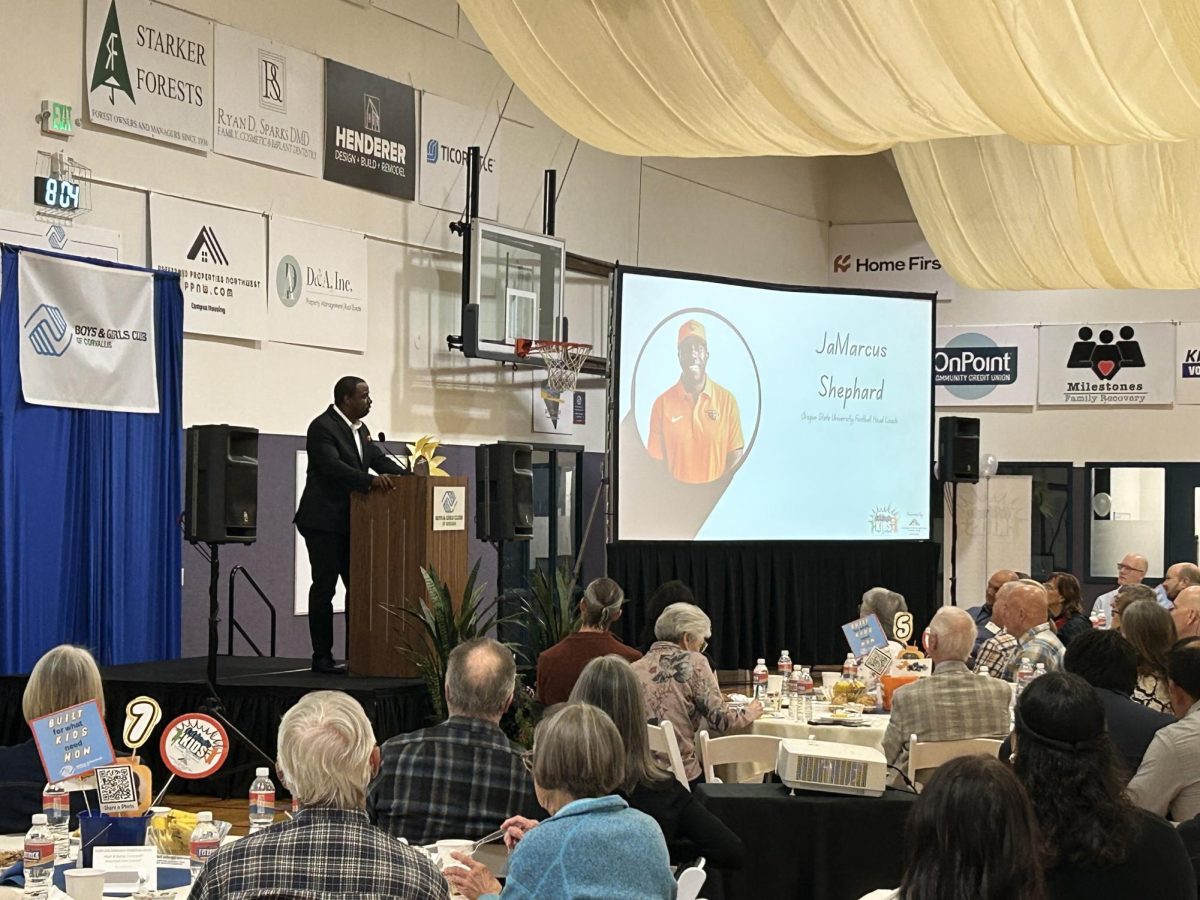
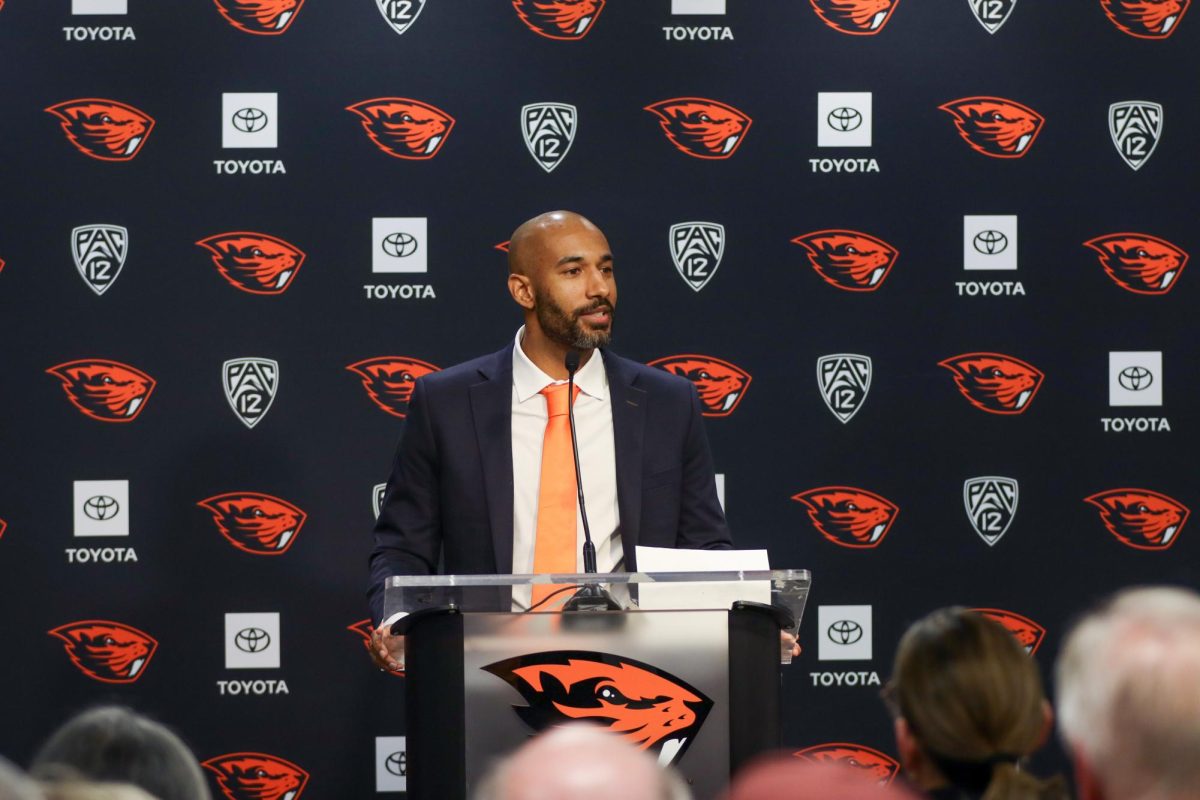
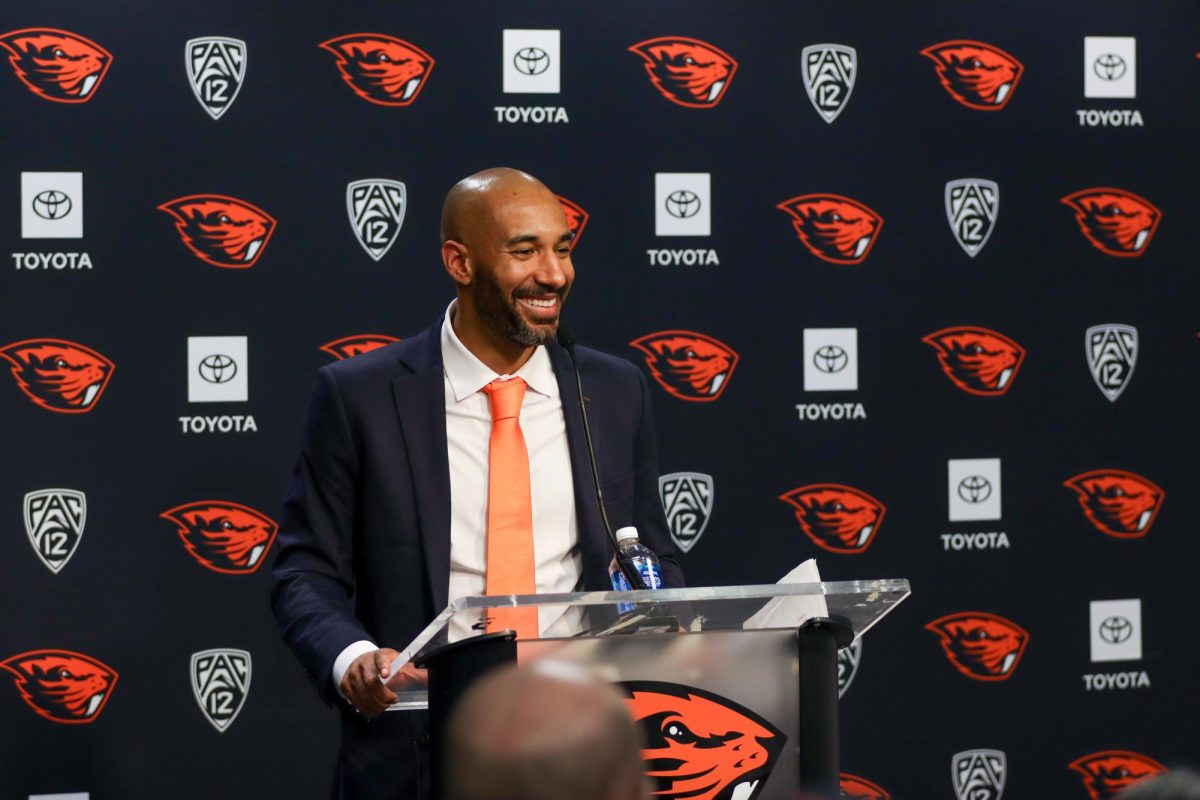
New Head Coach, JaMarcus Shephard, brings in a mentality of winning and grit that he carries from his time with the Alabama Crimson Tide. Despite this season being one to forget, there is once again a light at the end of the tunnel.
Josh’s part:
Looking back at the chaos that unfolded over the course of Oregon State’s season, it seems appropriate to be happy that Oregon State football won any games at all.
Back in August, there were chatters of difficulties for the Beavers, but few expected only two wins. The implosion of Trent Bray’s defense across the end of the 2024 and beginning of the 2025 season led to Bray’s mid-season firing and Rob Akey taking the reins of the Beavers.
Bray completed his tenure at Oregon State, having lost 13 of his last 14 games. His 0-7 start to the 2025 season was OSU’s worst start to a season since opening 0-10 in 1991.
While Akey opened his time at Oregon with consecutive wins over Lafayette and Washington State, the Beavers then proceeded to lose their final three games. Oregon State’s 2–10 finish was one of the program’s worst showings in decades.
How did a team with legitimate returning talent and a supposedly defense-first identity fall so catastrophically short?
I agree with Nik’s take a whole lot, and I believe that injuries significantly hampered OSU’s season. How many wins did injuries ultimately cost? I’d estimate injuries cost the Beavers somewhere between two and four wins.
This leads to our second observation: the schedule. I agree with Nik that this was a big hurdle, but it didn’t seem to be this difficult when the season started. At the beginning of the season, the Beavers’ schedule looked much better; this is part of why I predicted a potential 8-win season.
In 2025, Oregon State played only two games against teams with five or fewer wins. Seven of the Beavers’ 11 opponents won 7 or more games.
That included a three-game gauntlet featuring current No. 25 Houston, No. 5 Oregon, and No. 4 Texas Tech. When the season started, Houston was unranked and Texas Tech was No. 23.
For a developing roster adjusting to new leadership, such a difficult schedule would be a challenging place to find eight wins. For this group, one that is depleted and inconsistent, it set the tone for what became an unrecoverable slide.
Next, we take a look at how OSU’s defense collapsed, summarized by Nik quite well. Under Bray, OSU was supposed to boast defensive stability. As Nik mentioned, the Beavers surrendered 34.5 points and 427.8 yards per game.
12 of Bray’s 19 games featured opponents scoring 30+ points. Five crossed 40. With such defensive performances, Bray was not likely to last long as head coach.
But there is one point that I think Nik should have addressed, and perhaps it was too obvious. The Beavers’ quarterback play was atrocious.
Beavers’ quarterbacks amassed a collected college passer rating of 117.8, which would rank 155th out of 189 players if measured as an individual QB. They completed only 60.3% of their passes and threw 14 touchdown passes to 13 interceptions. In a world where a 2-1 TD-to-INT ratio is a lower threshold, the Beavers woefully underperformed in the passing market.
Where Oregon State football goes in the future is completely unknown to me. With a largely unknown incoming head coach, the Beavers will face increased difficulties on the recruiting trail. With the new Pac-12 beginning in full in 2026, the Beavers will have new and fertile ground for long-term recruiting to build their fortunes.
With the turmoil and struggle of the past two years sliding into the past, the Beavers reached the clear, with only upwards to go…
