




































































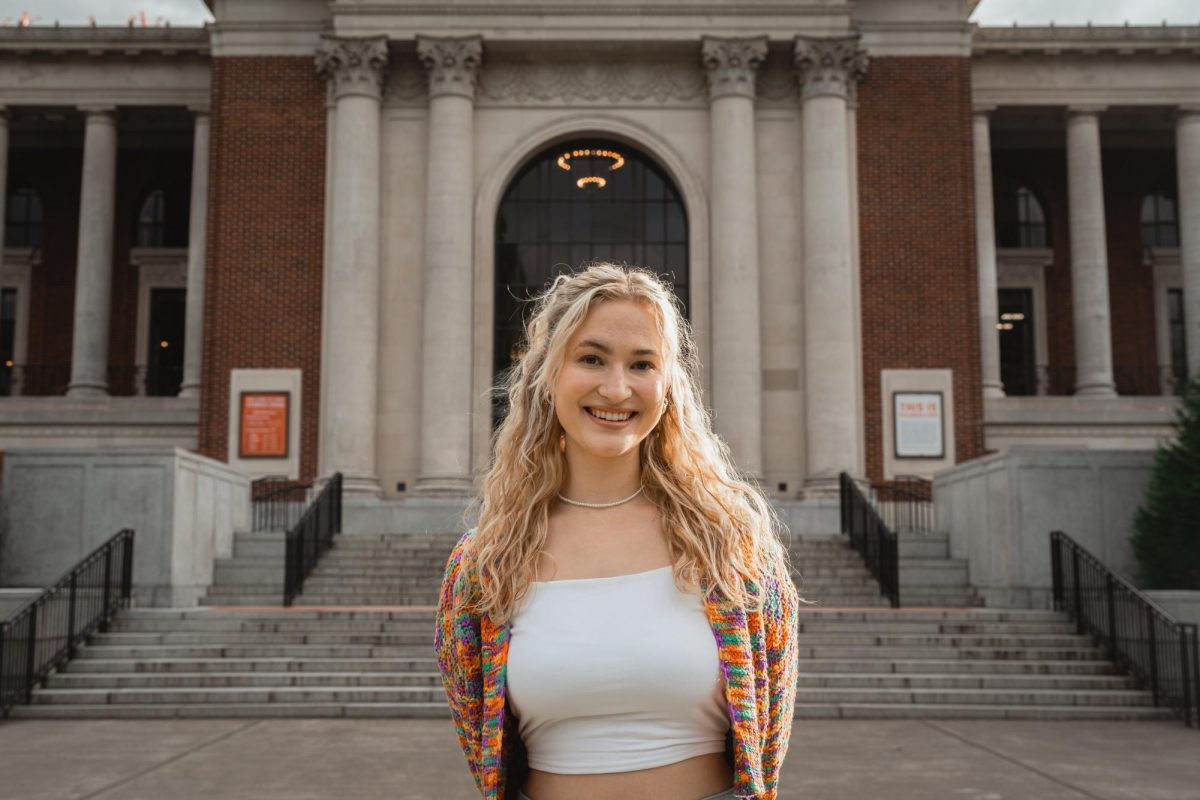










For graduate students Serena Frazee and Luke Nearhood, mistrust in Oregon State University is disappointing, but nothing new.
Graduate students began the 2025-26 academic year with a new health insurance provider, a change that was announced with little to no warning from the university. The sudden switch left many graduate employees frustrated with what they described as a lack of transparency from OSU.
“From our perspective, it felt like the university pretty much sprung it upon graduate employees that the switch was happening,” Nearhood said.
Nearhood is a fourth-year doctorate student in physics and is the proxy vice president of bargaining for the Coalition of Graduate Employees. Frazee, a third-year doctorate student in integrative biology, is CGE’s vice president of communications.
Nearly 49% of OSU graduate students are represented by CGE.
“PacificSource was raising its price quite a bit, so they made a decision to switch to Cigna,” Frazee said. “They normally would have a meeting of what’s called the Health Insurance Advisory Council every term. This summer (the) meeting for that was postponed, so we didn’t hear about this until after the decision had already been made.”
According to Nearhood, a HIAC meeting should have been held before the university made a final decision about switching insurance providers.
“We wouldn’t necessarily have objected to switching insurance providers if premiums were going to go up by a ton because, per our collective bargaining agreement, the university pays 90% of health care premiums, and then employees pay 10%. So it’s in both parties’ interests to keep premiums low,” Nearhood said.
While the HIAC’s recommendations are not legally binding and the final decision rests with the university, Nearhood and Frazee said graduate employees should have been meaningfully included in the process.
To advocate for members, CGE filed for impact bargaining in October, but according to Nearhood, the university has failed to formally consider it bargaining.
“The university’s position throughout impact bargaining has been that there isn’t any, there aren’t any impacts to bargain over,” Frazee said. “Which we don’t agree with. We’ve identified people with real quantifiable financial impacts, in addition to just the stress of it and potential damages from … interrupted care.”
“Although they are not willing to call it impacts or bargaining, they have still been willing to meet with us and provide information and talk. We would prefer it to be official bargaining and to be able to implement contract language, because obviously, contract language is legally enforceable, whereas good intentions are not.”
According to Nearhood, the sidestepping of the HIAC and avoidance of engaging in official bargaining are indicative of the broader pattern of the university’s relationship with graduate employees. He also said the university structure as a whole is “eroding shared governance and trying to diminish the voice of labor organizations and workers in decision-making processes.”
“Our contract says that any change in coverage should be essentially comparable to what we had before,” Frazee said. “We’ve really reached out to members as much as we can and try to hear how this transition has been impacting them and what issues there have been because on paper it looks like they should be pretty much the same, but that doesn’t necessarily mean that it’s going to be.”
According to Frazee, CGE has identified several issues stemming from the change in providers.
“There’s less providers that are now in-network with Cigna and it’s not a huge amount in terms of numbers – its 7% of grads’ previous providers that were no longer in-network – but the difference really disproportionately impacts mental health.”
CGE’s opening statement in bargaining reported that the number of in-network therapists and mental health providers dropped from 235 under PacificSource to 73 under Cigna.
Vice President for University Relations and Marketing Rob Odom addressed these concerns in an email, saying that “Cigna has begun immediate outreach with the top 20 most utilized providers to begin contracting efforts, and some of those are verified as now in network.”
Odom also noted that Cigna manages one of the nation’s largest virtual care networks, which provides unlimited, free virtual behavioral health visits.
However, CGE’s opening statement says many providers have chosen not to work with Cigna due to poor reimbursement rates.
In the opening statement, CGE shared the story of one graduate employee whose therapist of three years does not accept Cigna.
“I am now forced to find a new therapist in Corvallis who does accept Cigna, and we all know how difficult it is to “restart” therapy,” the student said. “(The therapist) was treating me for complex PTSD for the last several years; however, I can’t afford to pay for sessions out of pocket and she is out of network. The psychiatrist she works with who handles medications/prescriptions is also out of network.”
While Frazee emphasized that every graduate student has a different relationship with the university, she said that at this point she personally didn’t have much trust left to lose in the university anymore.
Currently, CGE is asking for a temporary increase in funding for the OSU-run graduate student hardship fund to assist those negatively impacted by the insurance change, according to Frazee.
The union is also requesting increased transparency around how the plan is implemented and how future decisions will be made.
Nearhood said that any graduate students interested should reach out about attending HIAC meetings in the future.
“I encourage (grad students) to continue sharing information with us,” Frazee said. “Come to talk to us. Obviously we want this contract language, but that’s only one tool that we have to help each other, and we are committed to finding ways to support the grads who are going through this, regardless of whether or not OSU meets us with contract language.”