



























































































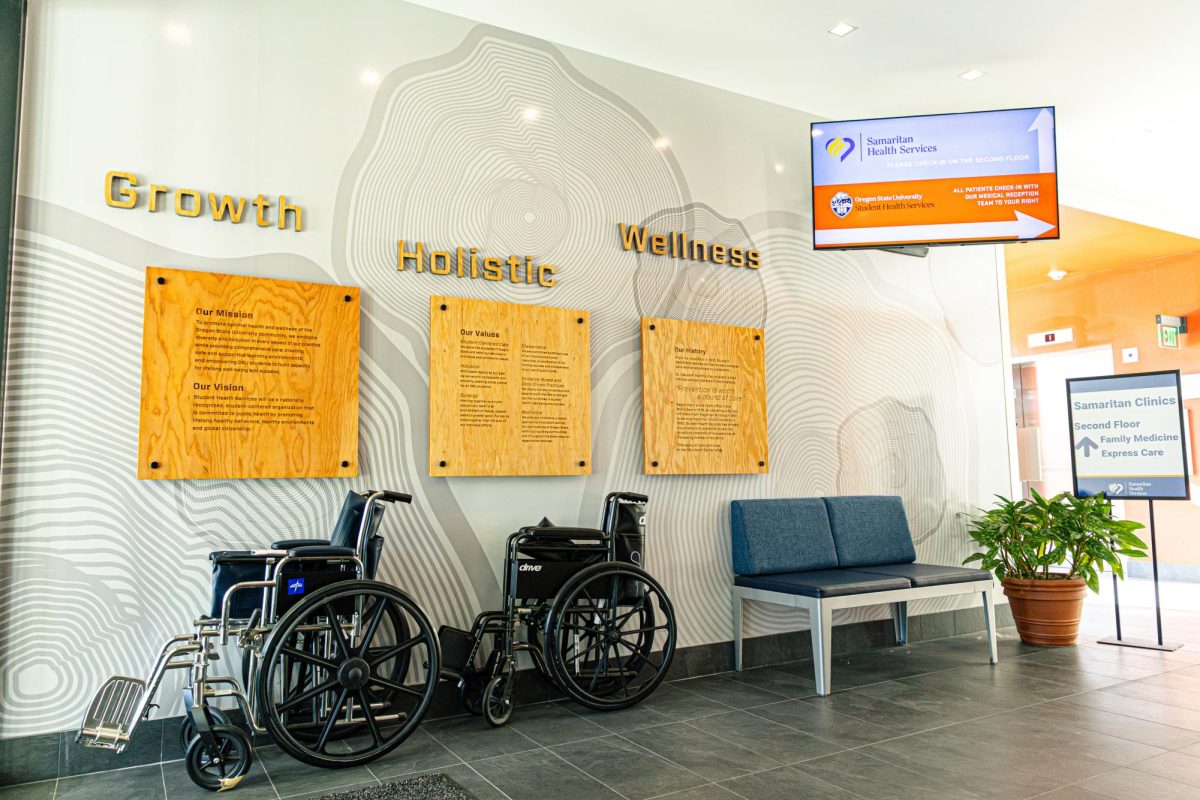
“Modernized exam rooms, enhanced technology for patient care and improved waiting areas.”
Kelly Hower, the executive director of Oregon State University’s Student Health Services looks at the campus’ new state-of-the-art center as the epitome of progress, comparing it to the past clinic formally in the Plageman Center.
Built in 1936, and updated last in 1961, the Plageman Building was not hard to beat in the area of technological advancements and modernity. The Reser Stadium-adjacent location of the new Student Health Building doesn’t only come with a change of scenery, but also a change in partnership for OSU.
Now equipped with a second-floor Samaritan Health clinic, Hower states that “Students can access same-day care through SamCare Express in the evenings and on weekends when Student Health is not open.”
This change has been a welcomed one for OSU’s healthcare professionals who say the new center’s “efficiency of services” has greatly increased over the last year since its opening before the 2023-2024 school year.
The student response to the evolving changes in campus healthcare reflects a mixed, but generally positive experience with the new clinic’s diversity in services under the Samaritan partnership.
Isabel Waggoner, a senior chemical engineering major, appreciates the larger, brighter space but feels the level of care is more clinical than personal. “It feels like a step up from going to the school nurse,” she said. Waggoner values the ease of scheduling appointments over the difficulties presented in the previous Plageman building.
This kind of upgrade came much to the delight of Medical and Clinical Services Directors Dr. Shanilka DeSoyza and Helen Lee. “We’ve made efforts to expand web booking, allowing students to schedule appointments at their convenience. For those who prefer to call or visit in person, our fully staffed front desk team is ready to assist,” DeSoyza and Lee said in an email.
While this rapid care is welcomed on a campus jam-packed with students facing unexpected issues daily, primary education student Sophia Lemcke acknowledges an issue with the communication factor within the clinic.
“There are often people I talk to on the phone who are not always on the same page about what each department does and what they can help with,” Lemcke said.
Lemcke recounts an experience over the phone in particular that escalated her medical concern and led to an improper diagnosis down the line making it more difficult for her to receive timely care for her actual medical issue.
Although these inconsistencies can reflect the makings of a new program, DeSoyza and Lee highlight OSU Student Health’s mission through these changes: “commitment to continuous improvement.”
Within this new building, improvement takes many forms, one of which is an expansion of behavioral health support services with collaborative efforts from OSU’s Counseling and Psychological Services.
“We now have a counselor from CAPS available onsite two days a week, making behavioral health services more accessible and integrated into the primary care team,” said DeSoyza and Lee.
This focus may be crucial for the development of Health Services in the future. This more all-encompassing approach to student needs seems evident in an experience recounted by a senior student wishing to stay anonymous.
“I wasted four months of my life not wanting to be alive,” the student said after recounting a troubling experience with birth control options. After being prescribed the Depo-Provera shot despite their concern with a history of depression, they suffered severe side effects that deeply impacted their mental health and personal relationships.
The lack of alternative options provided and insufficient warnings about potential risks led them to seek care outside OSU’s system where they were then given a wider array of options than what was provided with on-campus support.
These issues and comments are crucial to the development and success of OSU’s Student Health Services as they continue to grow and adjust to student needs. Dr. DeSoyza and Lee direct patients toward their online resources, saying they will continue to listen closely to feedback.
The new clinic represents a meaningful investment in student health and wellness as it partners with Samaritan Health to reach as many students as possible. But with bumps in the road, DeSoyza and Lee’s promise of “Staying responsive to students’ input and the changing health landscape,” will remain the most hopeful commitment looking at the coming years of OSU Healthcare progression.
