









































































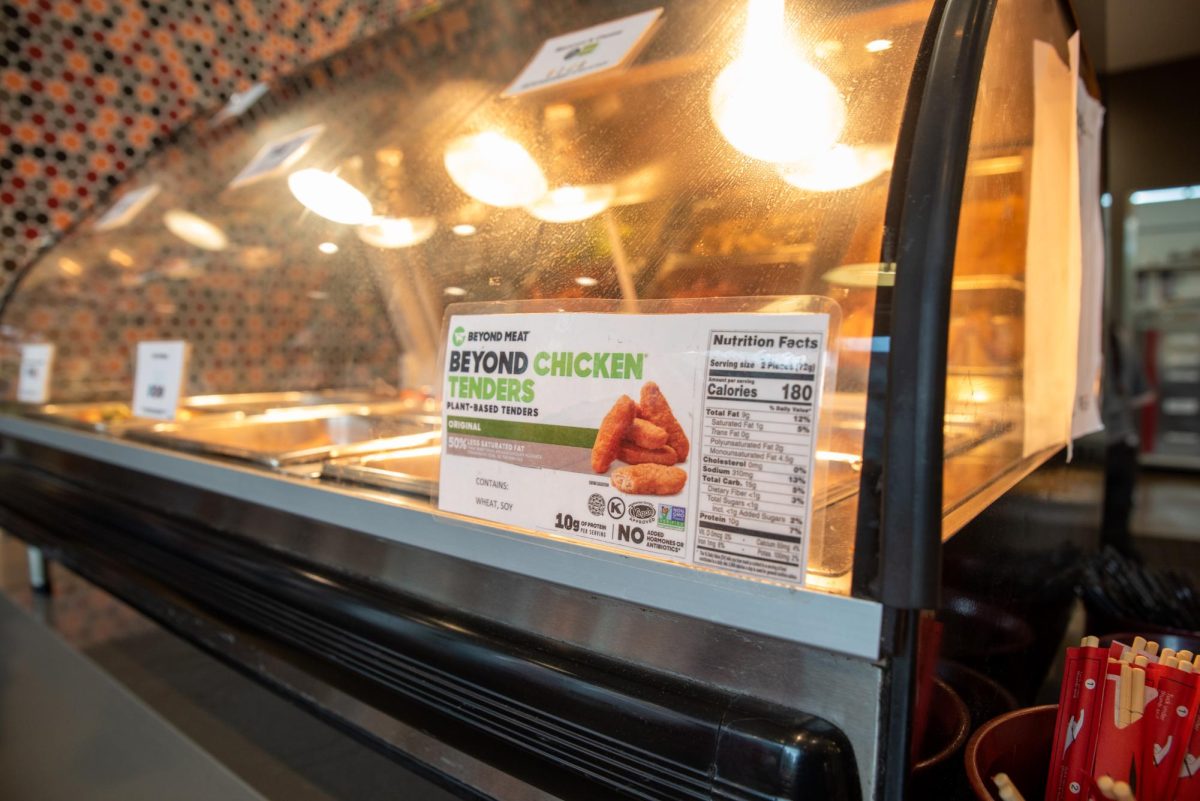





























Starting college brings a lot of changes for incoming students: new town, new dorms, new roommates, new classes and a new way of feeding yourself — the dining halls.
Oregon State University has three main dining halls as well as multiple cafes across campus where students can use their dining dollars, the currency in OSU’s per-term dining plan accounts.
The University Housing and Dining Service website includes menu guides for different dietary needs and dining hall options are labeled with allergens as well as vegetarian, vegan and halal designations.
According to Madison Delmendo, a registered dietitian with student health services, students can work to balance their plates by combining macronutrients (proteins, carbohydrates and fats) in their meals.
“Look for meals that combine food groups. Mixing carbs, protein, fats, and fiber together helps promote satiety and gives your body long-term energy to sustain you until your next meal or snack,” Delmendo said in an email. “Consider meals that are already combinations of food groups for example, like a sandwich that contains carbs from bread, protein and fats from meat and cheese, and fiber from vegetables.”
Delmendo also said every food group doesn’t have to be present at each meal, rather aiming to include each group a couple times throughout the day can be a great way to fit in a variety of daily nutrients.
“It is essential that we eat regularly enough through the day to provide our body with adequate fuel,” Delmendo said. “For some people this may look like three meals a day. Some may eat smaller, more frequent meals while others may prefer less meals with more robust portions. I encourage students to find what feels best for their bodies.”
According to Delmendo, grab-and-go options in the cold cases such as wraps, yogurt bowls and bento boxes are examples of underrated nutritious options for students.
According to Kerry Patterson, director of Campus Dining and Catering at UHDS, campus chefs are expected to prepare meals that support student nutrition.
“One major aim when we plan our menus is to provide a wide variety of options that meet both student demand and will help students embody healthy eating at OSU,” Patterson said. “Chefs are also expected to include a significant portion of plant-based foods on each restaurant menu in the dining centers to give a variety of whole-food and minimally processed grain, legume and vegetable options.”
While it is important to incorporate an array of food groups in your diet, according to Delmendo, this does not mean that students should restrict themselves.
“I encourage adopting an “All Foods Fit” mindset – all foods can be part of a balanced, nutritious eating pattern,” Delmendo said. “Too often we receive messages about limiting certain types of foods or cutting something out of our eating patterns. It’s important to nourish our relationship with food as well as our bodies. Consider (an) additive approach, like pairing together cookies and a banana for a snack.”
Delmendo and Patterson both recommended that students try cooking some meals in the dorm kitchen as well as explore off campus meal options to supplement meals – particularly snacks and breakfast staples – to stretch their meal budgets.
“Plan ahead by knowing how much you have budgeted for each meal, day and week,” Patterson said. “Be mindful not to spend significant amounts on non-nutritious foods such as beverages, sweets or unhealthy snacks.”
Patterson also recommended that students consider working for UHDS dining services as student employees receive half-off the price of a meal during their shift. He also recommended that students take advantage of the food programs at OSU to work within their individual budgets.
“There is always a variety of options at multiple price points available in the dining centers,” Paterson said. “Make Cents meals are priced at $6.50 and each of the recipes is reviewed for nutrition and portion sizes to ensure students receive a balanced and filling meal.”
According to Patterson, signage is posted toward the entrance of each dining center with the available Make Cents options for the day.
Another budget program UHDS offers is Food for Thought.
“Food for Thought was developed six years ago to fight both food insecurity and food waste,” Patterson said. “These meals are made with excess quality ingredients in the dining center kitchen, individually packaged, and sold in all three of the dining centers, as well as often being offered at the Basic Needs Center.”
Both Patterson and Delmendo identified OSU’s Basic Needs Center as a resource for students with limited financial resources. The BNC offers programs such as Mealbux (a food assistance program), a food pantry, meal bags and has staff who can assist students in learning about and applying for Supplemental Nutrition Assistance Program benefits. More information on the Basic Needs Center services can be found on their website.
SNAP benefits can be used at local grocery stores such as WinCo, Fred Meyer, Safeway, the Corvallis Farmers’ Market, as well as OSU’s on-campus grocery store, Cascadia Market. To learn more about SNAP benefits, you can visit the BNC or apply online at one.oregon.gov/.
To learn more about UHDS’s budget options and other dining hall resources, you can visit the UHDS website.
If students are interested in individualized nutrition support, they can schedule an appointment with Delmendo at OSU Student Health.