



































Sweat beads form on the foreheads of the Oregon State University blacksmithing officers as they pull hot metal in and out of the 1800 degree forge.
Alex Lulay, Josh Hale and Raymond Hinkley, club officers, fashioned spoon rests, hair pins, rings, dinner bells and more to raise money for the club.
The club prepped and sold these items at the Memorial Union Holiday Market Dec. 6 and 7.
Lulay, third-year mechanical engineering major and treasurer of the Blacksmithing Club, said that this was the first time the club has participated in a market like this.
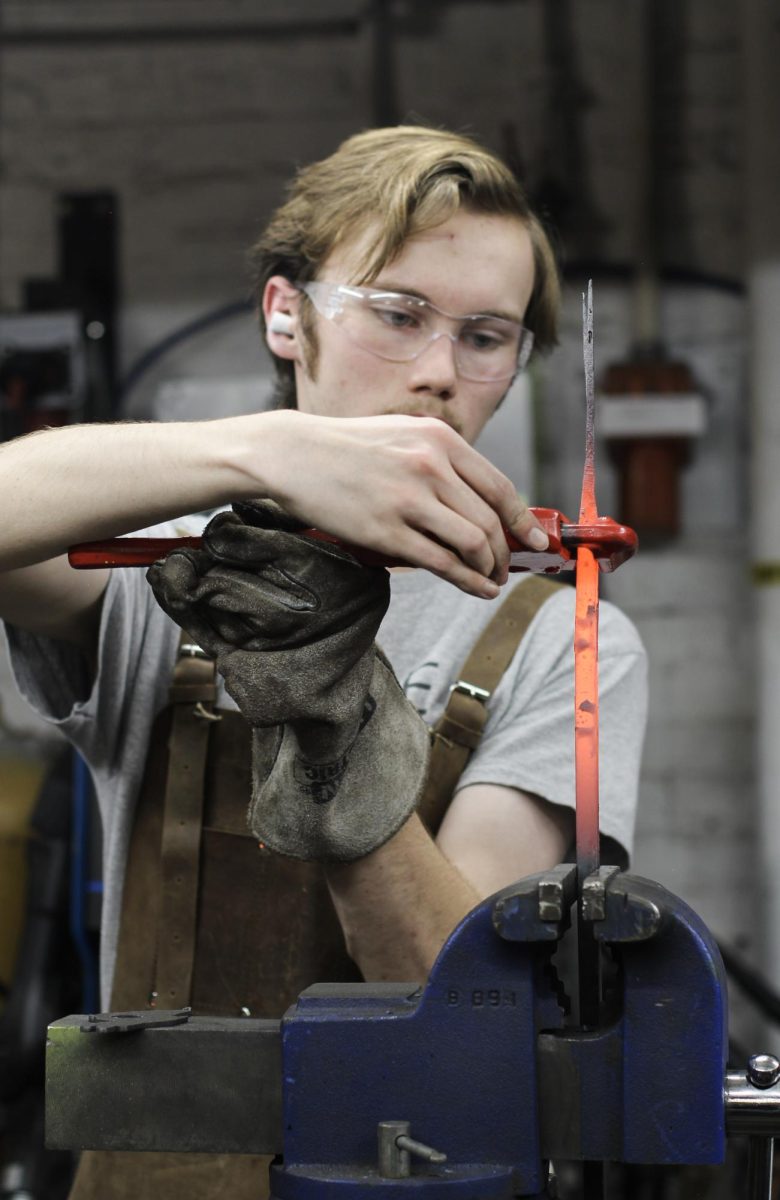
two-pronged skewer at the forge in Merryfield Hall in Corvallis on Nov. 24. (Jeremy Lines)
The club hosts forging sessions four times a week for two hours each where members can forge to their hearts content.
To join the club, students should reach out to officers via Discord, found through their Instagram. Then the officers will guide students through the process of getting certified through an online Innovation Labs certification program.
Once certified, all students have to do is sign up for a session and show up. Officers are available to teach students the ins and outs of forging.
The club welcomes all majors and no experience is required to join.
“We want to help people learn how to make things out of steel. Whether that’s an art piece or tool,” Lulay says.
In the beginning of the year, the club reserves about three weeks of forging sessions for new members exclusively to build skills one-on-one.
The most interesting thing Lulay says he made in the club was “half a crowbar.” A metal pry was sitting around the clubroom and Lulay decided to add the curved part to make the crowbar complete.
Being new to the hobby, Lulay used high-carbon steel to form the curve, not knowing that the metal was incredibly brittle. Former president Brandon Wied made an example of Lulay’s piece as it broke under his own weight when attempting to use it.
Lulay says one of the coolest things he’s seen someone else make was by Cyrus Kagen, a current officer, who forged a pig roasting spit.
Lulay says the club has only officially been established since either 2016 or 2017, the dates of the oldest records he has found. However, forging has allegedly been going on at OSU since the 1920s, as one of their anvils dates back to that time.
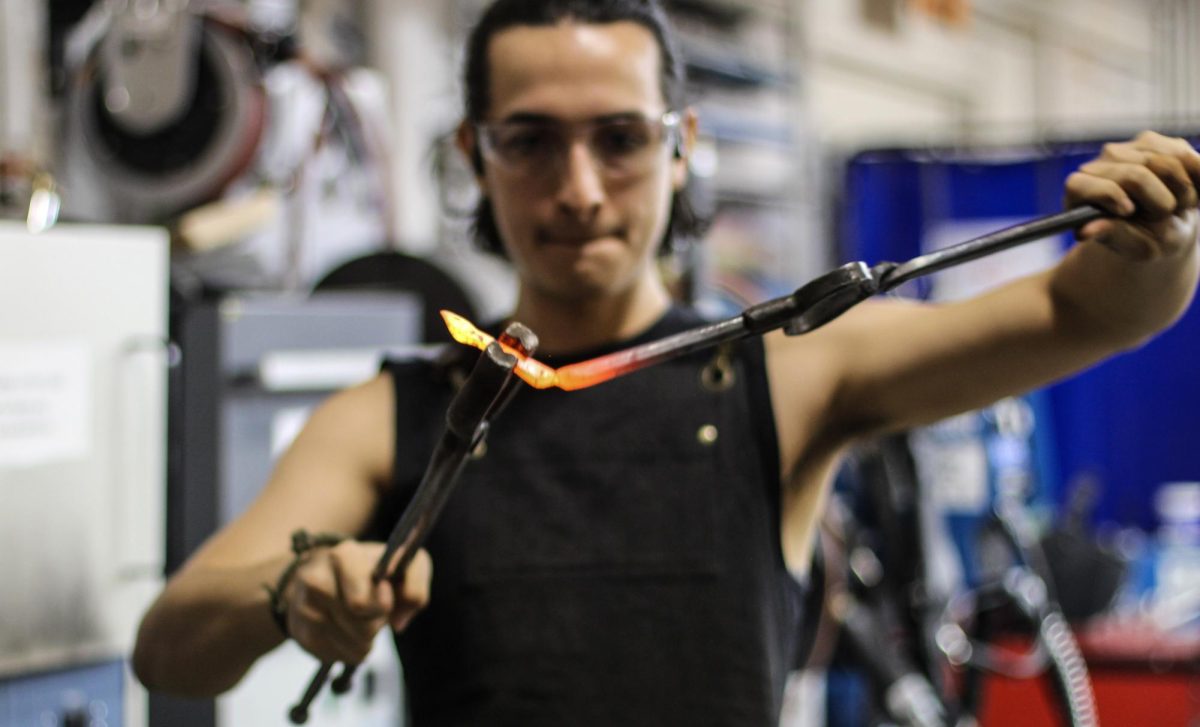
works on a project at the forge in Merryfield Hall in Corvallis on Nov. 24. (Jeremy Lines)
“Even throughout the Industrial Revolutions, blacksmithing was the most practical way to fix your steel hardware,” Lulay says.
Last year, the Blacksmithing Club had only about 20 members. This year that number about doubled to 30-40 active members regularly forging.
Before the coronavirus, the Blacksmithing club was fairly popular. After the pandemic, a lot of what the club once was had been lost, leaving only “one-and-a-half officers” and a handful of people interested.
“We lost a lot of people over COVID. We lost a lot of oral tradition over COVID,” Lulay says.
Pre-pandemic, the Blacksmithing Club would participate in a national Bladesmithing Competition, put on by The Minerals, Metal & Materials Society every other year.
Now, however, the club does not possess the funding to go to this event, according to Lulay. “We hope to go back as soon as we get the money to go back,” Lulay says.
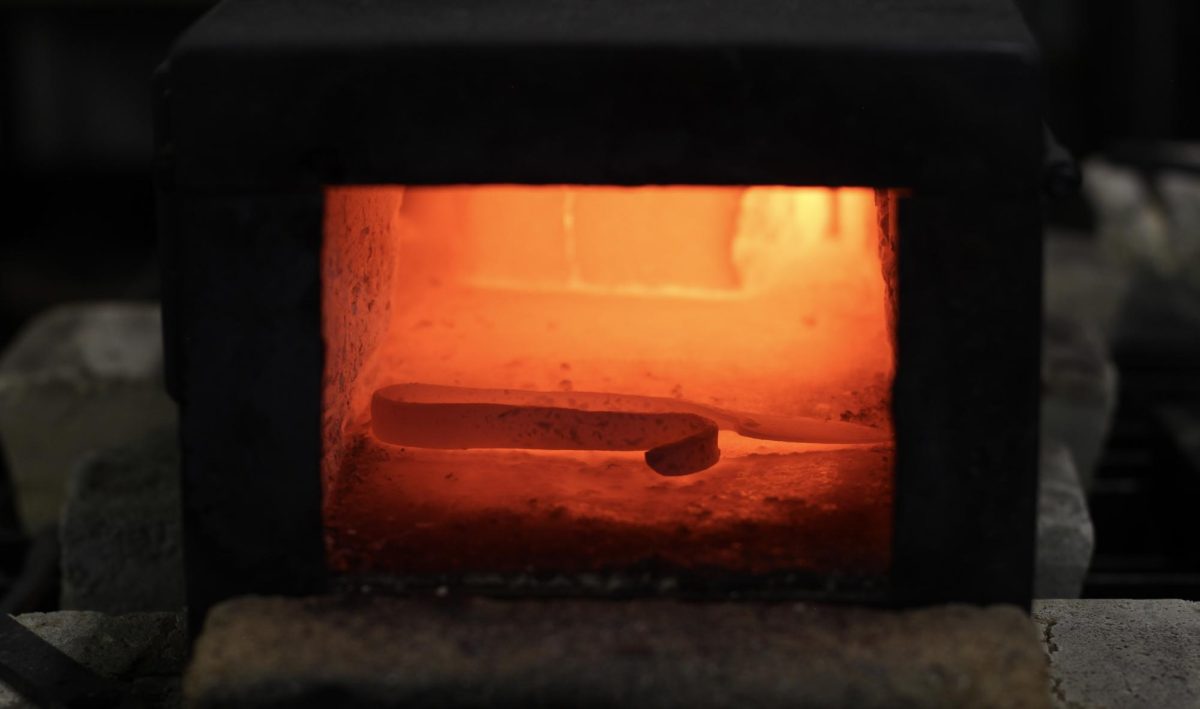
carving knife rests in the forge, in Merryfield Hall in Corvallis on Nov. 24. (Jeremy Lines)