






















































































Oregon State University is confronting a tightening financial environment as lower enrollment, federal budget cuts, uncertain state funding and broader economic headwinds strain the university’s budget.
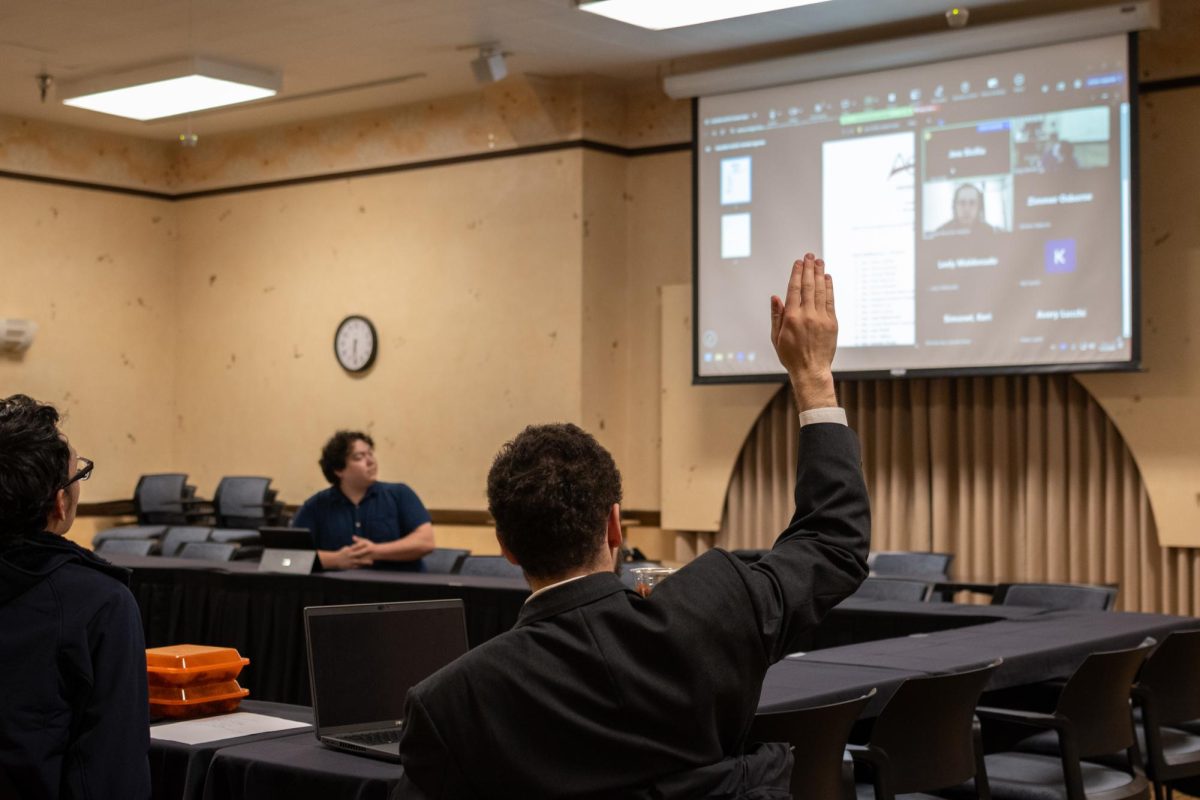
In a January meeting the Board of Trustees said the fall term freshman class was smaller this academic year than in the year prior and Ecampus has seen a relatively flat rate of enrollment — though at this time it is unclear what those numbers are. The board plans to have more concrete numbers in the spring.
Fewer students translates directly into reduced tuition revenue which, according to University Provost Roy Haggerty, is the university’s “largest single source of revenue.”
At the same time, uncertainty in state and federal funding has complicated the university’s long-term financial planning. While public universities rely on state appropriations to support instruction and infrastructure, fluctuations in revenue forecasts and competing budget priorities at the state level have limited the predictability of those funds.
Federal support, including research grants and student financial aid programs, also face potential changes as the White House continues to cut down on funding for higher education.
According to a Trustees Research and Innovation briefing given at the board’s latest January meeting, “The university is navigating an unprecedented federal funding landscape, creating uncertainty about the future of federally funded research and our universities’ role as global leaders in research and innovation.”
According to the same briefing, since the Trump administration took office in January, “federal agencies terminated 36 OSU grants, resulting in approximately $14M in lost funding.”
Research awards for the 2025 year totaled $344 million, a decrease of 21% compared to 2024. According to the brief, “a significant factor for this decrease is the continued decline in federal research awards.” From OSU receiving $340 million in awards in 2024 to $295 million being received in 2025.
To navigate through this uncertain and increasingly competitive funding environment, the board said OSU is looking to expand efforts to support research and scholarship by diversifying its research portfolio, investing in infrastructure and exploring emerging research areas.
OSU will begin to proactively broaden its funding base by targeting a wider range of federal agencies, private foundations, philanthropic organizations and industry partners, the briefing stated.
A major contributor to OSU’s projected downturn in tuition comes from declining international student enrollment, along with low birth rates in the United States. According to the World Bank, the U.S. has seen a considerable decrease in birth rates since 1960 — where the birth rate was an average of 3.7 kids for every two parents, compared to data from 2023 where the birth rate held an average of 1.6 kids for every two parents.
This particularly affects the College of Engineering. According to 2024 OSU Internationalization and Global Engagement figures, “The most significant opportunities for international enrollment growth are at the master’s level if capacity constraints in heavily subscribed programs in Engineering (especially computer science) and Business are addressed.”
“International students make up 4.1% of OSU students at the undergraduate level and 27.1% of students at the graduate level.” It is unclear how much these figures have changed or dropped since 2024, however, the board plans to have concrete numbers in the spring.
When discussing the future of graduate student enrollment, Vice President for Research and Innovation Irem Tumer said, “We’re going to lose a whole generation of graduate students, scientists, researchers, engineers and humanists.”
“There’s a brain drain threat to this country,” Tumer said.

