




































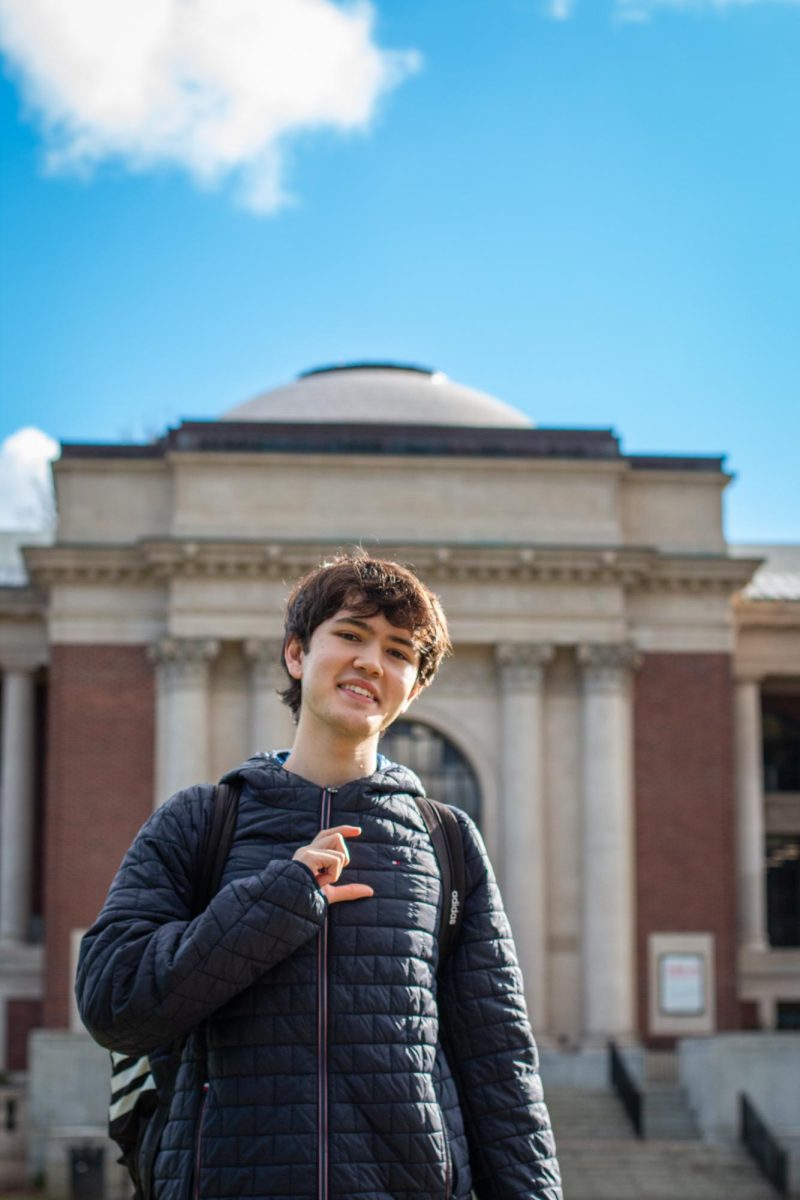





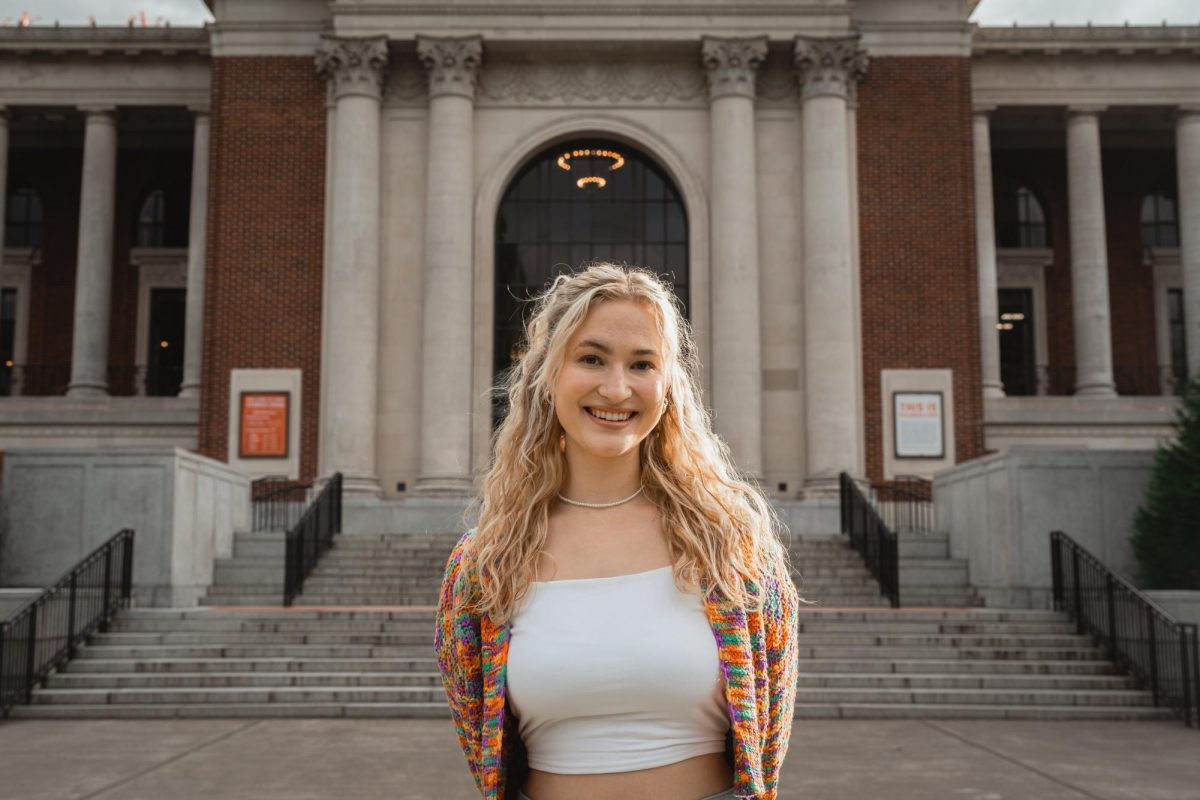












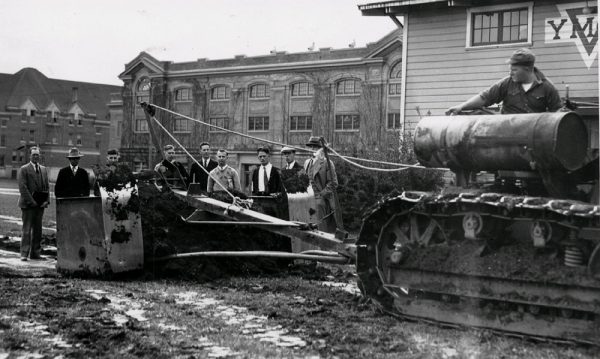
The construction of the Memorial Union, standing right at the center of Oregon State University’s campus, broke ground 100 years ago on March 3, 1926.
The MU was built for the main purpose of honoring the soldiers who fought in World War I. But the growing university, at the time called Oregon State Agricultural College, also was in need of a building to act as a hub for all students, regardless of major.
In a message given to alumni in 1928 by President William Kerr, he said, “There comes a time in the life of every large educational institution when its departments and activities become so diverse and specialized that it needs the unifying force of a great social center to retain its solidarity.”
The MU served just this purpose.
The MU stands on what was once the grounds of the Corvallis YMCA. While the MU looks like one of the oldest buildings on campus, all of its surrounding buildings, with the exception of the Student Experience Center, are older than it — Milam Hall and Strand Agriculture Hall were both built in 1913, Langton Hall in 1915, Moreland Hall in 1917 and the Women’s Building in 1926.
According to Kerr’s message, the funds from this came from the student body. Each student was to pay $3 per term, or $9 per academic year, to help fund the establishment of the MU.
Despite all of the funds raised by students, once the building was finished being constructed, they could only afford to furnish the main lounge. Although it’s been reupholstered many times, the furniture put in the lounge in 1928 is the same furniture that sits in there today.
With the MU being the first hub on campus for students, regardless of their major, the building had to house everything. The student government and Orange Media Network offices were once housed in the MU, as well as other clubs, organizations and even the campus bookstore.
One of the most recognizable features of the MU’s interior includes the flags hanging up in the main hallway; those have not always been a fixture, though.
According to MU Assistant Director of Facilities Mike Mayers, in the 1950s the flags were added, but only those from the Allied nations and the U.S. military were hung. Now, a flag hangs to represent every country OSU students come from.
The MU has around 30 staff members, and they are very aware of the impact they are leaving on the building.
“The staff who take care of this place, we’re all custodians of this, at this time, and I like to think that there’s been 98 years of people like me doing this work, and 100 years from now, there’s gonna be somebody else doing it too,” Mayers said. “We’ll take care of this place for the students, so that it’ll still be here for another 100 years.”
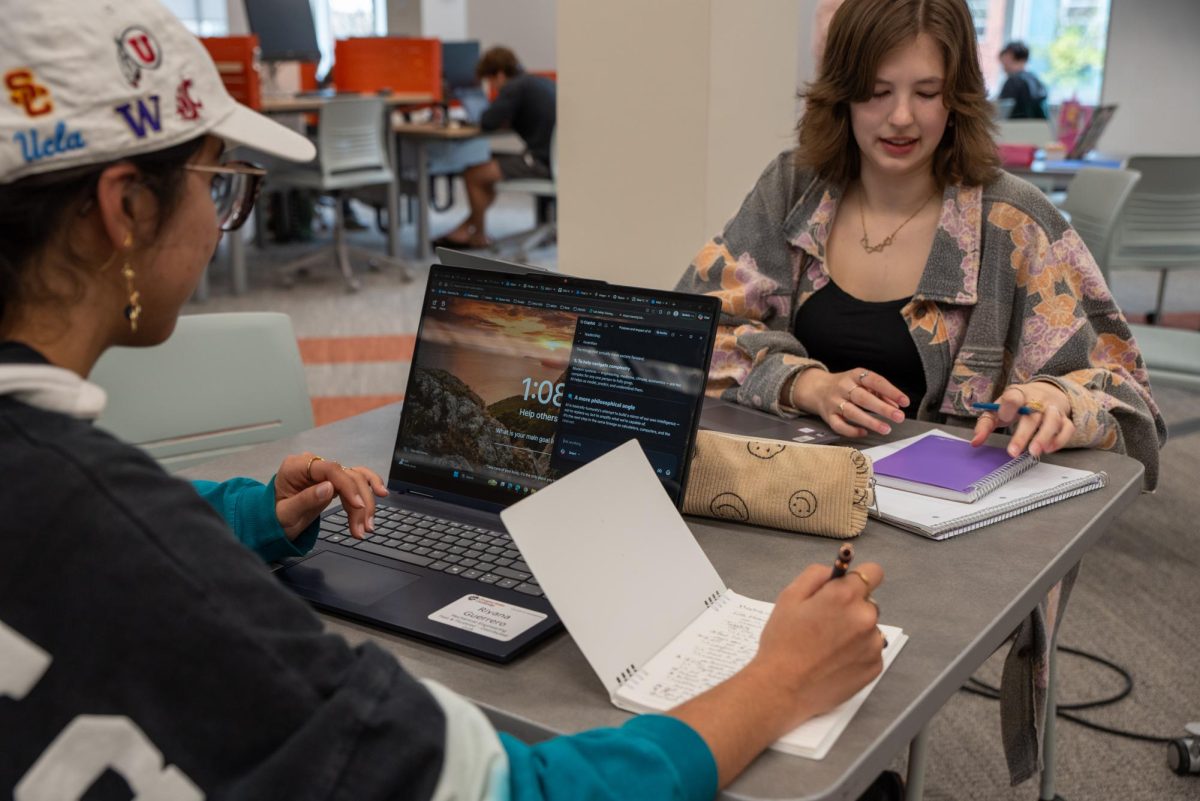
A lot has changed since the building first opened in 1928, but a lot has also stayed the same. The MU has always been a hub for students to study, housing restaurants and coffee shops since the beginning.
“I love the fact that you could talk to someone who is in their 80s who is visiting the building, or you could talk to somebody who is in their 40s, or you could talk to a student today, and they’ve had that shared experience of this place,” MU Creative Studio Advisor Travis Gilmour said. “That connection to generations in history is really the coolest thing to me.”
While the construction of the MU began in 1926, the building was not finished and formally opened until 1928. Mike Mayers says that students can expect a big celebration around homecoming 2028, where they will be opening a time capsule sealed at the 50th anniversary in 1978.
During the formal dedication of the MU, various individuals led the crowd in dedicating the building.
Grant McMillan, the retiring president of the Associated Students, led the crowd in the dedication on behalf of students, saying, “To that intangible but inspiring tradition, the Beaver Spirit, a heritage from the deeds and dreams of yesterday, a reality with the students of today, and the assurance of a magnificent tomorrow, we dedicate this building.”
So, the next time you step into the MU, imagine those who came before you and those who will come after you. One hundred years of students have stood where you stand today.