


































































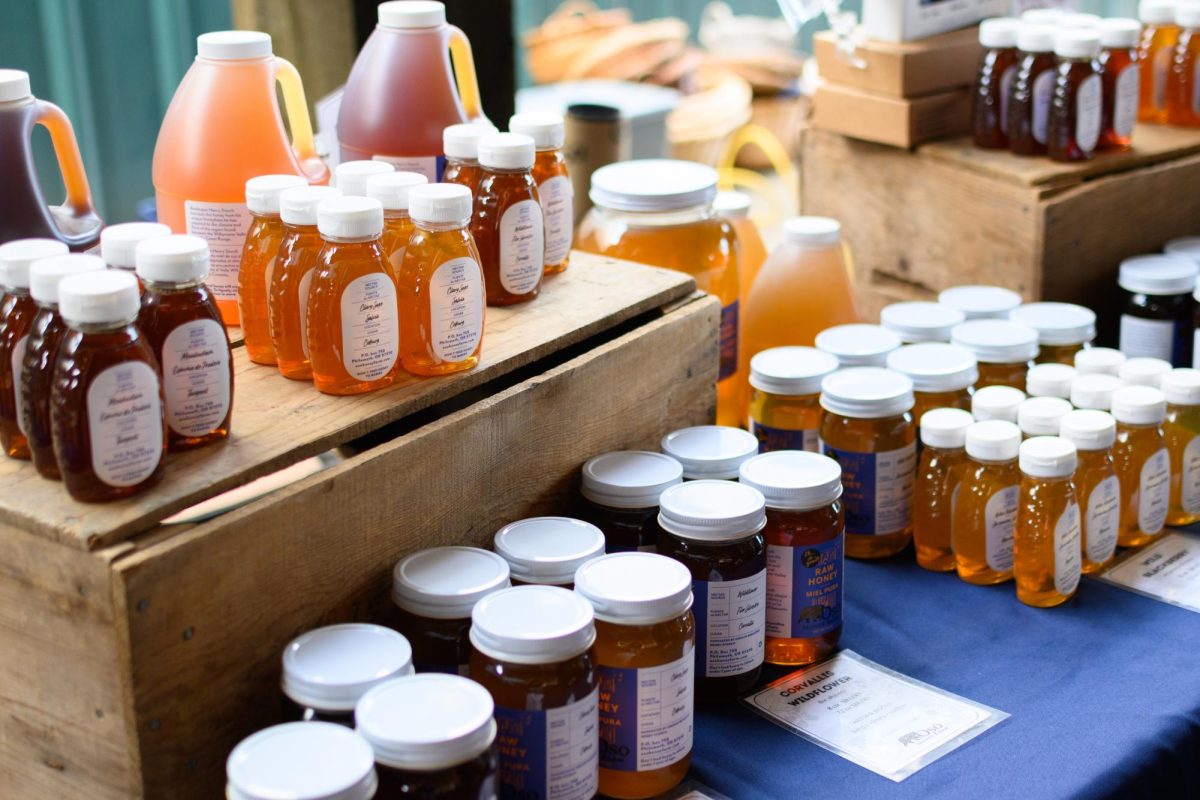
Oregon State University students are finding ways to afford fresh food through Supplemental Nutrition Assistance Program benefits and Double Up Food Bucks at the Corvallis Farmers’ Market.
Market organizers say awareness of the programs are growing, especially through outreach from the university’s student government and OSU’s Basic Needs Center.
“We want to make the market accessible to students,” said Rebecca Landis, the farmers market director. “We’re really happy with the outreach we are getting.”
The farmers market accepts SNAP benefits to purchase food products and spending can be matched through the Double Up Food Bucks program. Students who spend $20 from their EBT card receive an additional $20 to spend on fresh produce and other eligible items, helping stretch limited budgets.
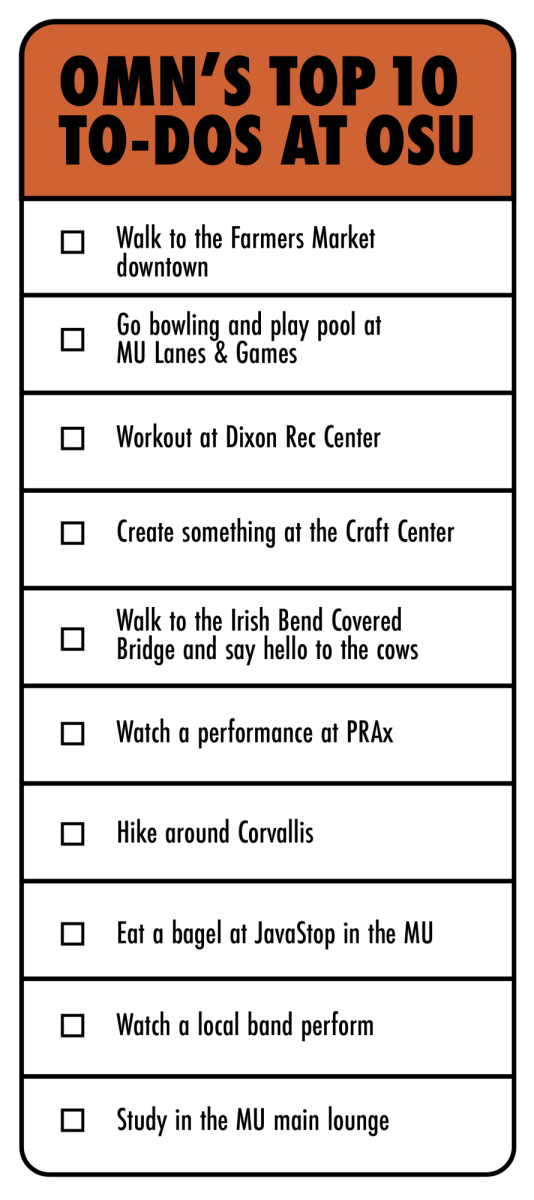
While access during winter may be limited for students when the market is at the Benton County Fairgrounds because of limited bus routes, the market is returning to its downtown location starting April 18.
Even for those who know about SNAP, qualifying and staying enrolled can be difficult, according to Landis. Federal rules often require students to work a certain number of hours and the paperwork involved can be complicated.
“It’s not always that people aren’t in compliance,” Landis said. “Sometimes they just can’t cope with the bureaucracy.”
Despite these barriers, organizers say more students are showing interest in using SNAP at the market. Increased awareness has helped students realize they may qualify for benefits and improve their diets by shopping locally.
Not all students shop the same way, however. Some may not have access to kitchens, limiting what they can buy. As a result, many students start with ready-to-eat options like fruit or simple items. Landis described this as a starting point for building healthier habits.
“You start wherever you can,” she said.
For vendors, SNAP programs have become an important part of both sales and community engagement.
Mark Van Dan from Rising Sun Farms said the program allows people to prioritize healthier food, even in a time when fast food is often cheaper and more convenient.
“(The market is) a great source for good food,” Van Dan said. “And for students, it’s a nice break from classes.”
Other vendors have also seen consistent use of the program. Samantha Furrow of Crooked Farm said Double Up Food Bucks is now a regular part of transactions at her stand.
Furrow also said that beyond affordability, the market offers something many students value: a sense of connection. Vendors and customers often recognize each other, creating a welcoming environment where people can interact and build relationships.
The market also creates opportunities for cultural exchange, according to Landis. Students from different backgrounds sometimes recognize ingredients that are familiar to them and share how they are used in traditional dishes.
For more information on the farmers’ market and to keep up to date with changes, visit the market’s website.