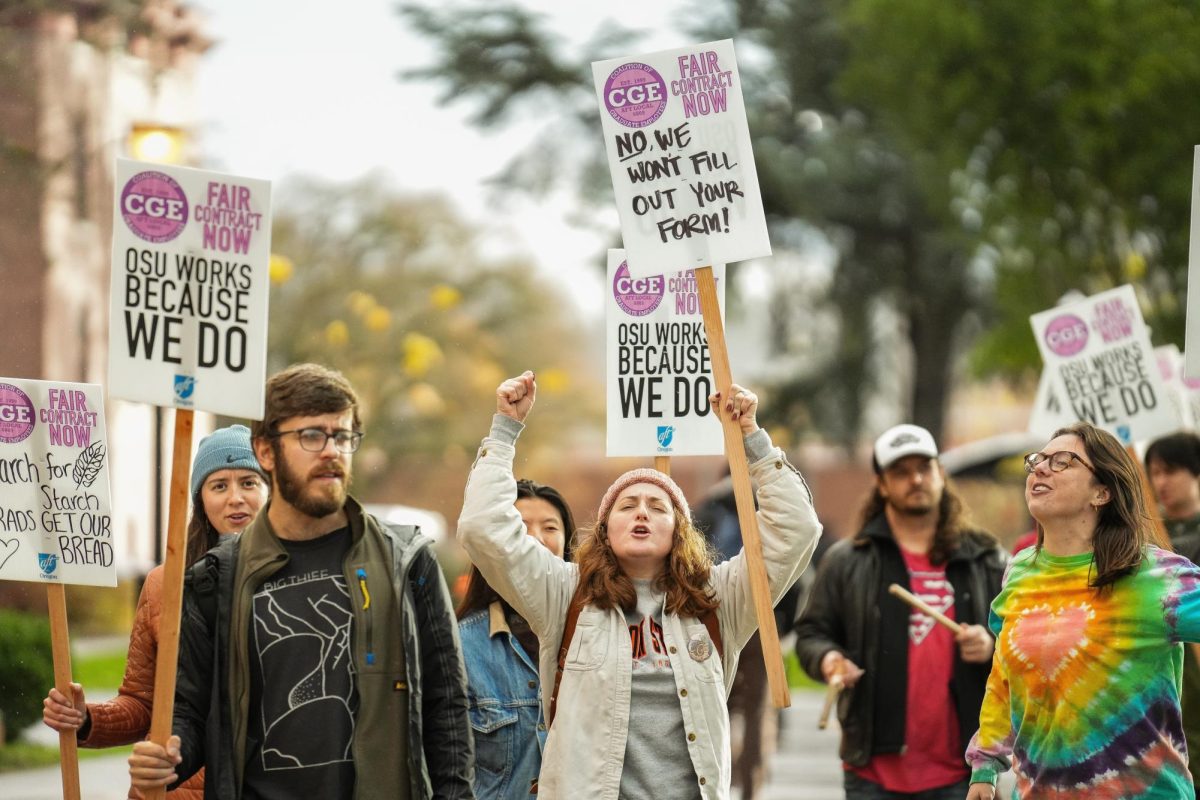


















































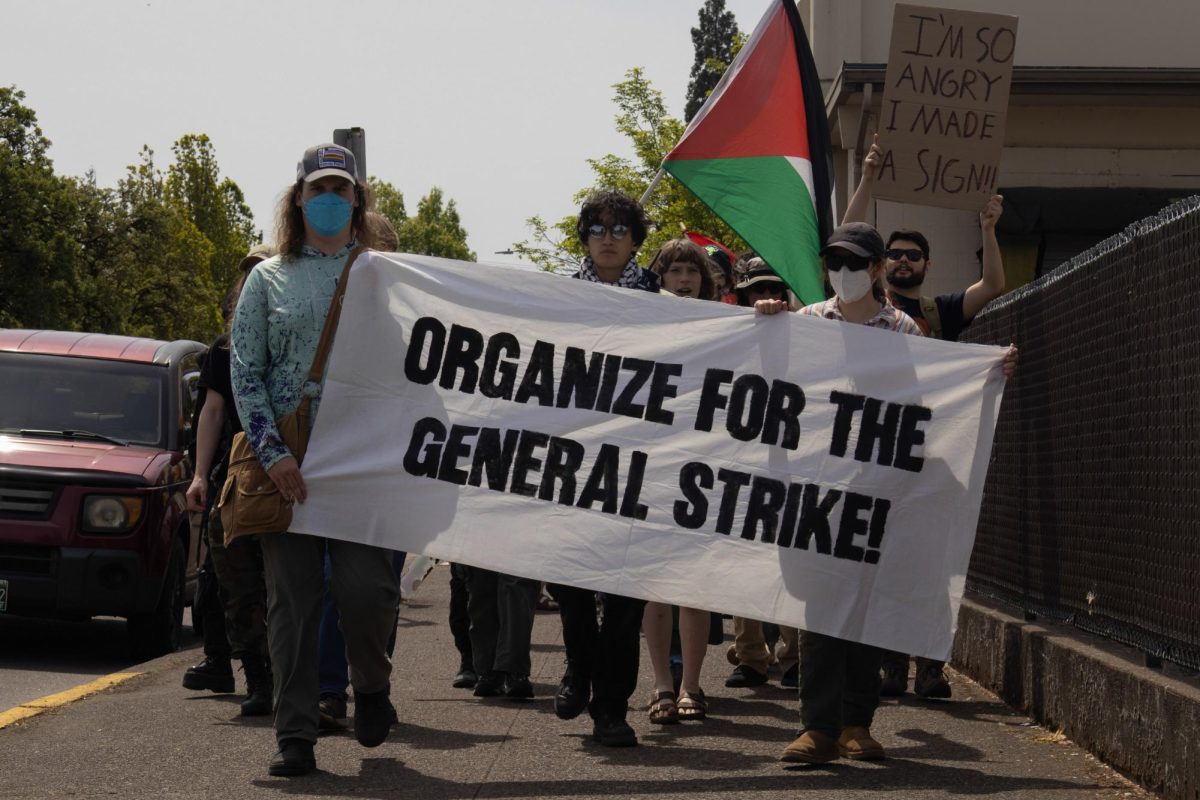



Over half a year after the ratification of a new contract between Oregon State University and the Coalition of Graduate Employees following a long-term strike, OSU is still facing accusations by graduate employees of its shortcomings.
In the three-year contract with the university, the union was able to secure several key gains, including a 13 percent increase to OSU’s minimum graduate worker pay for the first year as well as an approximate 11 percent cumulative merit raise over the contract’s duration, according to a statement from Emily Branam, CGE vice president of organizing.
The contract was ratified between CGE and OSU in Dec. 2024.
“OSU’s dual goal remains both honoring the important work of the graduate employees and meeting our responsibility to be a steward of public funds and tuition dollars,” wrote OSU’s Media Relations Director, Misty Edgecomb. “We believe that our agreement with the Coalition of Graduate Employees serves these aims.”
While the gains from the new contract have been impactful for many graduate employees, many members still feel dissatisfied.
“The biggest issues that graduate workers continue to face are sub-living wages and job instability,” CGE Vice President of Bargaining, Piper Aislinn, said in an email.
“OSU told us during bargaining that they don’t consider the cost of living a relevant factor in their consideration of our salary, despite the fact that our labor powers the teaching and research missions of the university and our working conditions make it extremely difficult to work additional jobs – though some people do that in order to support their families,” said Aislinn.
The union also has brought forth accusations of wage theft against the university related to how tuition remission functions at OSU. Currently, the university charges tuition to departments for graduate employees’ academic credits – even when those credits are for research or thesis work.
“What that means in practice is that once grads have finished their coursework, the university essentially starts charging them for the research work that their own employees are doing – and the amount of tuition paid to the university can be greater than the wages paid to the workers themselves,” said Aislinn.
“This is essentially wage theft, because in many cases the labor that workers are doing for academic credits – at the cost to their departments of roughly $10-20,000 per term for non-residents – is the same work they are being paid for as workers,” continued Aislinn. “This cost is artificially inflated by the university by imposing high minimum credit requirements on employees, even if they’ve already completed the required number of credits for their programs.”
Frustration has continued for graduate employees in the aftermath of the CGE strike in fall 2024.
According to Aislinn, as part of the contract settlement, the union agreed to instruct workers to report the hours of withheld labor during the strike period, and the university agreed to trust employees’ self-reporting of these hours.
“Despite assurances that they wouldn’t involve supervising in the process (workers are legally protected from having to disclose their strike status to supervisors), the University did end up getting supervisors involved in some cases in this intimidation,” said Aislinn. “People were sent ominous emails pushing them to report more hours, and in one case a supervisor even pressured his graduate students to report 40 hours of withheld labor per week during the strike, despite the fact that we are only paid for up to 16 hours per week, per the contract.”
OSU retroactively applied the raises graduate employees had won in deliberations to the start of the academic year, issuing backpay to make up the difference between old and new salaries from Sept. 2024 to Dec. 2024. However, according to Aislinn, OSU has not been upfront with this process.
“The university lacked transparency around their processes for calculating the amounts withheld, and issues in their system led to discrepancies, in some cases quite significant ones, between the hours reported and the pay withheld,” said Aislinn.
The graduates’ contract will reopen for negotiation in 2028, and according to Branam, CGE is ready to continue working toward meeting union members’ needs now and in the future.
“Our collective action as a union has pushed the university to align its actions with its stated values,” said Aislinn. “Their refusal to contribute to real financial stability of their employees is a material demonstration that they aren’t willing to put their money where their mouth is.”