
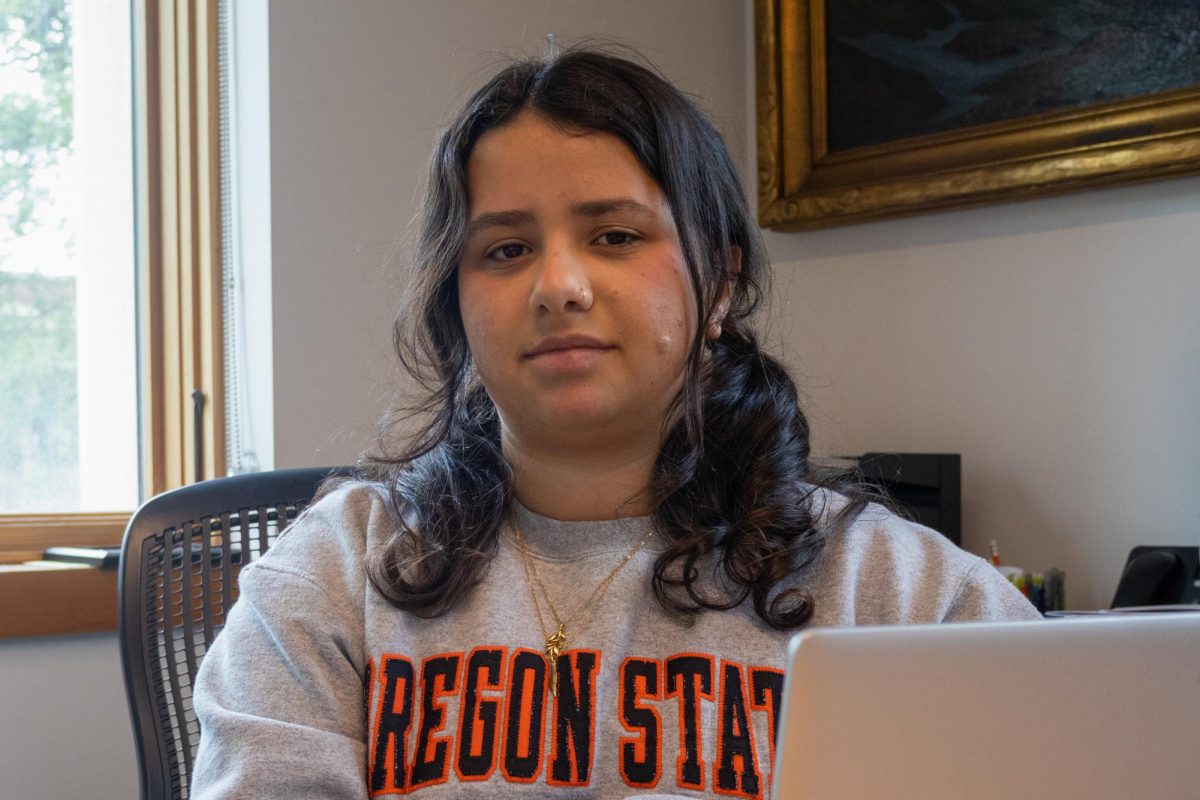










































Alice Moreau, a computer science major, sits in their Transitions class, just waiting for it to be over.
“They keep forcing me to do engineering…I just block out that class in my mind because I hate engineering,” Moreau said.
Transitions is a new core class introduced for the 2025-2026 school year to aid not only first years, but transfer students as well.
This 2-credit class replaced what once was the health and physical activity class requirements from previous years.
Transitions are made up of two different levels, 100 and 300, for first-years and transfer students respectfully. Both are very similar in nature, giving students campus resources and tips and tricks for college life at Oregon State University.
There are two different ways the course is set up. Either it consists of a 50-minute lecture and 50-minute recitation, taken at different times, or a two-hour class that combines both components.
Students so far have varying opinions on what they think about having to take this course.
“I feel like it’s pretty easy, but I feel like it’s also preparing me for the more difficult stuff ahead,” first-year computer science major Cohen Flanagan said.
Moreau expressed concern over being placed in the College of Engineering, as being an engineer as a whole is not their goal. However, they must complete engineering related courses despite being uninterested.
First-year education major Lex Schensul feels that many of the assignments he’s been given do not fit into his education overall.
Not only do first year students have problems with this course, but so do transfer students.
“The material is just such basic information designed for freshmen and has no adaptations for transfer students who often face different challenges than first-year students,” natural resource major and transfer student Julia Boaz said in an email.
“Every lecture, recitation and assignment seems more about checking boxes than actually learning something,” Boaz said.
While the students express several concerns over the class, professors have some insight to share.
June Morris, OSU professor, taught first-years for the first time last year. “I was taken by surprise at the little things that really mattered that they didn’t know,” Morris said. “They haven’t used Canvas in high school. They didn’t know how to access the library.”
“We want our freshmen to be successful, but we didn’t really give them a strong safety net for that (in the past), and I think Transitions does that,” Morris said.
Despite being the first year of Transitions, Morris described the format as “remarkably well planned,” but still shares some ideas from the faculty that may be helpful in the following years.
Morris said that the College of Education and herself have been throwing around the idea of taking field trips throughout the length of the course. One Transitions 300 professor offered an optional trip to the Basic Needs Center after the class.
Adding a field trip aspect to the Transitions course can help students, first-years and transfer students alike, according to Morris. “Physically seeing a resource on campus is a really great idea.”
“College is full of transitions…like that first week of class, really slowing down and saying, ‘This is how we do it. We’re going to do this together,’” Morris said.