



























































For the third consecutive year, Sudan has topped the International Rescue Committee’s Emergency Watchlist as the northeastern African country continues to face widespread conflict, displacement and deepening humanitarian need.
The report, released on Dec. 16, highlights the 20 countries at the highest risk of new or worsening humanitarian crises. This year’s list also included Occupied Palestine Territory, South Sudan, Ethiopia and Haiti.
While Sudan is located thousands of miles away from Corvallis, the impact of this crisis is still hitting close to home for some students at Oregon State University.
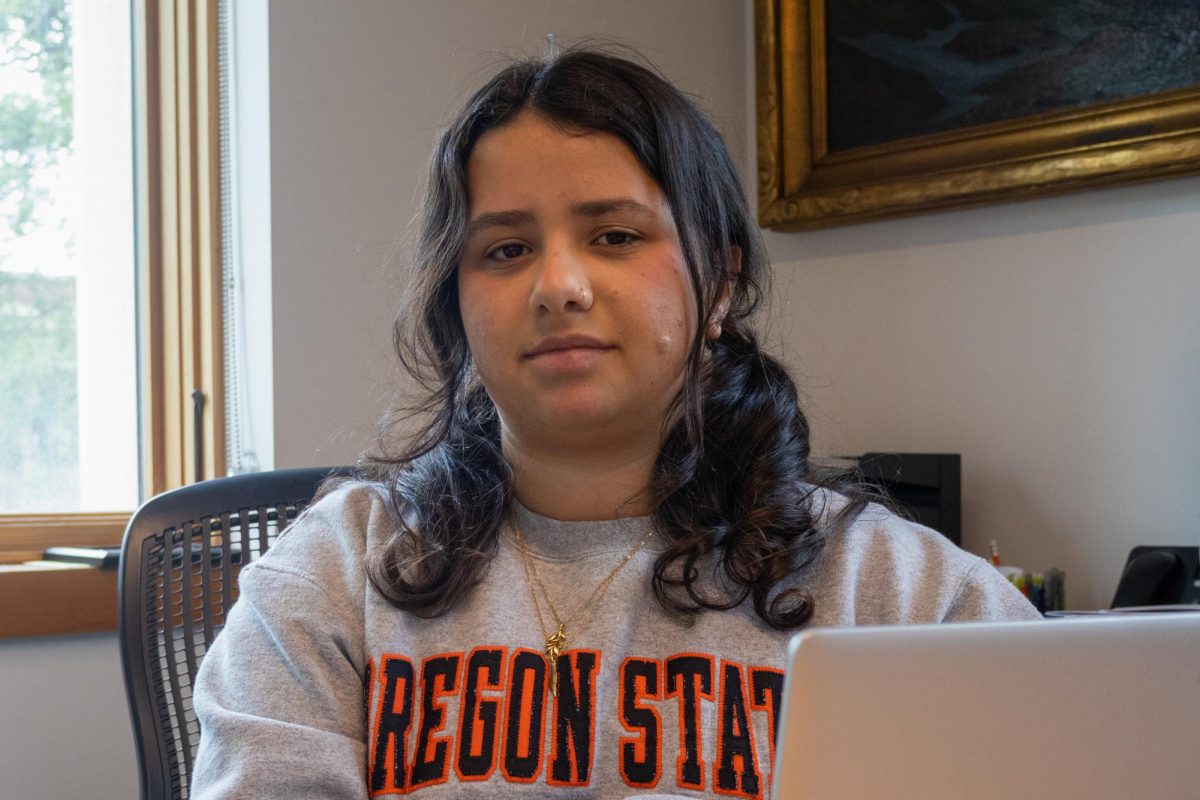
This past November, Oregon State’s Muslim Student Association in collaboration with SAFAR — Southwest Asia and North Africa (SWANA) + African Forum for Alliance and Representation — hosted an information event, “The Land of the Gold: A History of Sudan, The Genocide, and What You Can Do”, to trace the past that has led to Sudan’s current conflicts and genocide, according to Aya Ari, co-presdient of the MSA.
Born in Sudan, Ari has family members and friends who have been heavily affected by the conflict, which motivated her to share the history of Sudan at the event.
“The civil war in Sudan has been going on since April 15, 2023. I don’t think there is a lot of awareness around Sudan,” Ari said in an email. “I think a lot of times the situation has been portrayed as ‘it’s another African country that has corrupt leaders (RSF and SAF) fighting for power.’ Which is an extreme oversimplification and dismisses the reality that civilians have to suffer for.”
Ari also noted that exploitation has played a role in the crisis, particularly through the extraction of gold.
“Beyond the surface of this reductive rhetoric, there are a lot of political and economic factors that have played into it, mainly being Sudan’s gold,” Ari said in an email. “Armies, militants are being funded for the exchange of resources… I mentioned how UAE has 0 gold mines and asked the question of how many mines Sudan has. The answer being around 40,000 gold mines (Ejatlas). So, to simply put, Sudan has the resources. It is not underdeveloped but rather it is being exploited for its gold and resources by a number of countries.”
According to Ari, the MSA is committed to making space for political education in their future events and collaborating with other clubs around campus with similar goals such as SAFAR and Dissenters, a new anti-militarist group on campus.
To show solidarity and support, Ari suggested that people continue to learn, stay informed and raise awareness about Sudan. She also recommended that those looking to donate, support trusted organizations like Sudanese American Physicians who provide direct humanitarian assistance.
“Being Sudanese, something that has always been instilled in me is the importance of community,” Ari said in an email. “Even after going through so much, I believe that Sudanese people have been the most patient and resilient. At the end they’ll always have a smile on their face and will always support one another. Their resilience inspires me every day. I hope that everything gets resolved in the near future.”
In the end of her email, Ari shared a letter found on a Sudanese refugee that drowned while fleeing to safety.
“I am sorry, mother, because the ship sank with us and I couldn’t get there.
Nor will I be able to send the money I borrowed to pay for the trip… I am sorry, divers and search teams for the missing, for I do not know the name of the sea I drowned in.
Rest assured, asylum officers, I will not be a heavy burden on you.
Thank you, sea, for welcoming us without a visa or passport… I am not sorry that I drowned. I have rested and brought relief [to others].”