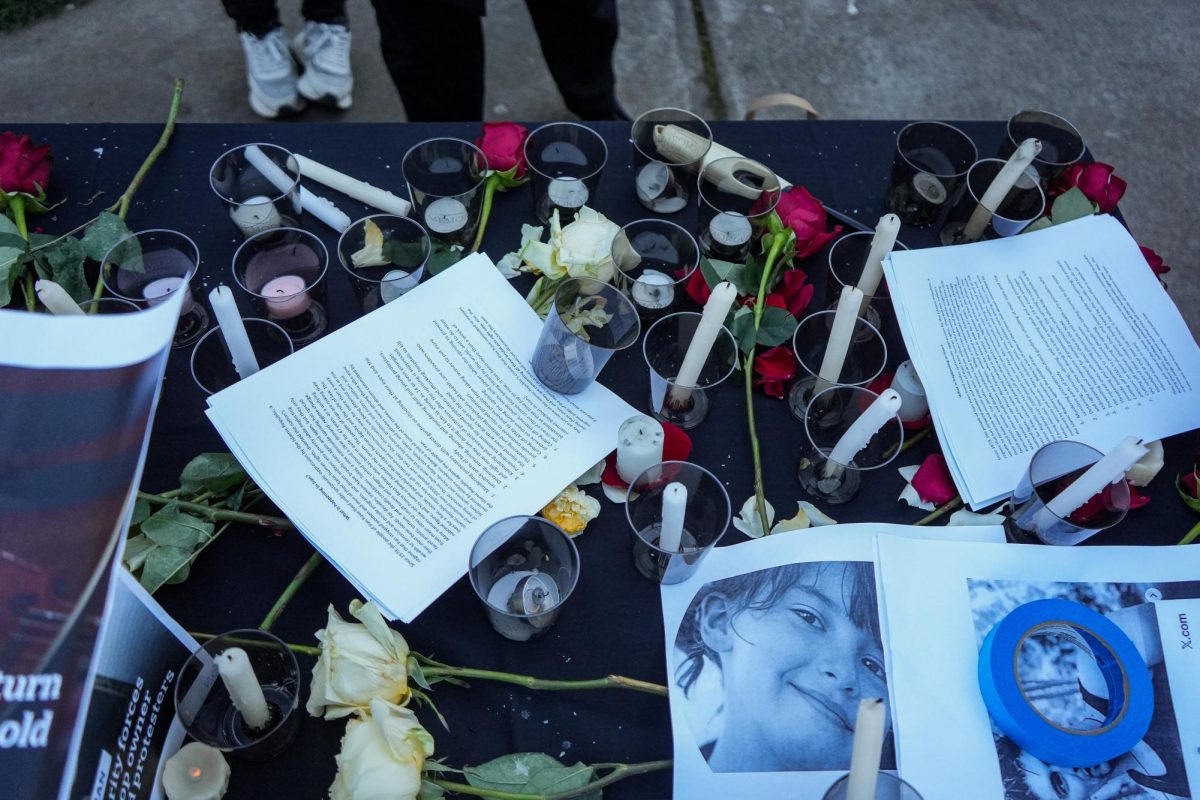



























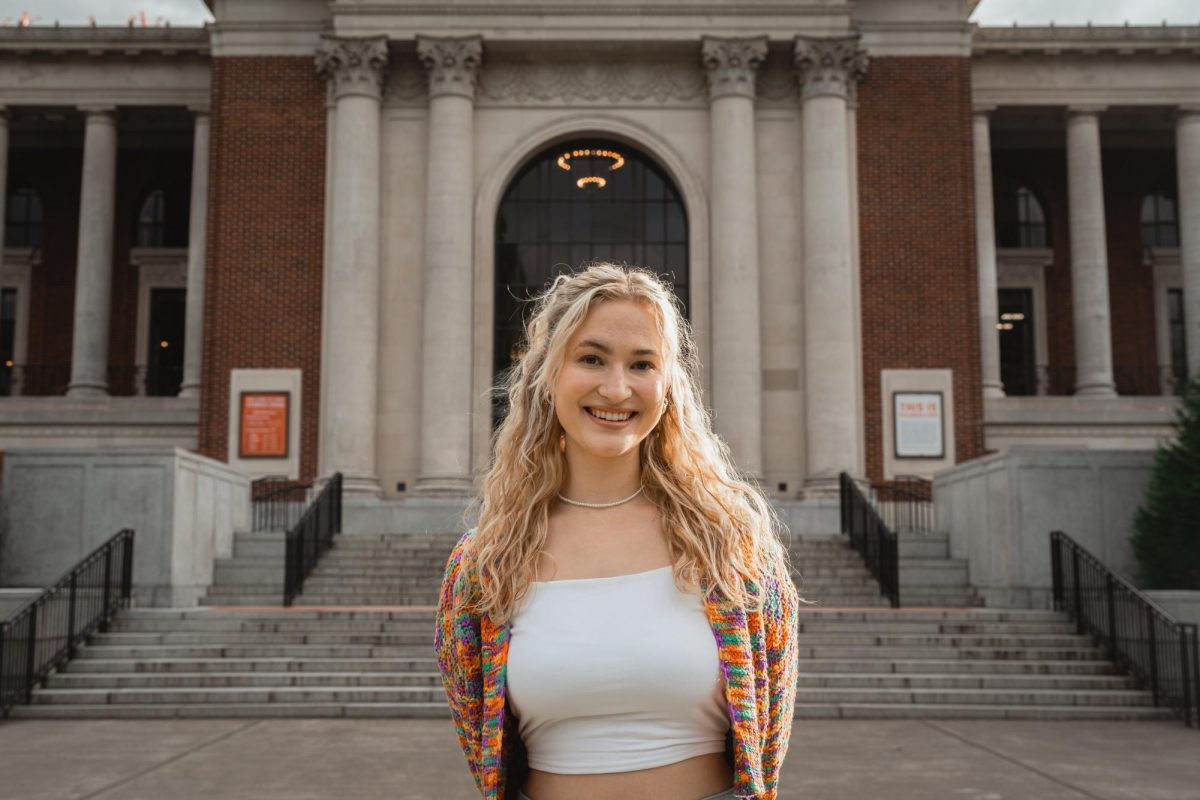


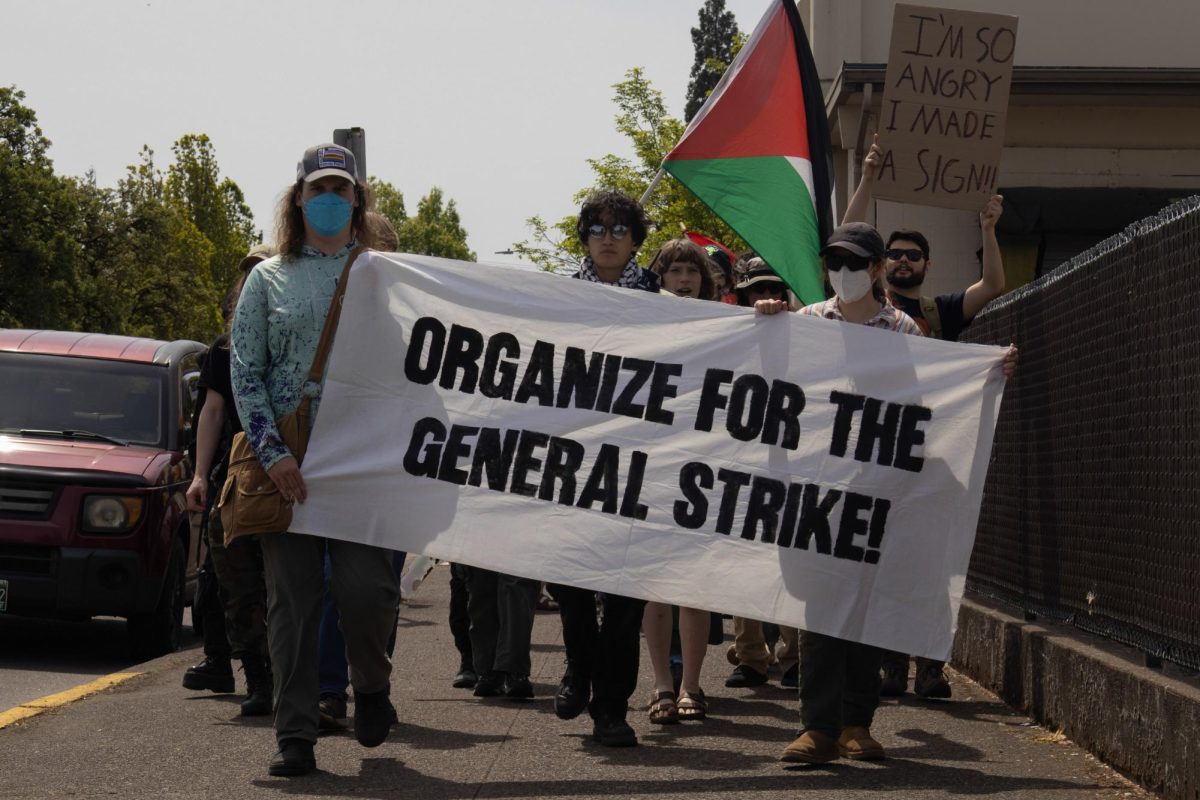


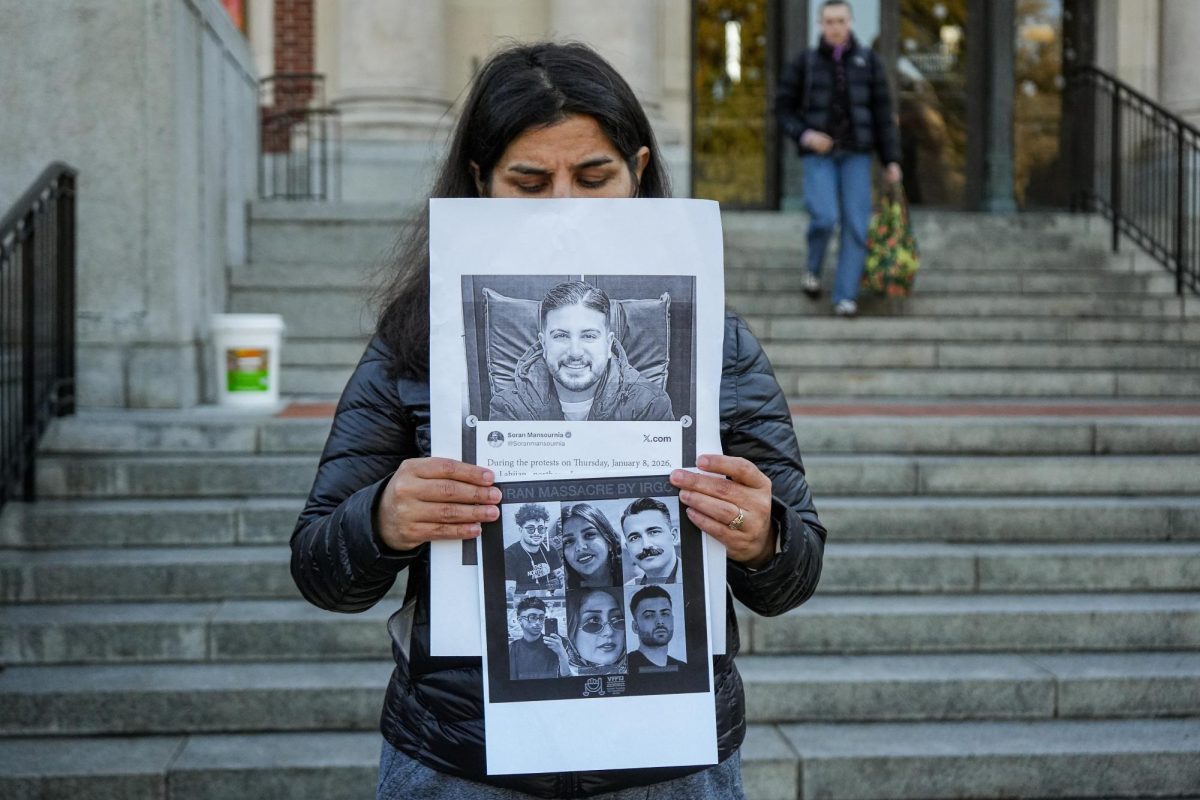
A dozen or so Oregon State students and faculty members gathered at the Memorial Union steps on Jan. 23 to protest the killings of civilians in Iran.
The event was organized by Iranian international students and faculty in response to the Islamic Republic’s crackdown on protests that has killed at least 5,137 civilians since Dec. 28, according to the U.S.-based Human Rights Activist News Agency.
Widespread government-imposed internet blackouts have made reporting out of Iran difficult and there are varying death tolls and numbers of detainees depending on sources. According to the UN special rapporteur for Iran, Mai Sato, doctors inside Iran estimate the death toll at 20,000 or more.
“This is the most brutal massacre happening in recent history. We are here for the memory of these people,” said M, a graduate student and organizer, who asked to go by only her first initial for fear of retribution against family in Iran.
“People had no access to the internet to contact the world and all of this happens in darkness,” M said.
“They were just protesting for their freedom, their life, all the basic principles of life. And they were all unarmed and civilians. The Islamic regime just killed innocent people,” said S, a PhD student, who also requested anonymity for fear of retribution.
Due to the internet outages, many Iranians abroad have been unable to contact family members at home.
“You have like a parallel world that you are observing every second, and you’re refreshing, and you’re wondering, is my family alive or not?” said P, a faculty member who also requested anonymity.
“Everything pales in comparison to what is happening back in Iran,” P said. “People are just like in bare hands in front of guns and bullets, so now their last hope is for the international community who care about human rights, who care about freedom, who care about peace to step up.”
Protesters carried signs with the faces of people killed in the crackdown, images of the violence, and the former Lion and Sun Flag used before the Islamic Revolution in 1979. One sign had a picture of Rezha Pahlavi, the exiled Crown Prince of Iran, who has voiced support for the protests and regime change.
“People, they don’t want this government anymore, they want regime change and the regime wants to keep themselves in power by bloodshed or tricking people or killing them,” M said.
P follows news about protests and violence in Iran on her social media feed. She showed a social media video of a father calling his son’s name and searching for him among body bags laid out in the street.
“Last night, that’s how I like went to bed, with this video. This is like our life for the past month,” P said.
The situation in Iran remains uncertain as the internet blackout stretches into its third week, detainees face the possibility of executions, and the United States moves an aircraft carrier group into the region in preparation for possible strikes.
“The university is monitoring protests and demonstrations occurring in Iran,” Rob Odom, vice president of university relations and marketing, said in an email statement. “The reports of violence and communication outlets being shut down have impacted many in our community and created fear or uncertainty as they follow news from home. The university is reaching out to impacted individuals with resources and support.”