



































































































From increasingly severe wildfires and drought to rising sea levels, many feel there is little they can do to stop climate disasters. In 2009, Oregon State University sought to change that by committing to carbon neutrality under former President Ed Ray.
Carbon neutrality refers to balancing the amount of carbon dioxide released into the atmosphere with the amount removed. OSU set a target year of 2025, though the university has since reduced its emissions by 23.5% between 2008 and 2024.
According to Brandon Trelstad, head of OSU’s Sustainability Office, the original goal was intentionally ambitious and meant to set a strong direction for taking climate action.
“It was an audacious and ambitious goal. I think the philosophy of our former president was, let’s set the bar really high and do everything we can to get there, knowing that we may not,” Trelstad said.
In 2022, the Sustainability Office and the Faculty Senate Carbon Commitment Committee created the OSU Path to Carbon Neutrality, which restructured the university’s approach. The plan outlines nine priority actions focused on cost-effective emission reductions, including improving building efficiency and, when necessary, purchasing carbon offsets.
The updated plan moved away from a fixed target year. Trelstad said the focus is now on reducing emissions as much as possible rather than debating deadlines.
“When the ambition is to reduce to zero or near-zero carbon emissions … that still becomes the goal,” Trelstad said. “Do we want to spend a lot of time and energy having the conversation about a specific year that may not come to fruition, or do we want to invest that time and energy into doing the work?”
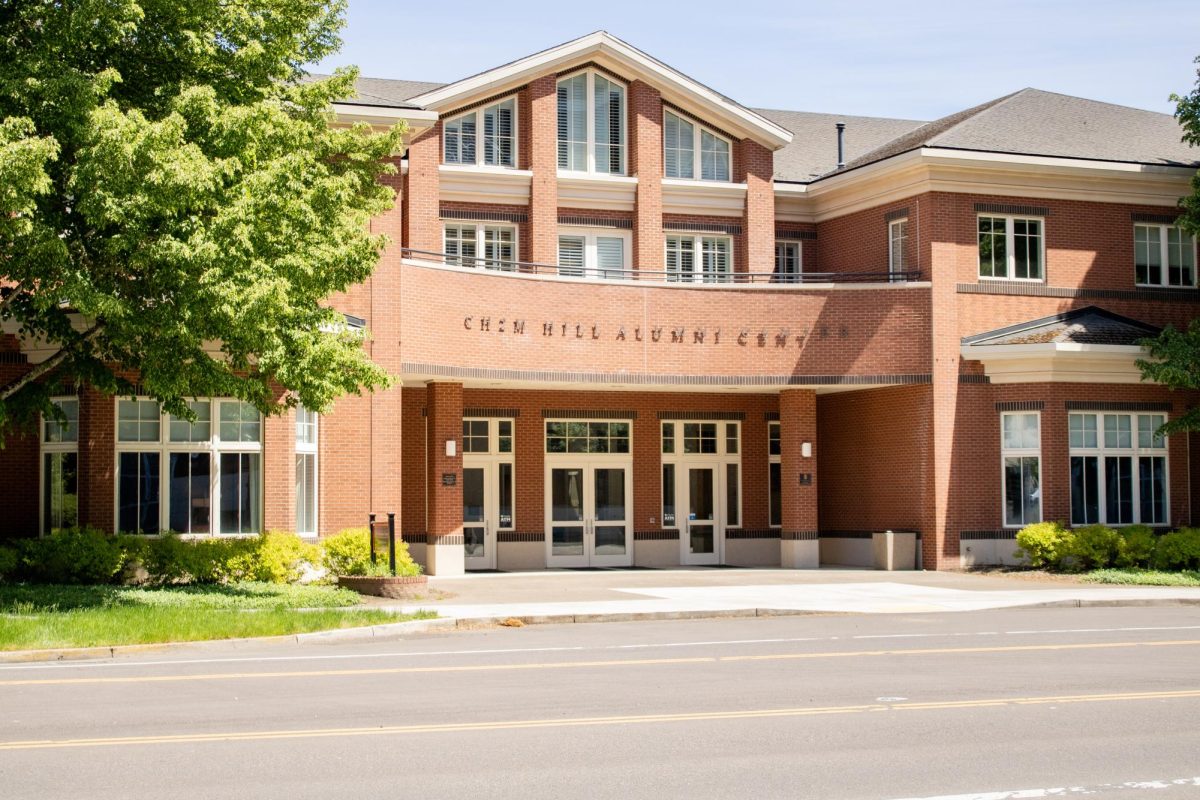
Much of that work centers on campus buildings, which account for the majority of OSU’s emissions. Improving building energy efficiency is a primary focus of the Sustainability Office.
Several buildings, including Nash Hall and the Linus Pauling Science Center, have undergone heating and cooling tune-ups. Trelstad said tune-ups save approximately $500,000 in energy costs and reduce about 1,500 tons of carbon emissions annually.
The university is also planning infrastructure upgrades such as heat recovery chillers, which capture excess heat from laboratory buildings and reuse it for heating and cooling.
Reducing emissions from electricity presents additional challenges, as Oregon’s electrical grid remains largely fossil fuel-based. Trelstad said progress in this area depends heavily on utilities, government policy and economic conditions outside the university’s control.
Currently, on-site solar panels provide 5-6% of OSU’s electricity needs. An additional 3-4% comes from the Oregon Community Solar Program, which allows customers to support shared solar projects.
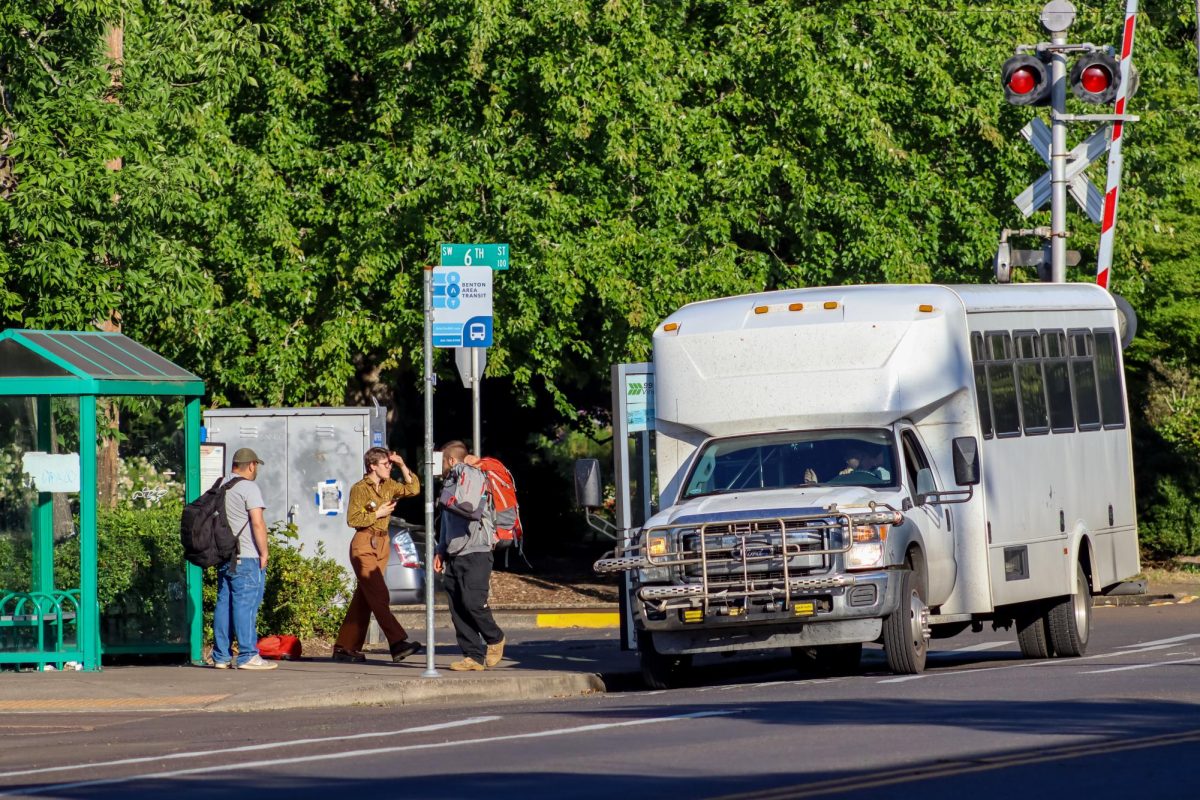
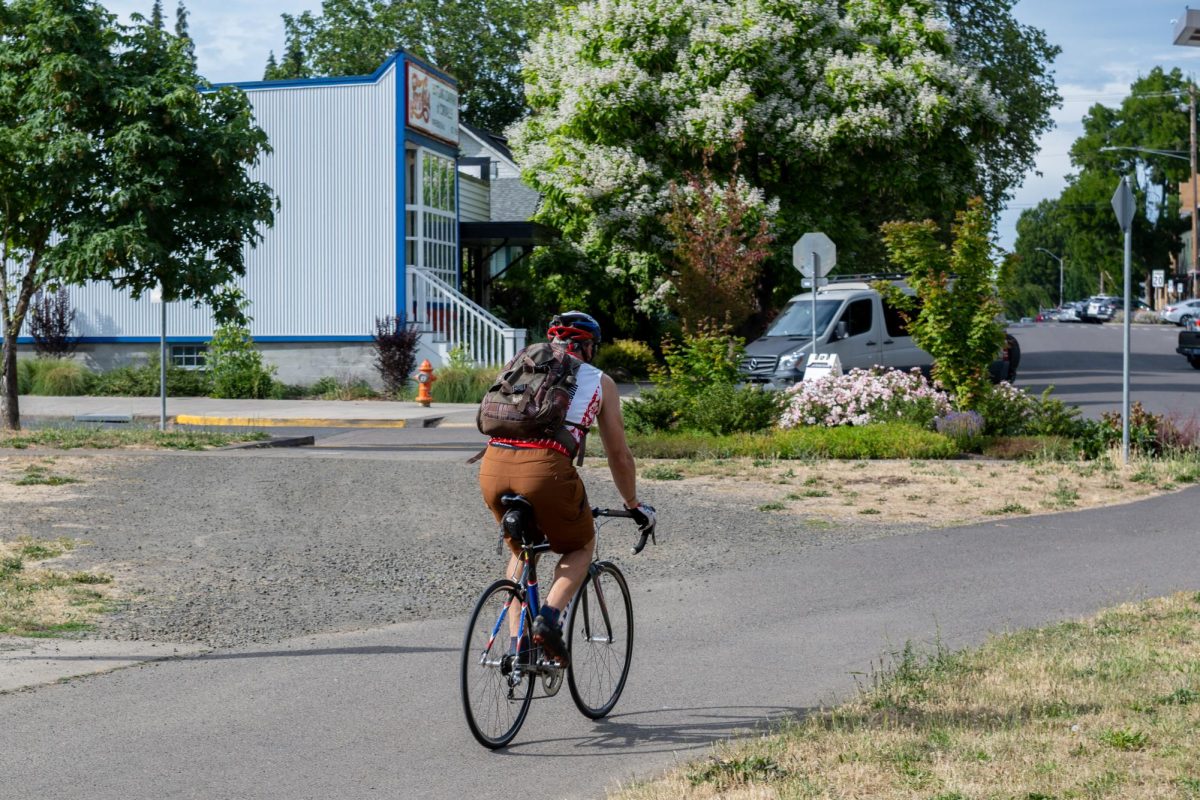
Transportation is another difficult area. About 8% of OSU’s emissions come from air travel, with another 8% from commuting. Carbon offsets are being considered to address these sources, though Trelstad expressed concerns about cost and effectiveness.
“We could be carbon neutral tomorrow if we just bought carbon offsets for everything,” Trelstad said. “But that’s not a good investment, and it’s not really an authentic way of reducing our emissions.”
Looking ahead, Trelstad estimated that OSU could potentially achieve a 50% reduction in emissions by 2045.
Lili Daniel, a second-year botany major who works with OSU’s sustainability council, said progress is often limited by staffing and funding. The Sustainability Office has only two employees, which restricts how much the university can take on at once.
While Daniel said she is encouraged by initiatives such as carbon-reduction grants for student-led projects, she noted that sustainability efforts can be slowed by institutional barriers.
“In any kind of big institution, you’re going to have people who really want to fight for sustainability, and you’re going to have things that get in the light of that,” Daniel said. “A lot of things that can get stuck in the bureaucracy.”
Daniel added that sustainability is often treated as a lower priority across institutions, not just at OSU.
“It’s like, ‘Well, that would be nice if we had it,’” she said. “And that’s not unique to OSU at all.”