


































































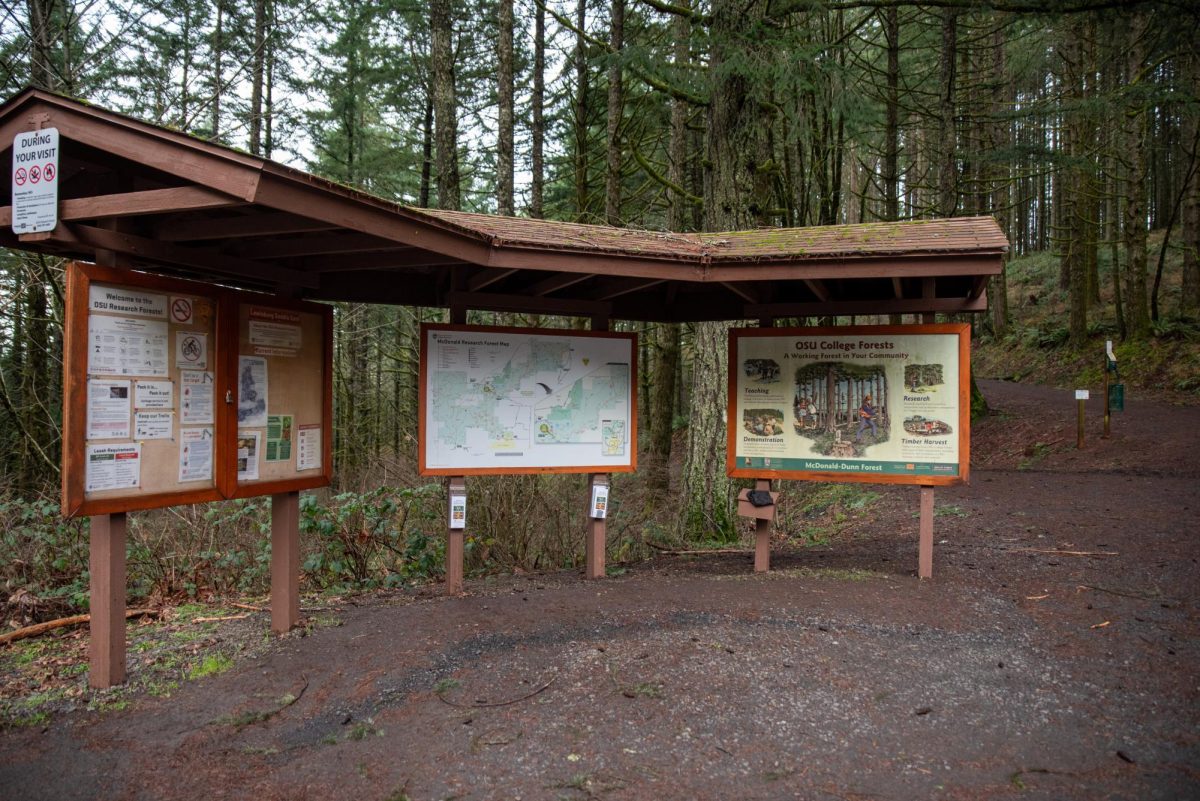
The Oregon State University College of Forestry has released its final management plan for the McDonald-Dunn forest. The plan went into effect starting in January, though not all are happy.
This plan replaces the previous management plan for the 11,500-acre forest located a 20-minute drive north of Corvallis, instituted in 2005. The release of the updated plan comes after a three-year planning process.
The new plan includes outlines of various management strategies for areas within the forest, dealing with harvesting, restoration and tribal partnerships.
One change is a reduction in the amount of timber harvested, through which OSU forests are self-funded. The new management plan decreases the harvest level from the original 6 million board feet to 4.3 MMBF.
The new plan increased the area of the forest designated as old-growth reserves from 4% to 10%. The name was also changed from old-growth reserves to late-successional forest.
Holly Ober, associate dean for science outreach in the CoF and forest plan development chair, said the increase in late-successional forest areas and areas of ecological concern came from the college’s desire to increase educational opportunities, as well as considering community feedback.
“One of the things that is different with this new plan is that we’re trying to expand the acreage that has that older forest condition,” Ober said.
The plan aims to diversify the forest conditions to expose students to more types of ecosystems. Ober said that there has been a small amount of acreage fitting the late-successional classification in the past.
Areas of forest designated as ecosystems of concern, such as native oak savanna, woodlands, prairies, meadows and riparian systems increased from 6% to 10% of the total area.
Additionally, while the 2005 plan protected trees older than 160 years from being cut, the new plan removed age-related cutting limits.
Doug Pollock, head of the community group Friends of OSU Old Growth, expressed concerns with the removal of protections on older trees from harvest, the ecological impacts of removing these protections and the lack of buffer land between late-successional areas and those for harvesting.
Ten percent of the forest will be managed, where trees of the same age are harvested every 35-50 years. Thirty percent of the forest will be managed with a rotation length of around 60–90 years, with some stands managed to 120 years.
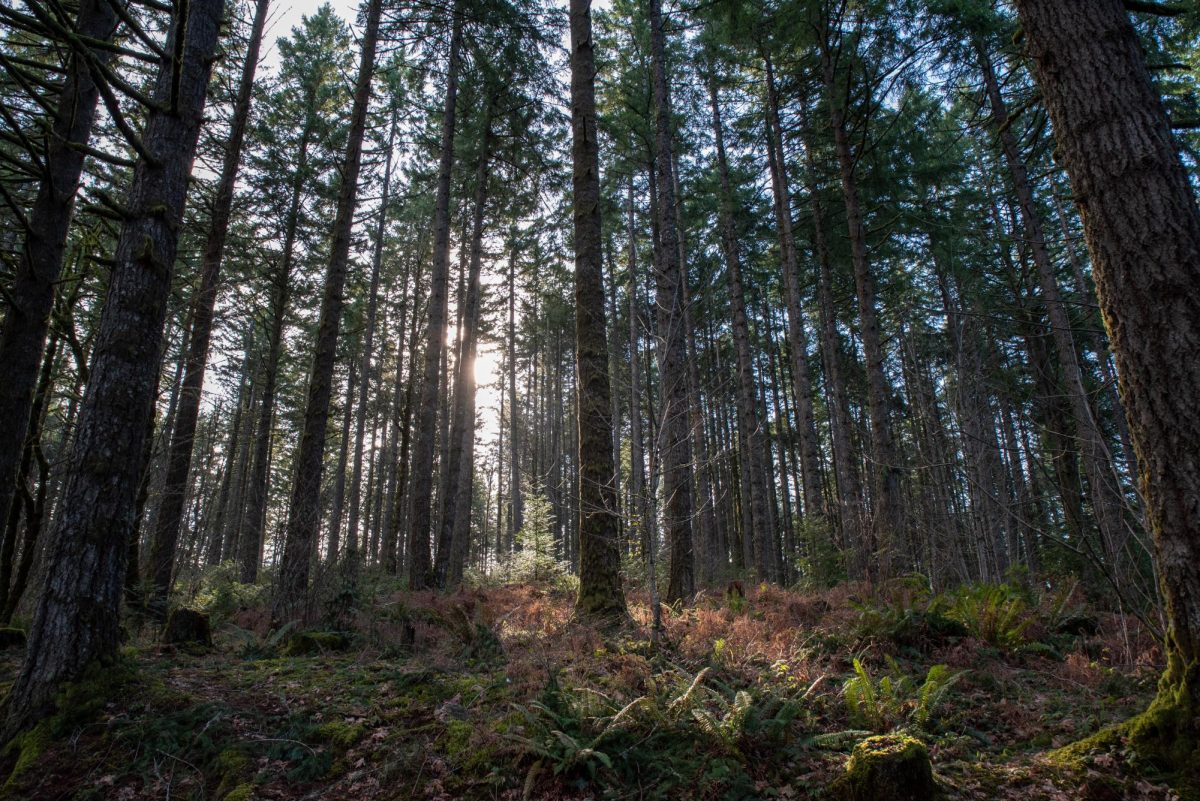
Clearcuts, where all trees in a given stand are cut down, are not to exceed 80 acres for short rotation and 40 acres for long rotation.
Pollock expressed concerns with the potential impacts of the amount of clear-cutting done in the forest, such as those regarding wildlife, wildfire risk, habitat and climate concerns.
“If they were following the best available science, they would recognize that clear-cutting has all of these adverse impacts. The future of forestry is ecological forestry, or some other varieties of forestry that are much more in tune with nature,” Pollock said.
The process for developing the new management plan was initiated by Dean Tom DeLuca three years ago.
The plan drew on input from two committees: an internal committee with faculty from the CoF and the College of Agricultural Sciences, and a stakeholder advisory group with members from the community.
Over the course of summer 2025, two community listening sessions and two community input sessions were held. The CoF received 130 public comments during a 30-day period.
Computer models examining recreation, climate, biodiversity and other metrics being used for creation of the draft plan, in addition to the potential of cutting older trees, faced scrutiny from public attendees at public meetings.
Ober said that the feedback received from the community was used to improve the modeling and clarify intent and language in the plan, in addition to creating an advisory group to identify ways to diversify revenue streams for the forest beyond timber harvesting.
Pollock said the 30-day comment period was not enough time for community engagement. He found issues with the organization of the public meetings and their accessibility, and felt the CoF is not listening to community feedback and lacks planning transparency.
Ober said that the final plan ultimately balanced the different uses of the forest, requiring several different needs, including learning opportunities, revenue generation and supporting biodiversity.
“This whole three-year process of developing the plan has been an attempt to think about all the trade-offs associated with different decisions that could be made and find a good balance of all of those interests,” Ober said.
For Pollock, this model of sustainability is ill-advised and hopes the CoF will eventually move away from being funded from timber revenue, take efforts to restore public trust and move away from clear-cut forestry.
“I think it’s clear to me, and I think many community members, that these forests are worth more standing,” Pollock said.