













































































Rising patient numbers have been a purr-fect opportunity for veterinary students to practice their skills at Oregon State University’s small animal clinic in the last few months.
The Small Animal Emergency and Critical Care clinic at Magruder Hall began seeing primary calls last December, according to Pia Martiny, a professor in the Department of Clinical Sciences and leader of the clinic.
The clinic only sees cats and dogs, since other small animals, called “exotics,” have medicinal needs outside the clinic’s abilities. But the clinic has been receiving more emergency room cases each month, Martiny expressed.
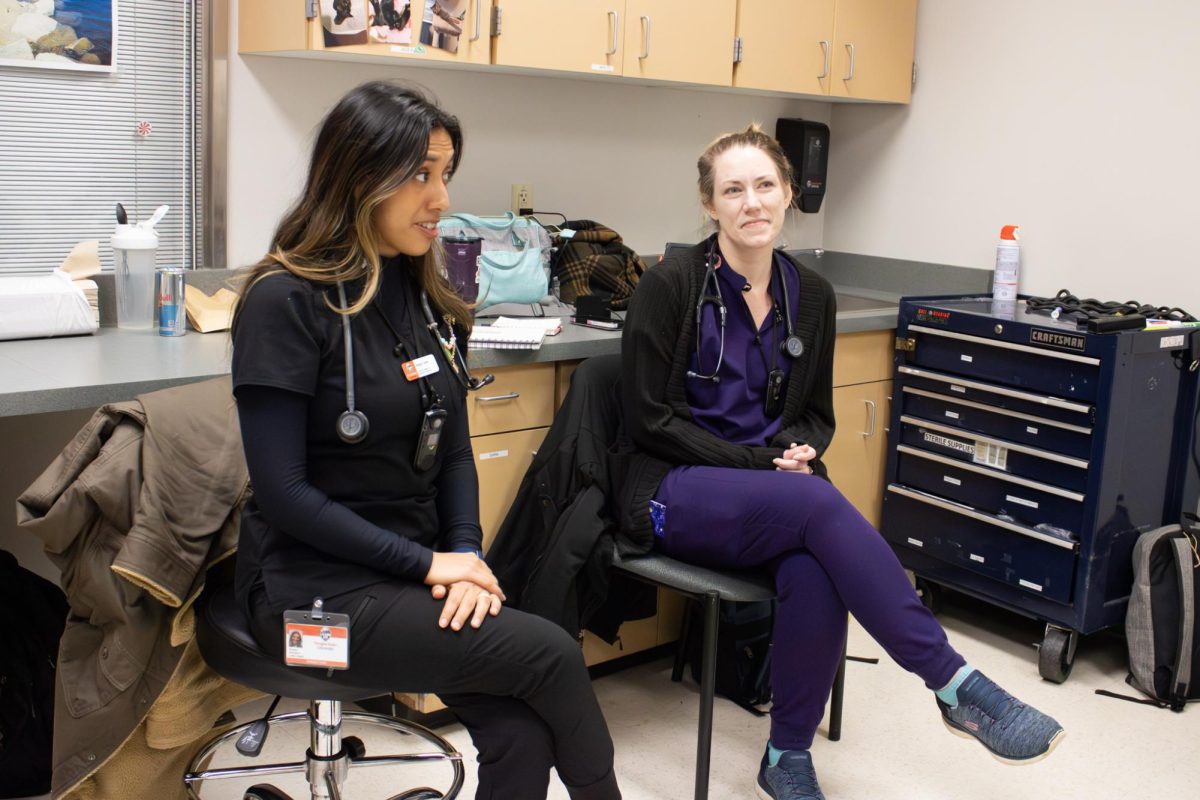
With the increased opportunities to practice, students working in the clinic have noticed benefits to their education.
“Usually when you see it, it helps it stick in your head more than when you see it in a textbook,” said Magali Lewis, a fourth-year vet graduate student working in the clinic.
Lewis is one of many graduate students enrolled in the College of Veterinary Medicine. The program consists of three years of lectures about veterinary practices, followed by a practical final year at the Lois Bates Acheson Veterinary Teaching Hospital, where the ECC clinic is located.
“It’s actually more hands-on now because before it was kind of a rotation of lecture,” said Nacoma Deese, another fourth-year vet graduate student working at the clinic.
Martiny explained that ER cases are a different working environment from planned procedures, but students are supervised all throughout.
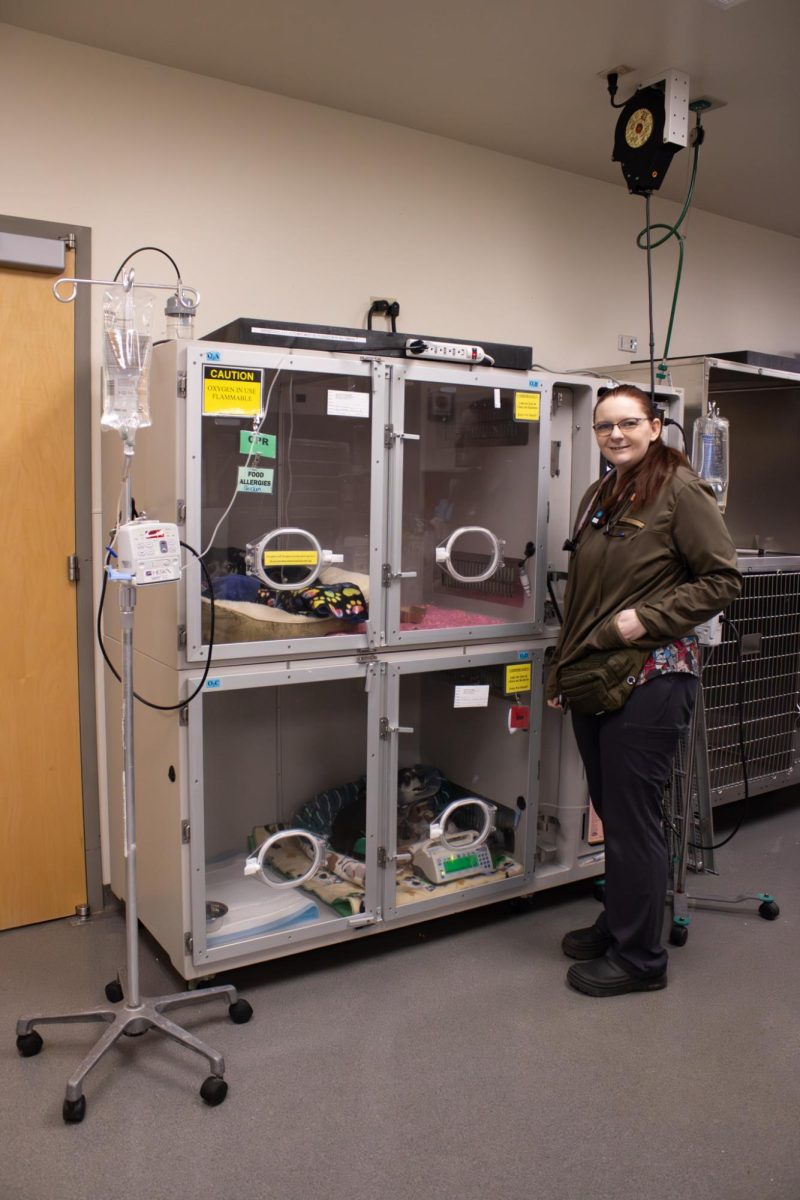
Emergency and Critical Care intensive care unit on Feb. 17. OSU’s Lois Bates Acheson Veterinary
Teaching Hospital offers emergency pet services that allows its vet students to get hands-on
experience.
“Part of what we do is react and treat very much on an instinctual level,” Martiny said. “Getting busier means more training opportunities. Every patient with the same disease will look a little different.”
Part of every case is a triage exam, which is an immediate assessment of the patient’s body systems of concern. Students review how to conduct this examination properly during their first day of orientation at the ECC, according to Lewis.
More chances to practice triage checks have been a beneficial learning experience for Deese.
“They help solidify screens, treatment and efficiency,” Deese said.
Unlike OSU, other veterinary schools have limited or no access to teaching clinics.
“I originally had to go to private clinics since my school didn’t have a teaching clinic,” said Christopher Larson, a post-doctorate intern working at the teaching hospital.
Larson explained that the structure of private and academic clinics differs in terms of supporting students. For one, academic clinics have communication courses built-in to assist students with providing empathetic support to pet owners during stressful moments.
Larson’s internship began last June, during which he has been focusing on anesthesia. Part of his role now is also training the current graduate students in veterinary procedures in the ER clinic.
Krutika Swadi, another intern at the clinic, also balances skill development with teaching graduate students.
“I’m really focused on refining my clinical decision-making under pressure and mastering the management of complex, critical cases,” Swadi said in an email. “I’m also working on my skills as an educator — learning how to mentor students effectively while still managing a heavy caseload.”
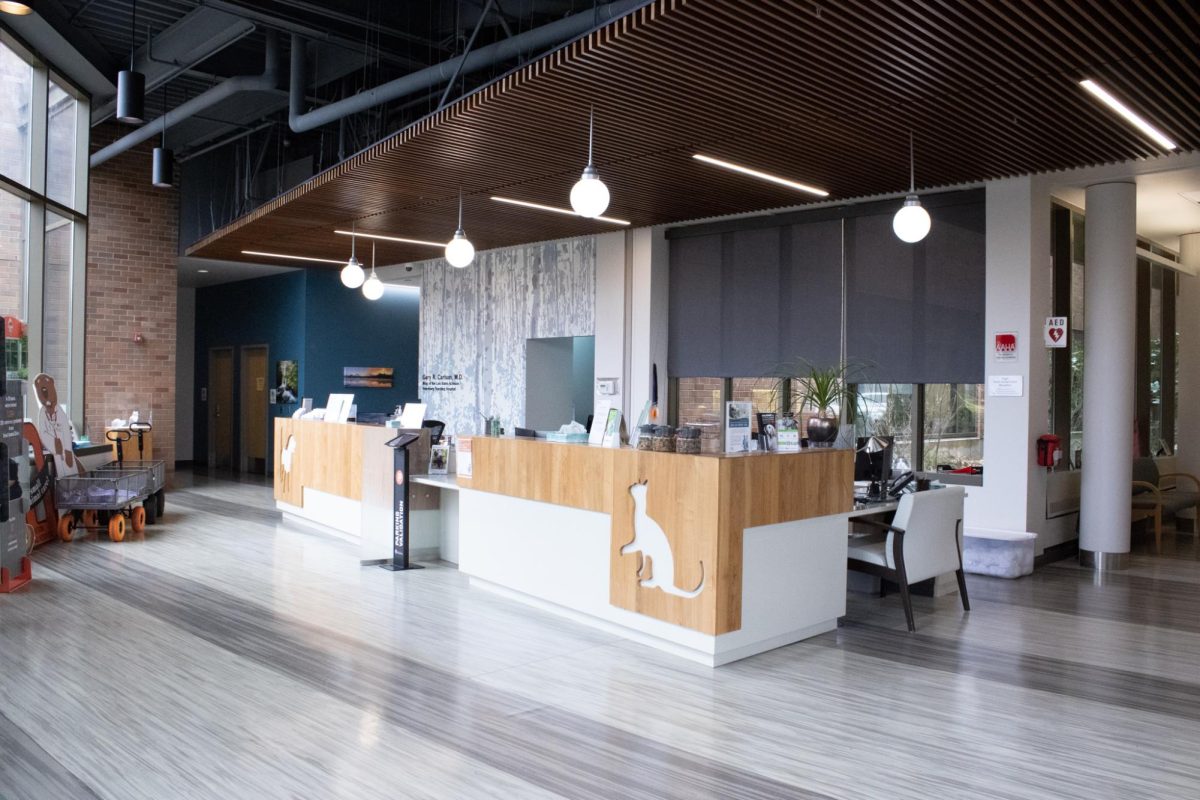
Tues, Feb 17. OSU’s Lois Bates Acheson Veterinary Teaching Hospital offers
emergency pet services that allows it’s vet students to get hands-on experience.
Swadi said part of her ultimate goals include an ECC residency and becoming a veterinary criticalist, a board-certified emergency room veterinarian, at the clinic.
“This internship is a major stepping-stone, providing the high-volume experience and excellent mentorship by the several boarded specialists at the veterinary teaching hospital, that I need for advanced specialty training and practicing at the highest level of emergency medicine,” Swadi said.
For interested pet owners, Martiny recommends contacting in advance when possible to determine the patient’s needs. The ECC clinic can be called at 541-737-4812 or emailed at [email protected].
To learn more about the clinic, visit the Small Animal Emergency and Critical Care clinic page on OSU’s veterinary medicine website.