












































































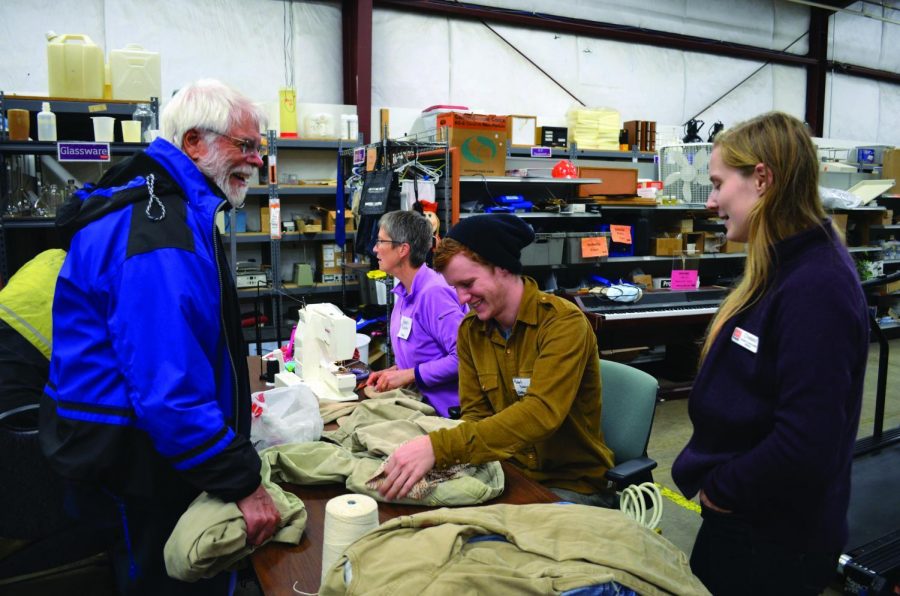
For the students of Oregon State University, Nov. 12 is an opportunity to learn some possibly life-altering skills.
For the Waste Watchers Club, it is just another day of recycling and taking initiative to educate students and community members about sustainability practices.
Oregon State University’s Repair Fair is Wednesday Nov. 12, 6 to 8 p.m. at the OSUsed store warehouse. Brought to you by Oregon State’s own Waste Watchers and Campus Recycling.
Available at the event will be tables where students can bring their torn or broken clothes, electronics, appliances, and bikes to be fixed by repair volunteers.
It should be noted that the repair fair will not be supplying spare parts. However, they will do their best to fix anything students bring and, should the fair lack a particular part, volunteers will refer students to where they may be able to find it.
If you brought a part and simply need help installing it, repair volunteers will assist where they can.
The repair fair is an event series held by Waste Watchers and Campus Recycling in an attempt to push students to shop second hand. The event promotes consciousness surrounding the pollution that the fashion industry creates.
The fair is also held with the intent of teaching students valuable skills and to help them save money. In the words of the event’s mission statement found on their website, “We believe in providing a space that allows us to exchange ideas rather than dollars.”
For students interested in taking part in the Repair Fair as either a standard volunteer or a repair volunteer, a portal for the sign up can be found here.
OSU’s Repair Fair, brought to us by the Waste Watchers club and Campus Recycling, happens twice every year. This year, the first one is happening Nov. 12 and the following is currently planned for week seven of spring term.
It should be noted that the event itself is not exclusively for students. All community members, whether you’re a student or not, are welcome to participate in the event as attendees or as volunteers.
Attendance rates of students and outside patrons alike, range from 30 to 50. With the volunteers -standard and repair only combined- coming at around 25.
When asking Dylan Kember, Waste Repair Fair Chair, Casey Gratz, Waste Club’s President, and Kaylee Anne Smith, Waste Club’s Advisor about the biggest challenge Waste Watchers faces when organizing the Repair Fair, they agreed it was effort allocation.
With a club largely made up of students, it’s hard to find time to give every necessary element of the event the proper attention. For instance, with the club’s efforts largely going to the production of the event, outreach becomes less of a priority.
“We kind of have to figure out where we’re going to allocate our limited amount of time,” Smith said. “We have to run the club too, it’s not just about the Repair Fair.”
On-campus sustainability events such as The Repair Fair are almost entirely dependent on student participation, whether it be as an attendee or as a volunteer.
“A lot of the power you have in changing things is by showing up,” Smith said. “The repair fair is a physical embodiment of showing up.”
From student-led lectures to arts and crafts, Waste club has a variety of activities to engage students. “We’ll do everything to have a good time and to get people interested in having conversations about waste that normally wouldn’t happen,” Gratz said.
Students are welcome to join Waste regardless of their experience with sustainability. Dylan Kemper, the current Chair of the Repair Fair, joined having never taken a natural resources or sustainability class prior.
“I had interests in waste and all that kind of stuff, it’s been a big learning curve joining. Hopefully that’s a motivation to anyone who’s interested but may not know that much about sustainability,” she said.
Waste is in talks with the Valley Library to have repair kits available to students. Until then, Waste suggests that students looking to repair something go to the Craft Center, found on the basement level of the Student Experience Center.
Last year, available to students at the Fair were booklets on how to do different activities sustainably. Inside were instructions to do anything from dying your own clothes to making your own detergent.
Waste intends on handing out these booklets once again at the event this Nov. 12.
Waste club has grown a lot since its debut in 2012. It has acted as a way for students to learn and understand the virtues of a sustainable community and skills needed to maintain one.
“As long as people know we’re here, that’s all that really matters,” Smith said.