






































What is the story of Native America and who gets to tell it?
These questions lie at the heart of the Corvallis Museum exhibit leaving the museum this July, according to Anya Ballinger, curator of education at the Corvallis Museum.
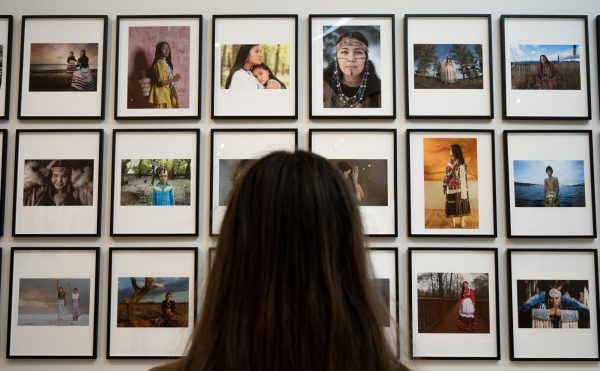
Created by photographer Matika Wilbur of the Swinomish and Tulalip Tribes, “Project 562: Changing the Way We See Native America” is the culmination of a multi-year effort to photograph people from the 562 federally recognized Native American Tribal Nations, according to the Corvallis Museums’ website.
“(Project 562) is a photography and storytelling exhibit told by an Indigenous person about Indigenous people,” Ballinger said. “It aims to counteract the traditional stereotypical narratives that are present all around us about Native Americans.”
The exhibition, which came to the museum in November and will be leaving July 19, was originally scheduled to be at a different museum. However, when the contract fell through, the Corvallis Museum jumped on the opportunity to bring the photographs to Corvallis, according to Ballinger.
Project 562 is a traveling exhibit and the photos on display were preselected by Wilbur herself, according to Ballinger.
“It’s always better to hear a person tell their own story than to have it filtered through an outsider’s perspective,” Ballinger said. “Pre-colonization museums often display artifacts and tell stories about Indigenous people as though they were primitive. Matika Wilbur’s project is… reclaiming the identity of Native Americans as people alive and thriving, celebrating their culture today.”
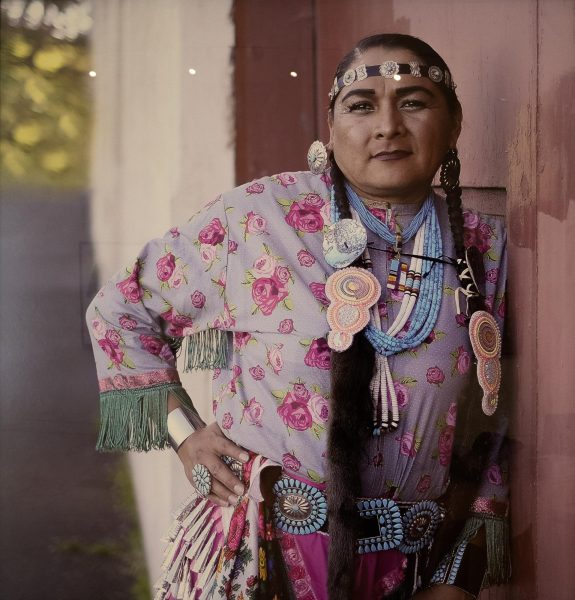
According to the Corvallis Museum’s website, every person photographed in Project 562 was able to choose the clothing, poses and location for their portraits, allowing subjects to assert their identity on their own terms.
To Luhui Whitebear, a professor of Indigenous studies at Oregon State University, modern Indigenous identity means that Native people are able to be their authentic selves and show up just how they are without explanation.
“I think that Matika is doing an amazing job with current-day storytelling in a way that’s on our own terms as Indigenous people,” Whitebear said. “That’s really important because there’s still stereotypical narratives and the romanticism of us as people of the past, and her work in particular really confronts that.”
According to Ballinger, as part of her tour of Project 562, she asks visitors to name any stereotypes about Native people that they are aware of, and face any that they may have gone along with.
“There are older members who will talk about how it was normal to dress up and play Indian when they were kids, play cowboys and Indians. I think it’s a chance for people to reflect on how we all can do better,” Ballinger said.
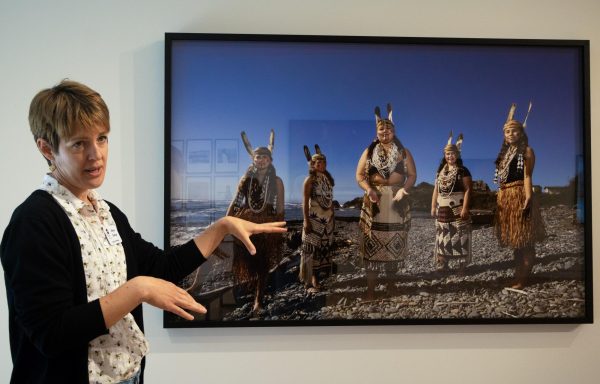
Ballinger thinks that most visitors who come on the tour are excited to learn and broaden their horizons, and believes that Project 562 is eye-opening for many.
“I had a teacher bring her high school students, and they seemed to resonate with this idea of representation and why it’s so important to feel accurately represented,” Ballinger said. “We all want to be seen for who we are, and so it’s a very human theme I think most people connect to.”
In the early twentieth century, white photographer Edward Curtis traveled the country taking pictures of Native Americans like Wilbur did in Project 562, but did so much differently. According to Ballinger, Curtis depicted Native people in a patronizing way and reinforced stereotypes.
Unlike Wilbur, Curtis staged his subjects, setting up scenes mixing tribal artifacts and traditions to match his romanticized vision of Native Americans whom he called “the vanishing race,” according to the Smithsonian.
According to Whitebear, the enduring narrative of Native people being ‘of the past’ is tied to continued land dispossession, access to resources on Native lands as well as an attempt to pacify any guilt associated with claiming those resources.
“If Native people aren’t here in the minds of people, then the connections we have don’t exist, and the treaties that were signed don’t need to be honored,” Whitebear said. “But we are very much still here.”
Reflecting on the United States’ semiquincentennial, Whitebear said that we cannot get lost in the romanticization of the 250th, and that we must focus on a better future as we move forward to the next 250 years.
“What is 250 years to time immemorial? This country is still really new in the grand scheme of humanity, and in that short amount of time has done some pretty atrocious things,” Whitebear said. “One can hope that we can change that, and that’s always the hope, and that’s why people keep trying to change the system.”
According to an article Wilbur wrote for Yes Magazine, embracing the fact that we all live on Native land is essential to actualizing a modern world that embraces the rich complexity of Indigenous culture and doesn’t erase its Indigenous intelligence.
“Matika Wilbur says the future is Indigenous,” Ballinger said. “But then what I say to my groups is that the future is Indigenous only if we do our homework and lift up these voices and let people speak for themselves.”
To become allies of Indigenous communities, Whitebear encouraged non-Native people to learn more about the lands they live on and the story and history behind them. She also said that it is important to challenge stereotypes that are embedded in history and in pop culture.
“A lot of times people think of Native people and just think about tragedy,” Whitebear said. “There’s a lot of beauty and a lot of accomplishments that tribal people and Native people are proud of that should be highlighted too.”
According to Whitebear, there is a general lack of awareness around Native people and culture that is prevalent even on the OSU campus. Whitebear encouraged students to make time to explore what OSU has to offer such as events through the kaku-ixt mana ina haws cultural center as well as attend guest lectures and film screenings organized by the Indigenous studies program.
Ballinger also emphasized the importance of education and said that she ends all her tours of the exhibit by encouraging visitors to explore Native-created media.
“Your homework,” Ballinger said, “is to add a podcast to your feed, or add a book to your bookshelf that is written or created by a Native person speaking from their own perspective. That’s your job.”
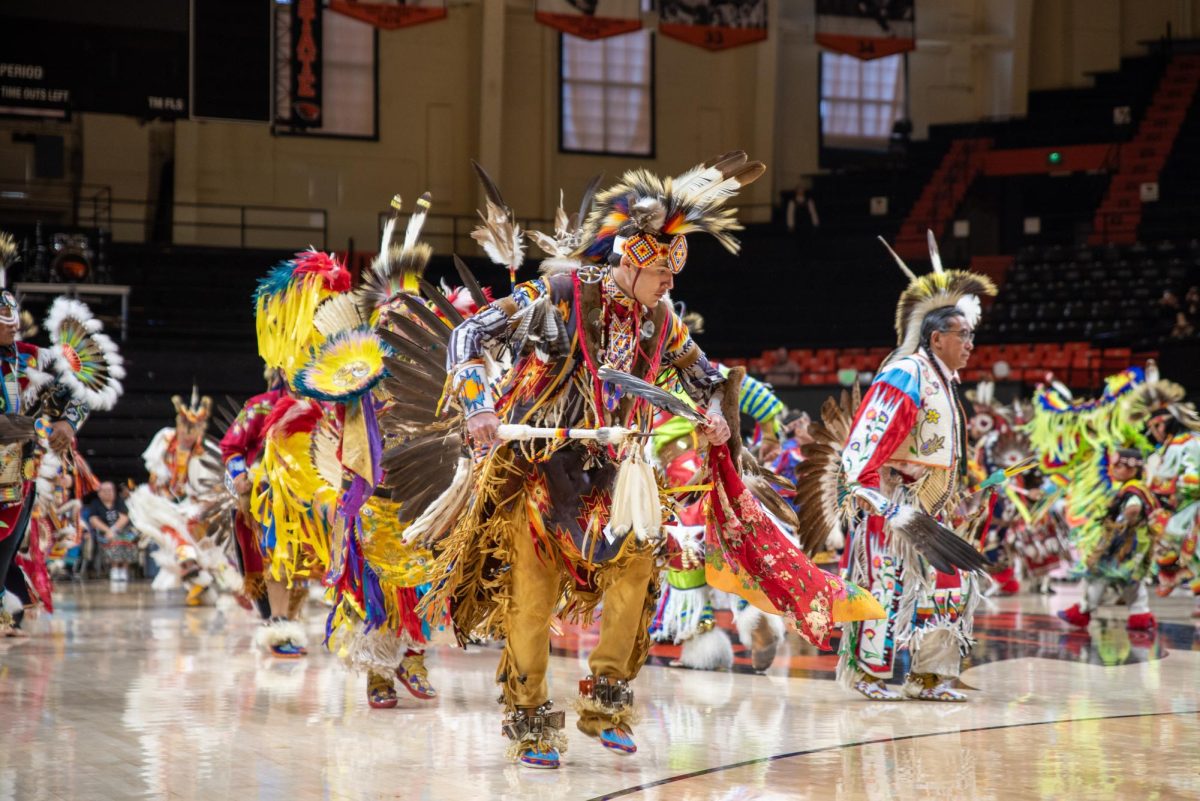
Ballinger recommended listening to Wilbur’s podcast, All My Relations, visiting the Chachalu Museum on Grand Ronde, advocating for teaching Native history to local school boards and attending the łatwa ina Pow-Wow at OSU.