


































































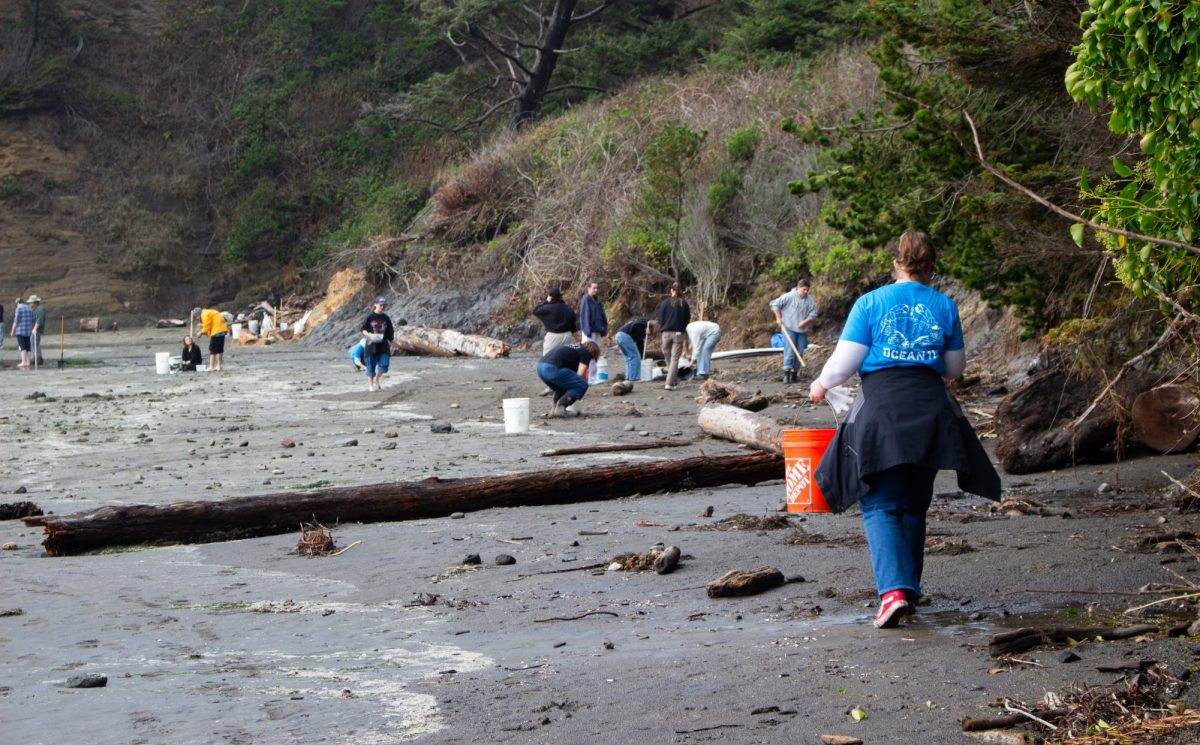
Saturday, Nov. 15, 45 Oregon State University students took to Otter Rock Beach in Newport, Oregon to make a difference. Here’s what you missed.
The beach clean-up was held by Ocean 11 Marine Club, a student organized group whose philosophy is “To get people to come together to protect the ocean as well as getting students out on the coast,” said Ocean 11 Club President Emily Osborne.
This last week’s beach clean-up is a regular event of Ocean 11. Every autumn and spring term, a group of student volunteers alongside club leadership take to a beach in Newport — often Otter Rock or Beverly beach — and begin the cleaning process from 12:30 p.m. to around 4 p.m.
Potential events during winter term include a new yet similarly formatted river clean up, taking place closer to OSU’s Corvallis campus.
This last event’s main activity, the clean-up, included students breaking into groups of around four people.
The groups would then be given proper equipment and set loose, combing the beach for any signs of pollution.
The bleeding edge technology given to the students to aid in the clean-up process: two large buckets, one small bucket, a PVC pipe and a shovel. The buckets weren’t specialty made beach-cleaning buckets and the shovels and strainers weren’t made for cleaning up beaches either.
Instead, Ocean 11 used easy to find kitchen and yard tools to show that this process is easily replicable at home. “This is definitely something where you can easily go outsource the materials yourself, and go do it on other beaches,” Osborne said.
The team would dig through the sand with the shovel, and scoop it into one bucket. Another member of the team would run to the shore with the other bucket to fill it up with water.
The water would then be poured into the sand bucket, while another student actively mixed the contents within the bucket with a PVC pipe. Eventually, the team would dredge through the mixed solution of their bucket with the strainer.
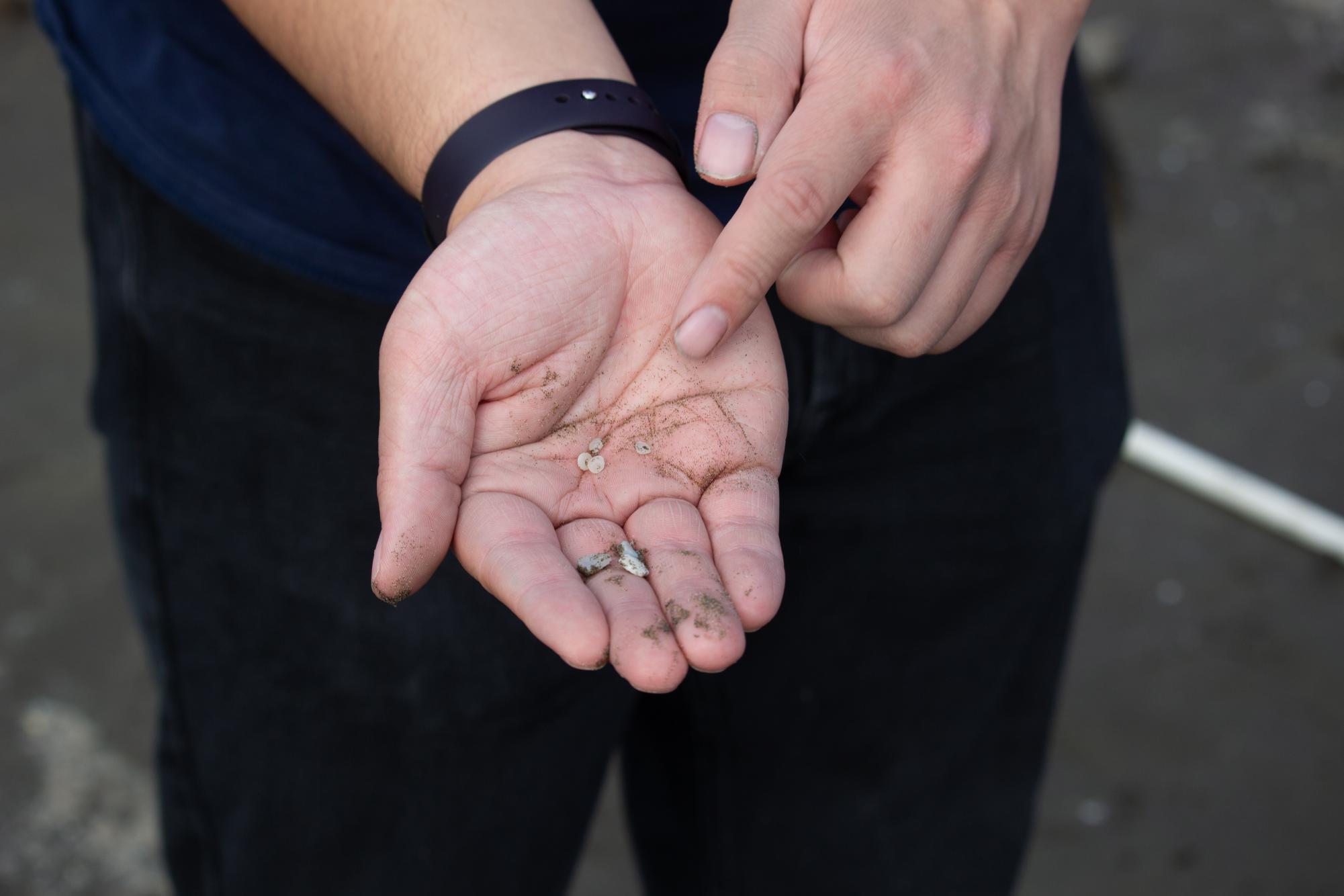
Using the strainer, students could be found picking up pieces of microplastics pellets and other pollutants ranging in size from as small as a bead to as big as a skipping stone.
Ocean 11 prides itself on connecting students from all 11 colleges at OSU with activities focused around the Oregon coast and the Pacific Ocean at large — hence the name.
Among the many different years and majors that comprises Ocean 11, this event largely consisted of first year students, with some veteran beach combers here and there.
A group of first time beach cleaners composed of club members Ian Barnette, a first year marine biology major, Henry Stem, a first year biology major with a focus in marine biology and ecology and Ian Dye, a first year natural resources major, were present at the beach clean-up.
For Stem and Dye, research wasn’t the only reason for showing up. It was the experience of being on the coast and helping to maintain a valuable natural resource.
“I have never lived near the ocean in my life, I’m from Colorado. So just being out here is kinda awesome,” Stem said. “(A) bit of the conservation type stuff, just getting out here —I love the view — big inspiration for a film project I’m working on right now,” Dye continued.
Regarding the importance of the clean-up, Barnette said, “making a positive impact on the beach — cleaning up pollutants is always a good thing.”
Barnette also made a point to note that the amount of pollutants that the group had found within the first 30 minutes of the event was remarkable.
“Off of our first collection, there were pollutants that I couldn’t even imagine were here because they were all under the sand,” they said.
Two Veteran beach combers and club members, Eleanor Maddison, a second year fish and wildlife major, and Noah Brown, a second year marine biology major remained far from the shore when combing the beach.
Unlike the rest of the Ocean 11 crew, the two chose to stick closer to the grassy and eroded cliffside rather than the freshly receding low-tide.
On that eroded cliffside, Brown ran a hand through a nearby patch of grass and held up a handful of loose dead grass as well as dozens of milky plastic beads, known as nurdles.
“One handful of grass, and there was so much plastic,” Brown said. “I think we can do better,” Maddison added.
Ziah Barron, community outreach co-chair for Ocean 11, talked about the observable density of plastic found in the clusters of marine grass and noted that while the presence of the plastic in the grass was unexpected, club members were quickly getting resourceful in removing it.
“Currently the method we’re trying is taking those clumps of grass and shaking the plastic out of it in the (bucket) water, because all the plastic will then rise to the top. The grass we can separate then from those bits of plastic,” Barron said.
Resourcefulness is among the traits members of Ocean 11’s leadership say that they see students walking away with after spending time with the club.
Isabella Vaughan, a fifth year marine biology major and skipper of the community outreach committee for Ocean 11 said, “You can kind of see, as the year progresses and we start to go on more trips, the difference in how people treat the environment… as we’re walking along paths or beaches people will go out of their way to pick up trash if they see it, even if it’s not the point of the trip we’re on.”
After a year away from Otter Rock, only because in years past the club did such a thorough job cleaning the beach that there was no need to return, Ocean 11 looks a little different than it did last time it came to the beach.
The club recently transitioned from a Departmental Student Organization — a club that was housed under a certain college affiliated department, in their case the Marine and Coastal Opportunities department — to a Registered Student Organization.
While a subtle distinction, it’s still one that affects the inner workings of the club.
Oregon State University’s own definition of a DSO includes that organizations registered as such have to comply with all university’s standards, policies, and processes. And are, in essence, part of the department they fall under.
Whereas being an RSO, the club is now a separate legal entity all together. Governed solely by the Organization’s student members and whatever sponsorships they currently hold.
While the organization is no longer directly affiliated with MACO, they alongside other departments such as the college of earth, ocean and atmospheric sciences still allocate resources to help the club out.
Emily Osbone says that with this transition, the club seeks to expand its horizons, while remaining a stalwart resource for OSU students interested in marine sustainability. “Really we’re just trying to expand more this year, and work with a broader range of departments and colleges,” they said.
Students interested in joining the Ocean 11 Marine club, can do so through their online portal. Joining the club’s LISTSERV grants students regular updates on events just like the beach clean-up as well as details on any planned meetings for that week.