












































































University officials are looking at “scenarios” for cuts to next year’s budget.
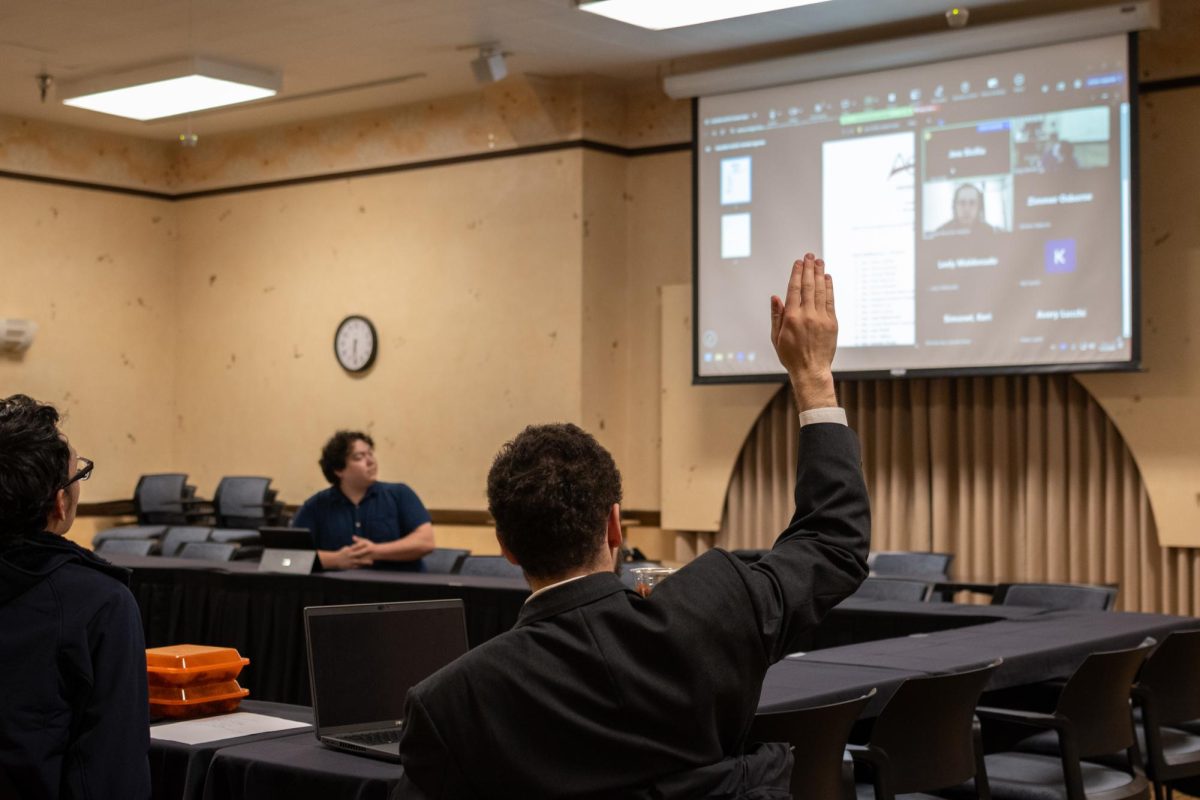
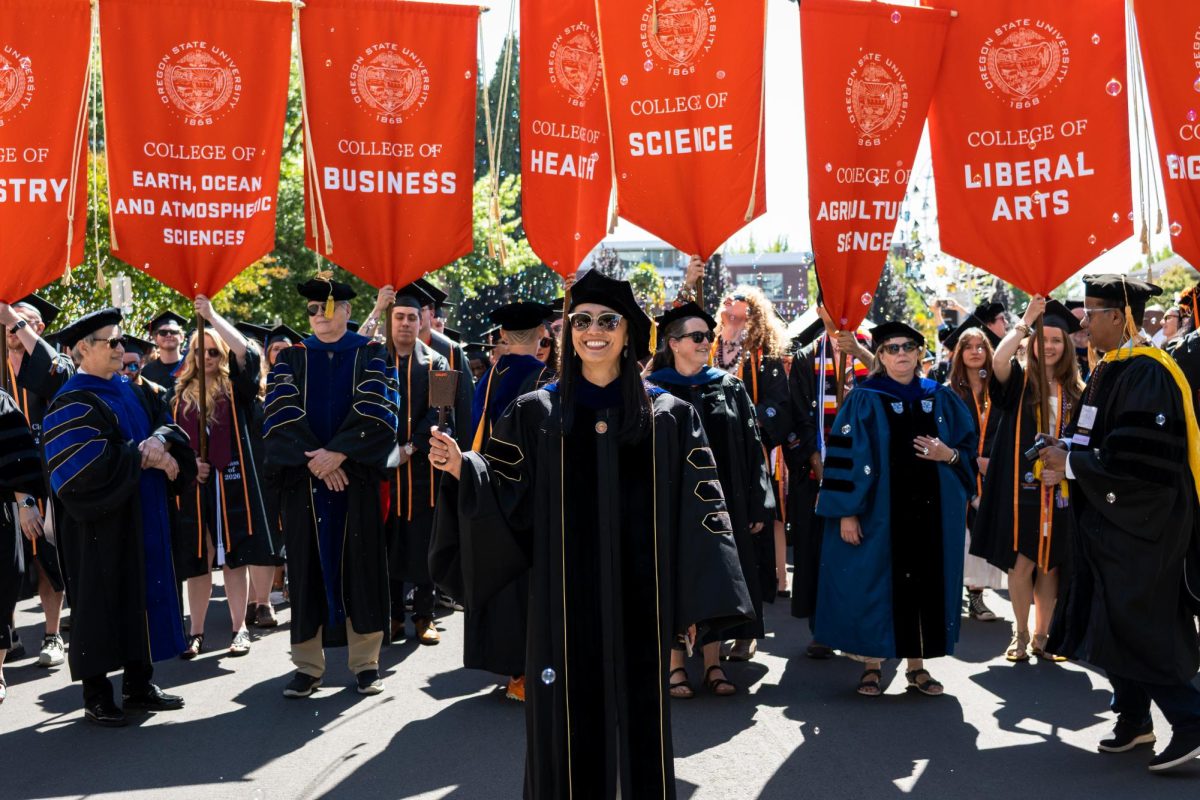
The announcement came from Provost and Executive Vice President Roy Haggerty during a quarterly update to the Faculty Senate on Thursday, as state legislators in Salem work to pass a budget for higher education.
According to Haggerty, the State of Oregon is facing a forecasted budget deficit of $600 million for the next two years. Oregon State University receives a majority of its funding from the state and tuition dollars.
“No great way to say that, but it does look like we are going to have to ask for scenarios for cuts,” Haggerty said. “We don’t know what those numbers will be, but that will be something that the deans and the deans’ teams will be working on.”
In addition to a projected decrease in state funding, an increase in Public Employee Retirement System contributions and a reduction in tuition revenue over the last year have left OSU preparing for budget cuts, according to Haggerty.
The State of Oregon has until March 8 to reconcile the budget during the legislative short session.
Some faculty senators expressed concern about potential cuts.
“It runs the risk of starting a negative feedback loop, where we have to cut back on instructors, we have to cut back on TAs, so we offer fewer sections, so we generate less money,” said Selina Heppell, a faculty senator from the College of Agriculture.
Lauren Gwynn, another College of Agriculture faculty senator, asked about the Higher Education Coordinating Commission’s request for impacts if there were to be a cut of statewide programs by 7%.
According to Haggerty, Oregon State was lobbying the HECC to decrease the cuts, which primarily affect OSU. Statewide services include the Extension Service, Agricultural Experiment Stations and the Forest Research Laboratory.
“It’s completely counterproductive on so many levels,” Haggerty said. “Statewide public services do what the Governor, in fact, is stating that she would like to do, which is to improve Oregon’s economy. Statewide public services are fundamentally an economic development engine for the state.”
Carla Ho’ā, Vice President and Chief Financial Officer, echoed Haggerty’s sentiment, saying, “Statewide programs are an essential part of our identity as a land grant mission, and that is something we will go to the mats on.”
After discussing the budget, Haggerty and Ho’ā introduced the university’s plan for “Strategic Resource Renewal.”
“This is an effort to generate resources, to give us margin, two to five to 10 years into the future,” Haggerty said.
According to a Strategic Resource Renewal website statement made on Jan. 16 from Haggerty and Ho’ā, the university will “explore ways to optimize procurement, structures, services, and physical infrastructure; maximize the impact of gifts; and generate new revenue.”
The university is currently in a preliminary “diagnostic and benchmarking” phase and has contracted the consultancy firm McKinsey & Company to help provide analysis.
The process will shift to a second phase called “solution design” in spring term. Ho’ā said this phase will involve input from faculty and others in the university to provide ideas for revenue generation.
The Faculty Senate is also preparing to host a special election.
President-elect and College of Business Associate Professor Prem Matthew stepped down recently to become interim vice president for Enrollment Management.
Senators will have an opportunity to nominate candidates for president-elect at their next meeting on March 12 in the Memorial Union Multipurpose room. The goal is to fill the position before spring break begins, according to Senate President Jake Hamblin.