



















































































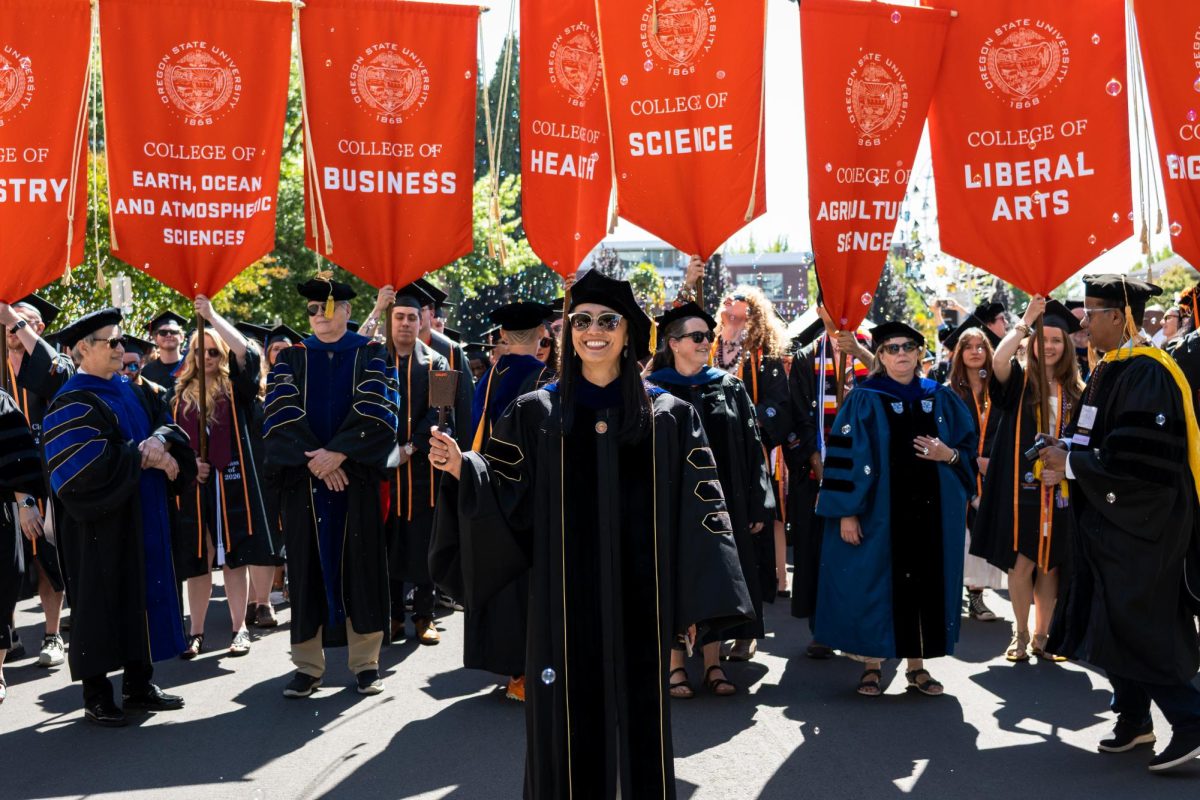




As the United Academics of Oregon State University settles into a new contract, the union awaits decisions that may result in cut faculty programs and a restructured budget.
UAOSU is a faculty union representing a large portion of academic and instructional staff in negotiations with the OSU administration on various working conditions.
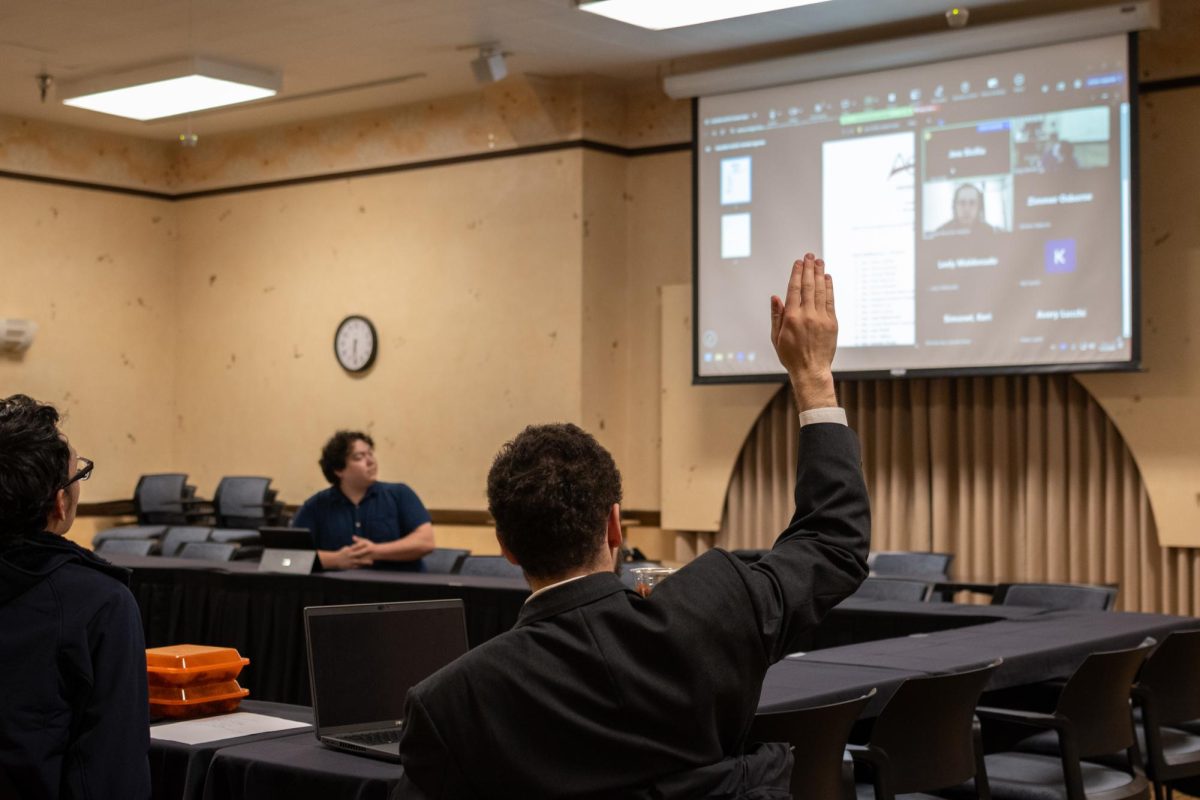
There are general membership meetings where all committees of the union meet together to discuss future plans, goals, union member feedback and current events on campus that may demand a faculty voice.
The union helps ensure that faculty members receive benefits, compensation and adequate teaching conditions, as agreed upon by UAOSU and the university.
A new contract was made and went into effect in May 2025.
Included in the contract were several agreements that aimed to combat challenges of affordability facing instructors and faculty. This is a problem that has been at the forefront of UAOSU’s negotiations, according to Joseph Orosco, president of UAOSU and professor of philosophy.
Among the agreements were an increase of yearly salaries for all categories of academic faculty, increased stability and job security for academic staff, new tools and resources meant to address excessive workload and improvement to health, safety and worksite provisions.
“(The academic faculty and staff) are people that are getting food stamps and working second jobs,” Orosco said. “Not all of your instructors are twee-jacket-wearing, pipe-smoking kinds of people; very few of us are like that.”
At Oregon’s capital, a legislative session that includes discussion of the state budget started on Feb. 2 and is set to remain open for up to 35 days.
After the continued long-term loss of federal funding, the state budget is getting tight and with that come cuts to the funding of higher education, such as public universities.
With the current budget constraints, the university has already seen budget restructuring and may see the elimination of some programs, according to Orosco.
He also said the union is making sure to keep a close eye on the university’s administration this year as questions of program elimination become more frequent.
Following the federal government’s cut to Supplemental Nutrition Assistance Program-Education last year, OSU saw its own Family and Community Health program lose more than 70% of its funding, according to a report from the Faculty Consultant Group investigating the termination of three tenured faculty from the College of Health.
The report also stated that more than seventy faculty positions were eliminated in the Oregon State University Extension Services, a community engagement program set to “support lifelong learning and co-create innovative solutions to address local challenges,” as their website states.
“We are very adamant that if the university is going to start engaging in questions of eliminating programs because of budget concerns, that we do so very carefully and follow policy,” Orosco said.
Orosco points out that while OSU has yet to face major concerns over program and faculty loss, a similar situation has already occurred at the University of Oregon.
UO was not long ago also facing several dozen faculty layoffs as a result of a budget crisis, before their own faculty was able to organize and make the administration back off, according to Orosco.
In the summer of 2025 at UO, after several faculty layoffs, word spread that the administration was looking to lay off dozens more academic staff members, according to United Academics of the University of Oregon President Kathryn Celis Mills. These layoffs included the previous president of UAUO.
Following the efforts of the faculty, the administration eventually announced that they would take a different approach to managing the budget, one that didn’t include the elimination of programs and the faculty loss that followed.
“It’s been a sore topic because there doesn’t seem to be much acknowledgement or transparency on what changed their mind,” Mills said. “We’ve been since then trying to initiate processes so that this does not happen again.”
Despite the faculty managing to avoid any major layoffs, Orosco notes that OSU may face a similar crisis in the near future following the results of the state legislative session.
Students curious about the future of OSU’s budget and OSU’s budget-centric policies can pay attention to OSU’s Board of Trustees.
“I think that these questions of affordability that our faculty are concerned with are things that students are concerned with and that working Americans are concerned with,” Orosco said.